• 875 Films, 50 Countries: Kashmir’s Biggest Cinematic Moment Yet
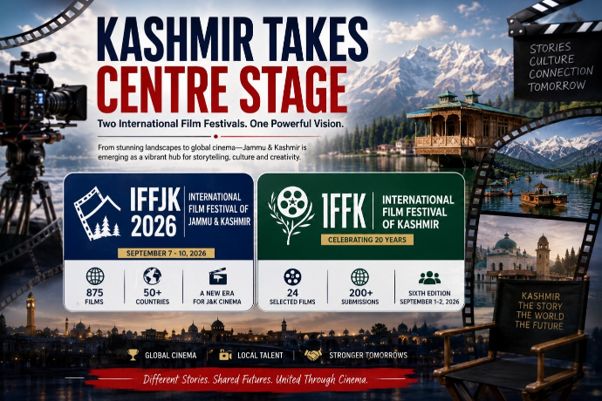
Srinagar: Jammu and Kashmir is scripting a new chapter in its cultural and creative journey. Once known primarily for its breathtaking landscapes that served as the backdrop for Bollywood classics, the Union Territory is now positioning itself as a serious destination for international cinema, film production and cultural diplomacy. This transformation is set to take centre stage in September, when two major film festivals—one government-backed and the other independently curated—will bring filmmakers, producers, artists and cinema enthusiasts from across the world to Kashmir within a span of just ten days. The maiden International Film Festival of Jammu and Kashmir (IFFJK) 2026, organised by the Department of Information and Public Relations (DIPR) in collaboration with the National Film Development Corporation (NFDC), has already attracted 875 film submissions from around 50 countries, underlining the growing global interest in Jammu and Kashmir’s emerging cinematic ecosystem. Almost simultaneously, the International Film Festival of Kashmir (IFFK) will celebrate its 20-year journey with its sixth edition in Srinagar, showcasing 24 carefully selected films from over 200 submissions received from filmmakers worldwide. Together, the two events signal an unprecedented moment for Jammu and Kashmir’s cultural landscape, reinforcing the government’s ambition to transform the region into a vibrant hub for filmmaking, artistic collaboration and creative tourism.
Global Interest in J&K’s First Int’l Festival: Scheduled to be held from September 7 to 10, the inaugural International Film Festival of Jammu and Kashmir has generated enthusiastic participation from filmmakers across continents even before the close of its submission window. According to officials, the receipt of 875 entries from nearly 50 countries reflects growing confidence among filmmakers in the Union Territory’s ability to host an international cinematic event of significance. The response is particularly noteworthy considering this is the festival’s first edition. The organisers believe the diversity of entries will enrich the festival by bringing together varied storytelling traditions, cinematic styles and cultural narratives from different parts of the world. For Jammu and Kashmir, the festival represents much more than a showcase of films—it is an attempt to position the region as an international destination for cinema, creativity and cultural exchange.
Cinema Beyond Scenic Beauty: For decades, Kashmir’s snow-covered mountains, pristine lakes and picturesque valleys have attracted filmmakers seeking spectacular shooting locations. Classic Hindi films helped establish Kashmir as one of India’s most recognisable cinematic landscapes. However, the government’s vision extends beyond offering scenic locations. The International Film Festival of Jammu and Kashmir seeks to create an institutional platform where filmmakers can not only shoot films but also exchange ideas, build collaborations, attend masterclasses and participate in professional networking. Officials say the initiative aligns with broader efforts to revive the film industry in Jammu and Kashmir by strengthening production infrastructure, attracting investment and encouraging local talent.
A Four-Day Celebration Of Cinema: The four-day festival will feature an extensive programme of activities beyond film screenings. These include masterclasses by industry experts, panel discussions on contemporary cinema, interactive sessions with filmmakers and cultural engagements highlighting the artistic heritage of Jammu and Kashmir. Students, young filmmakers, cinema scholars and industry professionals are expected to benefit from interactions with national and international experts participating in the festival. The organisers hope such engagements will encourage knowledge exchange while opening new opportunities for aspiring filmmakers from the region.
Projecting J&K On The Global Cultural Map: Officials describe the festival as a major step towards presenting Jammu and Kashmir before an international audience through the language of cinema. Apart from recognising outstanding films from across the world, the festival also seeks to promote Jammu and Kashmir’s own cultural traditions, heritage, languages and artistic diversity. The initiative is expected to strengthen cultural diplomacy by encouraging dialogue between filmmakers representing different societies and traditions. Through cinema, organisers hope to promote friendship, mutual understanding and international cooperation while celebrating artistic excellence.
Curtain Raiser Sets the Tone: The journey towards the inaugural festival formally began on July 17, when Chief Minister Omar Abdullah launched the curtain raiser ceremony. Inviting filmmakers, producers, artists and cinema enthusiasts from around the world, the Chief Minister described the festival as a landmark initiative capable of opening new opportunities for Jammu and Kashmir’s creative economy. The launch reflected the government’s larger vision of reviving the region’s historic relationship with cinema while creating new employment opportunities in tourism, hospitality, media and creative industries.
A Festival With A Legacy: While the government-backed festival marks a new beginning, Kashmir’s independent film movement already possesses a significant history. The International Film Festival of Kashmir (IFFK) will hold its sixth edition in Srinagar on September 1 and 2, celebrating two decades since its inception. Over the years, the festival has steadily evolved into one of the Valley’s important cultural platforms, bringing together filmmakers, academics, artists and cinema lovers committed to meaningful storytelling and intercultural dialogue. Its continuation over two decades reflects the resilience of Kashmir’s independent cultural institutions despite numerous social and political challenges.
Remarkable Response Continues: According to the organising committee, this year’s edition received more than 200 submissions from filmmakers around the world. After an extensive review process, 24 films have been selected for official screening. Festival Director Yaqut Mushtaq said the programming team carefully evaluated hundreds of entries before finalising the official selection. The organisers said the festival will feature several South Asian and Asian premieres alongside films representing diverse cultures, artistic traditions and social experiences. The programme is expected to offer audiences a unique opportunity to engage with contemporary international cinema while encouraging meaningful conversations around storytelling and filmmaking.
Growing Film Ecosystem: The simultaneous organisation of two international film festivals points towards the gradual emergence of a broader film ecosystem in Jammu and Kashmir. Beyond tourism, the film sector has the potential to generate employment across multiple industries including production, cinematography, editing, sound design, costume design, hospitality, transport and event management. Experts believe sustained investment in film infrastructure could significantly benefit the local economy while creating opportunities for young professionals interested in media and entertainment. Local artists, technicians and creative entrepreneurs also stand to benefit through collaborations with national and international production houses.
Cinema As Soft Power: Film festivals have increasingly become instruments of cultural diplomacy across the world. Cities such as Cannes, Busan, Berlin, Venice and Toronto have successfully transformed film festivals into platforms for tourism, investment and global engagement. For Jammu and Kashmir, developing a credible international film festival can similarly contribute to reshaping global perceptions by highlighting its artistic, cultural and creative strengths. Cinema offers narratives that often transcend political boundaries, enabling audiences to engage with societies through stories of humanity, culture and lived experiences.
Opportunities For Young Filmmakers: One of the significant outcomes expected from both festivals is the exposure they will provide to aspiring filmmakers from Jammu and Kashmir. Masterclasses, panel discussions and interactions with experienced professionals can help young directors, writers, cinematographers and producers understand contemporary filmmaking practices. Film students will also gain opportunities to engage directly with international cinema and industry experts without travelling outside the region. Such exposure can strengthen local creative capacities and encourage more original storytelling rooted in the region’s diverse cultures.
A New Creative Identity: The growing interest from filmmakers around the world suggests that Jammu and Kashmir is increasingly being recognised not merely as a picturesque filming location but as a destination capable of hosting meaningful international cultural events. The Government’s inaugural International Film Festival and the continued success of the International Film Festival of Kashmir together represent two complementary dimensions of this evolving identity—one focused on institutional expansion and global outreach, the other rooted in sustained independent cultural engagement. If these initiatives continue to receive policy support, industry participation and public engagement, they could establish Jammu and Kashmir as one of India’s emerging centres for cinema, creativity and cultural dialogue. With global filmmakers preparing to converge on Srinagar this September, the Valley appears poised to reclaim its historic relationship with cinema—not only as a spectacular backdrop for films, but as a destination where stories from around the world meet, inspire and create lasting cultural connections.