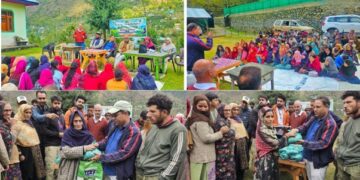
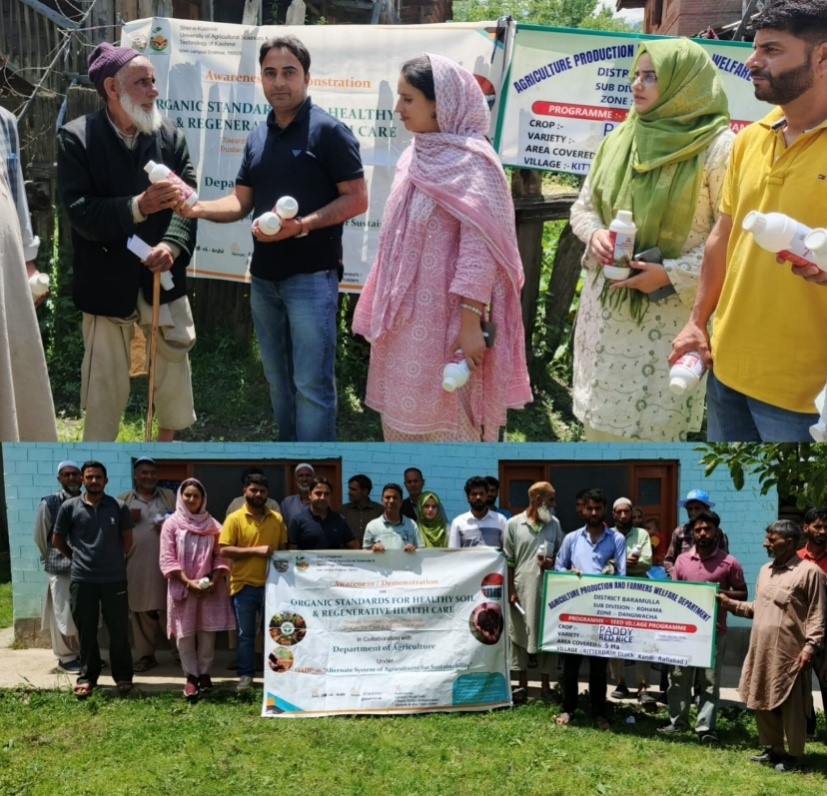
Baramulla, : A one-day Awareness-cum-Training Programme was on Wednsday held in Village Kitardaji, DangiWacha Baramulla, under the HADP-16 initiative, focusing on sustainable agriculture and organic farming. Organized in collaboration with the Department of Agriculture, the event aimed to educate farmers on practices that promote healthy soil management and regenerative agriculture.
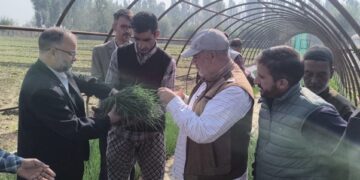
The programme emphasized the importance of sustainable and climate-resilient agricultural practices, highlighting soil health, biodiversity conservation, and efficient resource utilization. A key focus was on the promotion of indigenous red rice cultivation through organic methods. Dr. Raies Ahmad Bhat, an Assistant Professor of Agronomy, underscored the role of alternative agricultural systems in boosting farm productivity while conserving natural resources for future generations. He pointed out that healthy soils are essential for sustainable agriculture and long-term food security. Dr. Bhat also discussed scientific methods for organic red rice cultivation, organic nutrient management, and enhancing soil fertility. He encouraged farmers to adopt regenerative practices to improve crop quality and environmental sustainability, while also strengthening Red Rice Clusters through sustainable cultivation techniques. Bilal Ahmad Mir, the AEO of DangiWacha, highlighted the Red Rice Cluster initiative’s role in preserving indigenous crop varieties and enhancing farmers’ livelihoods, reaffirming the Department of Agriculture’s commitment to supporting organic and regenerative farming under HADP-16. Additionally, Dr. Shayista Fayaz, Suhail Shameem Malik, and Shafiya Fayaz introduced participants to the Kissan Sathi portal and other online services sponsored by the JK Government’s HADP. They discussed entrepreneurship opportunities within the Alternate System of Agriculture and provided technological inputs, including biofertilizers and biopesticides, along with pamphlets on their usage. The programme included technical sessions on organic farming standards, composting, soil health management, and quality produce. Farmers actively engaged in discussions and showed a strong interest in implementing sustainable farming practices on their farms.