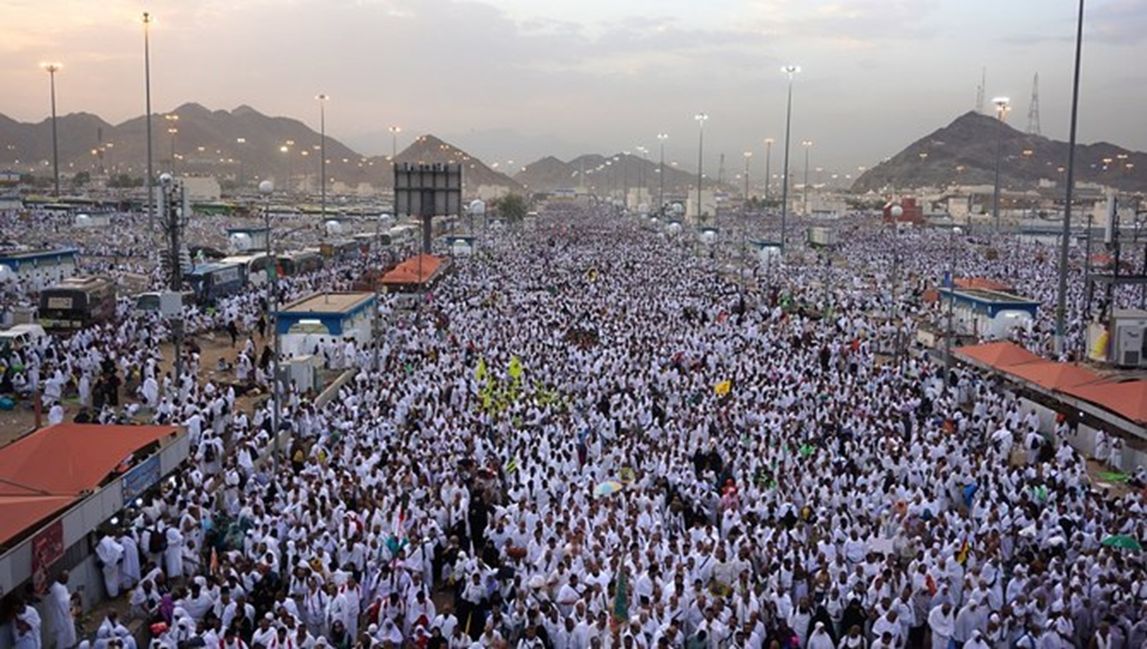
- Millions recite Talbiyah, move to tent city amid intense heat and tight security
- Over 1.75 lakh Indian pilgrims, including 4,000 from J&K, participate in sacred journey
New Delhi/Makkah: The annual Hajj pilgrimage began on Monday with more than 1.7 million Muslims from across the world converging in Mina, the vast tent city near Makkah, as the first major ritual of Hajj 2026 commenced on Yawm al-Tarwiyah.
From the early hours of the day, pilgrims dressed in simple white ihram garments filled the surroundings of Masjid al-Haram, reciting the Talbiyah — “LabbaikAllahummaLabbaik” (Here I am, O Allah, here I am at Your service) — as they prepared to begin the journey towards Mina after offering Fajr prayers and performing Tawaf at the Holy Kaaba.
By midday, the majority of pilgrims had reached Mina, where they settled into rows of white tents spread across the valley. The atmosphere was marked by continuous prayers, Quran recitations, and collective supplication, reflecting the spiritual intensity of one of the largest annual religious gatherings in the world.
Officials said over 1.5 million international pilgrims had arrived in Makkah for Hajj this year, joined by nearly five lakh domestic pilgrims from Saudi Arabia and neighbouring countries. Among them are around 1.75 lakh pilgrims from India, including more than 4,000 from Jammu and Kashmir, participating through the Hajj Committee of India and private tour operators.
Indian authorities confirmed that extensive arrangements have been made to assist pilgrims, including medical aid, transport coordination, and accommodation support across Makkah and Madinah.
Massive arrangements for Indian pilgrims, enhanced medical support in place
Officials at the Indian Hajj Mission in Makkah said a wide network of facilities has been activated for the convenience of Indian pilgrims. These include 34 hospitality centres, 12 branch Hajj offices, 13 medical clinics, mini clinics, and several mobile medical units operating in key locations.
Similar arrangements have been established in Madinah, while additional support systems have been deployed at Jeddah Airport and metro stations connecting pilgrimage routes. Authorities said the aim is to ensure immediate assistance for pilgrims in case of medical emergencies or logistical needs.
Consul General of India in Jeddah Fahad Ahmed Khan Suri said the arrangements have been functioning smoothly and appreciated Saudi authorities for their coordination and support in facilitating a safe and organised pilgrimage.
Security arrangements across the holy sites have also been significantly strengthened. Saudi authorities confirmed that a comprehensive security system, including aerial surveillance, crowd control units, and rapid response teams, has been deployed to manage the movement of pilgrims.
Helicopters were seen hovering over Makkah for aerial monitoring, while ground forces, volunteers, and digital tracking systems supported the movement of pilgrims across key routes. Each pilgrim has been issued a Nusk card containing a barcode for identification and location tracking.
Officials said the system has improved coordination and reduced congestion, particularly during peak movement hours between Makkah and Mina.
Heat challenges and weather alerts as pilgrims proceed with rituals
This year’s pilgrimage is being held under extreme weather conditions, with temperatures in Mina expected to reach up to 45 degrees Celsius on the Day of Tarwiyah. The Saudi National Center of Meteorology (NCM) issued repeated heat advisories, urging pilgrims to avoid direct sunlight, stay hydrated, and follow safety instructions.
Thousands of pilgrims were seen using umbrellas, handheld fans, and cooling accessories as they walked or travelled via buses and the Al Mash Al Muqaddassah metro line. Volunteers distributed water bottles along pilgrimage routes, while misting fans were installed in several areas to provide relief from heat stress.
Despite the challenging conditions, pilgrims continued their journey with devotion, many walking nearly six kilometres from the Grand Mosque to Mina through shaded pedestrian pathways specially constructed for the pilgrimage.
The NCM said it has deployed eight monitoring stations across the holy sites, supported by mobile weather units and advanced forecasting systems. The centre will issue 24-hour weather bulletins and multilingual alerts to guide pilgrims throughout the pilgrimage period.
Authorities also announced awareness campaigns in multiple languages to educate pilgrims about heat safety, dehydration risks, and emergency response procedures.
Over the next few days, pilgrims will proceed from Mina to the plains of Arafat and Muzdalifah to perform the key rites of Hajj, including the Day of Arafah, considered the spiritual peak of the pilgrimage.
As the sacred journey continues, officials from Saudi Arabia and participating countries have emphasized coordination, safety, and discipline to ensure smooth completion of one of the world’s largest religious gatherings.