

Introduction | Civilization Under Threat: In a striking and provocative reflection, Mahathir Mohamad raises a fundamental question: Who is truly civilised? His statement, reacting to threats attributed to Donald Trump regarding the destruction of Iranian cultural heritage, is not merely political rhetoric—it is a philosophical challenge to modernity itself. At its core lies a profound civilizational anxiety: can a world that claims progress justify the annihilation of ancient legacies that embody the memory of humanity? The issue transcends geopolitics. It touches upon ethics, identity, historical consciousness, and the fragile continuity of human civilization. When a civilization threatens to erase another, the question is no longer about power, but about the very meaning of being “civilised.”
The Meaning of Civilization: Beyond Power, Progress: Civilization is often measured through material progress—technological advancement, economic prosperity, and military strength. Yet, historically, civilizations have been judged by deeper criteria: their ability to preserve knowledge, respect diversity, and honor the past. The destruction of ancient heritage contradicts these values. From the burning of libraries in antiquity to the devastation of monuments in modern conflicts, such acts represent not strength but insecurity—a fear of history, identity, and plurality. Mahathir’s argument rests on a timeless principle: a truly civilised society preserves, rather than destroys, the legacies of others. This principle has been upheld across cultures. Whether in Islamic, Greek, Indian, or Chinese traditions, there has been an enduring respect for the intellectual and artistic achievements of earlier civilizations.
Iranian Civilization | A Continuum Of Three Millennia: The civilization of Iran represents one of the most continuous and sophisticated cultural traditions in human history. Its roots stretch back over 3,000 years to the Achaemenid Empire, encompassing intellectual, artistic, and spiritual achievements that have shaped global civilization.
1. Pre-Islamic Foundations: Ancient Persia was a cradle of governance, architecture, and philosophy. The Cyrus Cylinder, often regarded as an early declaration of human rights, reflects a sophisticated moral and political consciousness. Persian art, urban planning, and imperial administration influenced civilizations from Greece to India.
2. Islamic Transformation, Synthesis: With the advent of Islam, Iran did not abandon its past; rather, it integrated it into a new civilizational synthesis. Persian scholars became central figures in the Islamic Golden Age. Thinkers such as Ibn Sina and Al-Ghazali contributed to philosophy, medicine, theology, and science. Iranian Islamic civilization exemplifies continuity through transformation—a hallmark of resilient cultures. It preserved ancient knowledge while enriching it with Islamic intellectual traditions.
3. Cultural Legacy: From poetry (Hafez, Rumi) to architecture (Isfahan’s mosques), Iranian civilization embodies a deep aesthetic and spiritual sensibility. Its legacy is not confined to a single nation; it is part of the shared heritage of humanity. To threaten such a civilization is to threaten a living archive of human experience.
The American Civilization | A Three-Hundred-Year Narrative: In contrast, the civilization of the United States is relatively young—approximately 300 years old. Yet, it represents a different kind of civilizational achievement: rapid innovation, democratic ideals, and global influence.
1. Foundations Of Modernity: American civilization is rooted in Enlightenment values—liberty, individual rights, and constitutional governance. It has contributed significantly to science, technology, and global political thought.
2. Strengths, Contradictions: While the United States champions freedom and progress, its history also includes contradictions—colonial expansion, slavery, and cultural homogenization. These tensions reflect the challenges of a rapidly evolving civilization.
3. The Problem Of Historical Depth: Unlike Iran, the United States lacks a millennia-long civilizational continuity. Its identity is dynamic but relatively shallow in historical depth. This does not diminish its achievements but highlights a key difference: older civilizations carry accumulated wisdom that newer ones are still developing.
“The true measure of a civilization—whether Iranian, American, or otherwise—is not found in power or superiority, but in ethical conduct. It posits that civilization is a continuous responsibility rather than a fixed status. In an era of global conflict, the survival and flourishing of our shared humanity depend on choosing dialogue, humility, and preservation over clash and arrogance.”
Clash Or Dialogue ? Reframing Civilizational Encounters: The idea of a “clash of civilizations,” popularized by Samuel Huntington, suggests that cultural and religious differences inevitably lead to conflict. However, this framework is increasingly challenged by scholars advocating for a dialogue of civilizations.
1. Clash Of Civilizations: The clash paradigm views civilizations as competing entities. It emphasizes differences, often leading to suspicion, hostility, and conflict. In this framework, the destruction of cultural heritage can be justified as a strategic act.
2. Dialogue Of Civilizations: In contrast, the dialogue approach emphasizes mutual respect, understanding, and cooperation. It recognizes that civilizations are not isolated; they have always interacted, borrowed, and enriched one another.
The Islamic world, for instance, preserved Greek philosophy, which later influenced the European Renaissance. Similarly, Persian culture influenced South Asia, Central Asia, and beyond. Dialogue transforms difference into enrichment rather than conflict.
Who Is Civilised? A Moral Inquiry: Mahathir’s question—Who is civilised?—demands a moral rather than material answer. A civilised society:
Respects the past, Preserves cultural heritage, Engages in dialogue rather than destruction, and Recognizes the shared humanity in all civilizations. Conversely, a society that threatens to erase ancient legacies reveals a deficiency—not in power, but in ethical maturity. The act of destruction is not merely physical; it is symbolic. It represents a rejection of history, diversity, and the collective memory of humanity.
The Ethics Of Preservation: Preserving civilizational heritage is not an act of nostalgia; it is a moral responsibility. Ancient monuments, texts, and traditions are repositories of human wisdom. They provide continuity, identity, and meaning.
International organizations like UNESCO emphasize the protection of cultural heritage as a global duty. The destruction of such heritage is considered a crime against humanity.
Lessons From History: History offers numerous examples of both preservation and destruction: The House of Wisdom in Baghdad symbolized intellectual openness and preservation. The Mongol invasion destroyed vast libraries, representing a loss to humanity. Colonial powers often appropriated or destroyed indigenous cultures. These examples remind us that civilizations are judged not only by what they build but by what they preserve.
Towards A Civilizational Ethics: In an interconnected world, the survival of civilization depends on a shared ethic:
Respect For Diversity: Recognizing the value of different cultural traditions.
Commitment to Preservation. Protecting heritage sites and knowledge systems.
Promotion of Dialogue: Encouraging cross-cultural understanding.
Rejection Of Cultural Violence: Opposing the destruction of heritage.
Conclusion| Civilization As Responsibility: Mahathir Mohamad’s statement is more than a critique; it is a call to redefine civilization. True civilisation is not measured by technological advancement or military power but by the ability to honor the past, respect the present, and safeguard the future. The contrast between Iranian and American civilizations is not a judgment of superiority but a reminder of diversity in historical experience. Each has its strengths, but the ultimate معيار (criterion) of civilisation lies in ethical conduct.
In a world increasingly marked by conflict, the choice is clear: clash or dialogue, destruction or preservation, arrogance or humility. To choose preservation is to affirm our shared humanity. To choose dialogue is to ensure that civilizations do not merely survive but flourish together. And perhaps, in answering the question “Who is civilised?”, we discover that civilisation is not a status—it is a responsibility.
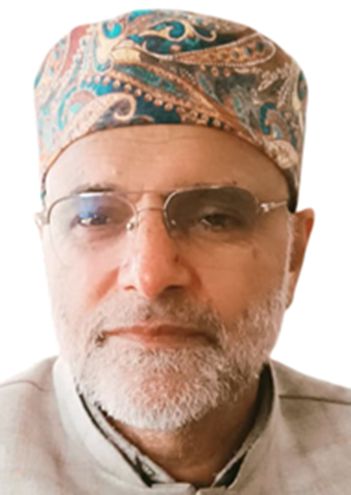
(The author a veteran academician is a former Professor and Head Department of Islamic Studies, Kashmir University. The views, opinions and conclusions expressed in this article are those of the author and aren’t necessarily in accord with the views of “Kashmir Horizon”)





