
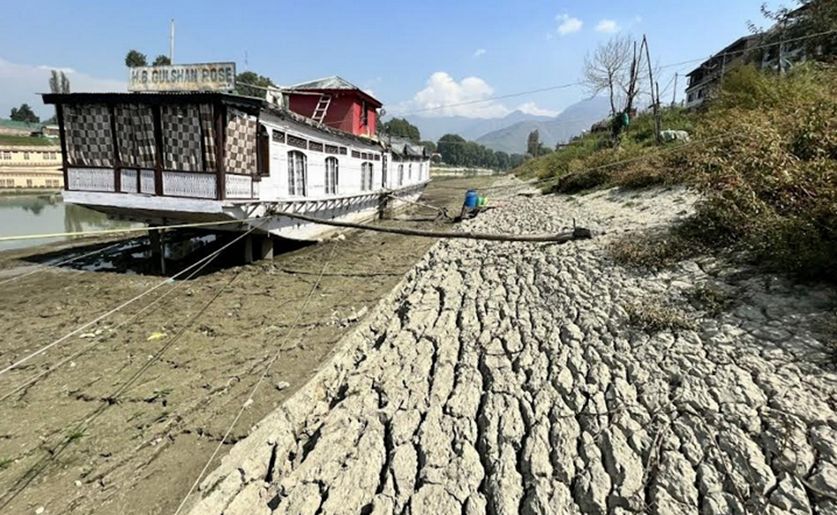
• Over 2,800 hectares of water area lost in six decades
• Majority of vanished lakes fall under Rev,Agriculture Deptts
Irfan Yattoo
Srinagar: In a stark warning on environmental degradation, the Comptroller and Auditor General (CAG) of India has reported that 315 out of 697 lakes in Jammu and Kashmir have disappeared since 1967, resulting in the loss of 2,851.26 hectares of water area over nearly six decades.
According to the report, Jammu and Kashmir had 697 lakes in 1967, including 367 in the Jammu region and 330 in the Kashmir Valley. Of these, 315 lakes, 259 in Jammu and 56 in Kashmir have completely vanished, leading to a loss of 1,537.07 hectares of water area.
The audit highlights significant administrative gaps, noting that of the disappeared lakes, 80 (25 percent) were under the Forest Department, while a majority of 235 (75 percent) fell under the Revenue and Agriculture Departments.
In addition to the vanished lakes, the report points to a sharp decline in the size of existing water bodies.
A total of 203 lakes—144 in Kashmir and 59 in Jammu—have shrunk over time. Their combined area reduced from 8,566.55 hectares in 1967 to 7,252.36 hectares in 2020, marking a loss of 1,314.19 hectares. Alarmingly, 63 of these lakes have lost more than 50 percent of their original area, placing them at serious risk of extinction.
However, the report notes limited positive trends. Around 150 lakes 104 in Kashmir and 46 in Jammu—have recorded an increase in area by 538.22 hectares, while 29 lakes remained unchanged during the assessment period.
Overall, 518 lakes—about 74 percent of the total have either disappeared or shrunk, indicating large-scale degradation of water resources across the Union Territory.
The CAG has raised serious concerns over the broader ecological consequences of these changes, stating that the deterioration of lakes has led to loss of flora and fauna, reduced water availability, and disruption of biodiversity.
It also flags disturbances in carbon, nutrient and hydrological cycles, warning of increasing climate vulnerability in the region.
Importantly, the report links the shrinking and disappearance of lakes to heightened risk of natural disasters. It notes that reduced water-holding capacity contributed to the devastating floods in Jammu and Kashmir in September 2014.
The report cites research by multiple institutions, attributing the severity of flooding to changes in land use patterns and encroachment on lake areas.