Says J&K plans Rajasthan-style training to improve tourist experience
508 complaints since 2025; overcharging, coercion flagged
Behavioural training for guides, pony operators, hotel staff on cards
Irfan Yattoo
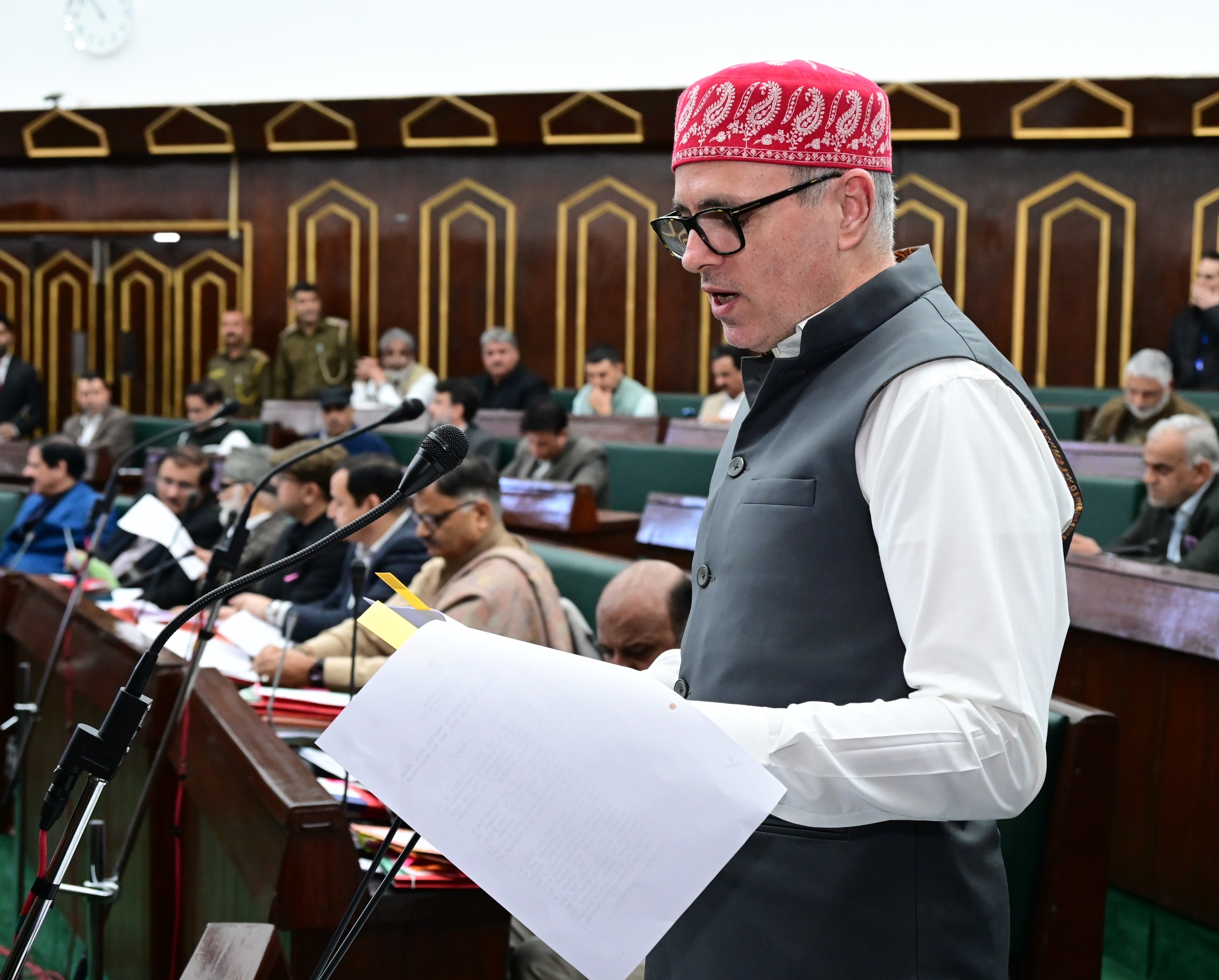
Srinagar: Chief Minister Omar Abdullah on Wednesday said the government bears the responsibility of protecting the properties and religious shrines of displaced Kashmiri Pandits until conditions are created for their safe and dignified return to the Valley, while also indicating readiness to bring a law on the subject if there is consensus within the community.
Speaking in the Assembly during a discussion on a private member’s Bill, the Chief Minister said no one can deny that Kashmiri Pandits were compelled to leave the Valley under extremely difficult circumstances in the early 1990s.
“They were forced to migrate after their security was compromised, and unless that sense of safety is fully restored, their return cannot be expected,” he said.
The Bill, moved by a legislator, sought to provide a framework for better management, protection, administration and governance of Kashmiri Hindu shrines and religious places in the Union Territory.
Opposing the Bill in its present form, CM Omar said the government was not averse to legislation but emphasised that any such move must be backed by broad-based agreement among stakeholders.
“Since 1990, all governments both at the Centre and in Jammu and Kashmir have reiterated their commitment to facilitating the dignified return of Kashmiri Pandits, but the necessary conditions for their return are yet to be created,” he said.
He reiterated that until such time, the responsibility of safeguarding properties particularly religious sites and land belonging to displaced families — rests squarely with the government. Recalling earlier efforts, CM Omar said that after the 1996 elections, when an elected government returned to power in the erstwhile state, a law was introduced to prevent distress sale or transfer of Kashmiri Pandit properties, aimed at ensuring their protection during displacement.
Chief Minister also addressed the broader narrative surrounding the issue, saying that while films and public discourse often highlight the suffering and displacement of Kashmiri Pandits, another dimension remains less discussed. In several areas, he said, local residents have played a role in safeguarding temples and shrines in the absence of their original custodians. “All steps will be taken to keep these religious institutions and properties intact,” he added.
CM Omar also pointed to differences within sections of stakeholders including within communities, over the contours of any proposed legislation. He cautioned that proceeding without consensus could risk further divisions.
Referring to past experience, he noted that a similar Bill he had introduced earlier had faced opposition from sections of the Pandit community, who argued that certain provisions could be unjust or detrimental to their interests.
“If the community unites on a common platform, the government is ready to bring a law; however, taking steps without consensus may lead to further divisions,” he said.
Following the Chief Minister’s reply, the legislator who had introduced the Bill withdrew it in the House.
In a separate reply to questions on tourism, CM Omar — who also holds the tourism portfolio — said the government is planning to adopt a Rajasthan-style behavioural training model for stakeholders to improve the overall experience of visitors to Jammu and Kashmir.
He said that while harassment of tourists is not widespread, even isolated incidents are unacceptable as they can damage the Union Territory’s reputation as a tourist destination.
“We want to ensure that such negative tendencies do not grow, and that we provide a better experience so tourists return happily,” he said.
The proposed programme draws from a successful initiative in Rajasthan, where behavioural science-based training modules, developed in collaboration with academic institutions, were used to improve the conduct of tourism stakeholders.
Chief Minister said that from January 2025 till date, 508 complaints have been received from tourists, of which 413 have been disposed of in accordance with rules.
He pointed to several recurring issues faced by visitors. In some places, tourists are made to rent heavy winter clothing such as long coats and boots even in relatively warm conditions, leading to discomfort. In other instances, they are aggressively approached by service providers including pony operators — who insist on their services even when unnecessary.
There have also been complaints of overcharging and coercion, where tourists are initially quoted one price on display boards but later asked to pay higher amounts. Such practices, he said, undermine trust and tarnish the image of the destination.
To address these concerns, the government has been conducting regular training and capacity-building programmes for tourism stakeholders, including hotel staff, tourist guides, Shikara operators, taxi drivers and vendors. These programmes cover hospitality etiquette, housekeeping, food and beverage services, guiding skills, first aid, CPR, safety protocols, rescue operations and responsible tourism practices.
“A proposal for mandatory certification of stakeholders is currently under consideration,” CM Omar said, indicating that the government is looking to institutionalise standards in the sector.
However, he stressed that ensuring a positive tourist experience is not solely the responsibility of the government. Elected representatives from key tourist destinations such as Gulmarg, Pahalgam and Sonamarg must work in coordination with authorities and stakeholders to address issues on the ground.
On sanitation, the Chief Minister said maintaining cleanliness at tourist destinations is critical, as poor hygiene discourages repeat visits. He added that while the tourism sector is a major source of employment for local youth, quality and visitor satisfaction cannot be compromised.
Responding to concerns about pending applications in Gulmarg, CM Omar clarified that delays were not due to procedural lapses but because the number of existing permits is currently sufficient given the tourist inflow.
He also highlighted the need to ensure equitable distribution of economic opportunities. “It has often been observed that one person secures multiple permits across activities such as pony rides, ATVs and guiding services resulting in limited distribution of income,” he said.
Efforts are underway to rationalise the system so that more families can benefit from tourism-related activities. The government is exploring ways to diversify income streams, allowing stakeholders to earn across seasons — for instance, pony services in summer and sledging or ski guiding in winter.
“As tourist arrivals increase, the number of registrations and permits will also be expanded accordingly,” he said, adding that J&K administration remains committed to ensuring balanced, inclusive and sustainable development.