

The relentless march of war across the contemporary world has once again exposed a painful and enduring truth: violence begets violence, and no lasting solution has ever emerged from the barrel of a gun. Today, as the Middle East burns and tensions ripple far beyond its geographical boundaries, the global community finds itself standing at the edge of a dangerous precipice. The echoes of explosions are not confined to battlefields; they reverberate through economies, societies, and the fragile hopes of millions who yearn for peace. The recent call by the Secretary-General of the United Nations to halt the ongoing conflict is not merely a diplomatic statement—it is a moral plea, an urgent appeal to humanity’s collective conscience. It reflects the frustration and helplessness of a world body that was established in the aftermath of a devastating global war with the singular aim of preventing such catastrophes. Yet, decades later, the same institution appears constrained, unable to enforce peace when it is most desperately needed. The reason lies not in the lack of intent, but in the structure of global power itself, where the interests of dominant states often override the imperatives of justice and humanity. The ongoing crisis in the Middle East is not an isolated phenomenon. It is deeply embedded in a long history of interventions, rivalries, and geopolitical calculations. Powerful nations have repeatedly justified their military engagements in the language of democracy, freedom, and security. However, the lived reality on the ground tells a very different story. Cities reduced to rubble, families torn apart, and generations condemned to trauma and displacement—these are the real consequences of wars that are often framed as noble endeavors.
One cannot ignore the pattern that has emerged over the past few decades. From Iraq to Afghanistan, from Libya to Syria, military interventions have consistently led to prolonged instability rather than sustainable peace. Each conflict leaves behind a fractured society, weakened institutions, and a vacuum that often gives rise to further violence. The promise of liberation turns into a cycle of destruction, and the rhetoric of security becomes a justification for endless warfare. At the heart of this troubling reality lies a complex web of interests that extends beyond national security. The global arms industry plays a significant role in perpetuating conflict. For defense contractors and weapons manufacturers, war is not merely a tragedy—it is also a business opportunity. The surge in demand for military equipment during times of conflict translates into soaring profits and rising stock values. This creates a disturbing incentive structure, where the continuation of war aligns with economic gain for certain powerful actors. The ethical implications of such a system are profound and deeply troubling.
Equally concerning is the role of political leadership in shaping the course of these conflicts. Decisions to engage in military action are often taken far from the realities of the battlefield, within the secure confines of political institutions. The human cost of these decisions is borne not by those who make them, but by ordinary people—men, women, and children who have no say in the strategic calculations that determine their fate. This disconnect between decision-makers and the affected populations underscores a fundamental flaw in the current global order. The situation is further complicated by the dynamics of international alliances and rivalries. In many cases, conflicts are not merely bilateral but involve multiple actors with competing interests. This transforms localized disputes into broader confrontations with global implications. The Middle East, with its strategic importance and vast energy resources, has long been a focal point of such rivalries. Any escalation in this region has the potential to disrupt global stability, particularly in the realm of energy security. The Strait of Hormuz, for instance, represents a critical artery for the world’s oil supply. Any disruption in this narrow passage can send shockwaves through global markets, leading to rising fuel prices, inflation, and economic uncertainty. For countries already struggling with economic challenges, such developments can be devastating. The burden ultimately falls on ordinary citizens, who face higher costs of living and diminishing economic prospects.
“War is a reversible choice, not a biological certainty. Choosing peace is no longer just a moral ideal—it is a mandatory requirement for human survival and the protection of future generations.”
Europe’s response to the current crisis highlights another dimension of the issue. While there is concern about the potential influx of refugees, there is often less willingness to address the root causes of displacement. People do not leave their homes willingly; they are forced to flee by violence, insecurity, and the collapse of basic services. Addressing migration without addressing the conflicts that drive it is akin to treating the symptoms while ignoring the disease. It is also important to recognize that responsibility for the current situation cannot be attributed to a single actor. While powerful nations play a significant role, regional dynamics and local actors also contribute to the escalation of tensions. Acts of retaliation, proxy conflicts, and internal divisions all add layers of complexity to an already volatile situation. However, acknowledging this complexity should not be used as an excuse to justify inaction or to perpetuate cycles of violence. The path forward requires a fundamental shift in approach.
Military solutions must give way to diplomatic engagement, dialogue, and negotiation. This is not a naive ideal but a pragmatic necessity. History has shown that even the most entrenched conflicts can be resolved through sustained diplomatic efforts. The process may be slow and fraught with challenges, but it offers a far more promising alternative to endless warfare. Diplomacy, however, cannot succeed in isolation. It must be supported by genuine political will and a commitment to justice. This includes addressing legitimate grievances, ensuring accountability for violations of international law, and creating conditions for inclusive and sustainable peace. Without these elements, any agreement reached at the negotiating table is unlikely to endure. The role of global institutions must also be re-examined. The limitations of the current system, particularly the veto power within the Security Council, have become increasingly apparent. Reforming these structures is essential to enhance their effectiveness and credibility.
A more equitable and representative system would be better equipped to respond to contemporary challenges and to uphold the principles on which it was founded. At a broader level, there is a need to rethink the very notion of security. True security cannot be achieved through military dominance alone. It requires investment in human development, economic stability, and social cohesion. Education, healthcare, and infrastructure are as important to security as defense capabilities. By prioritizing these areas, nations can address the underlying conditions that often give rise to conflict.
The economic dimension of war also demands attention. The resources devoted to military expenditure could be redirected towards addressing pressing global challenges such as poverty, climate change, and public health. Such a shift would not only improve the quality of life for millions but also contribute to a more stable and peaceful world. Ultimately, the question that confronts humanity is not merely political or strategic—it is deeply moral. What kind of world do we wish to create? One defined by perpetual conflict and competition, or one guided by cooperation and mutual respect? The answer to this question will shape the future of our planet.
The voices calling for peace must not be drowned out by the noise of war. Civil society, intellectuals, and ordinary citizens all have a role to play in advocating for a more just and peaceful world. Public opinion can influence policy, and collective action can bring about change. The demand for peace must be persistent, informed, and unwavering.
In conclusion, the current crisis serves as a stark reminder of the consequences of unchecked aggression and the failure of diplomacy. It is a call to action for the global community to re-evaluate its priorities and to embrace a more humane and rational approach to conflict resolution. War is not an inevitable feature of human existence; it is a choice. And like any choice, it can be changed. The time to act is now. The cost of inaction is too great, and the stakes are too high. If the world continues on its current path, the consequences will be felt not only in the present but for generations to come. Peace is not merely an ideal to aspire to—it is a necessity for survival.
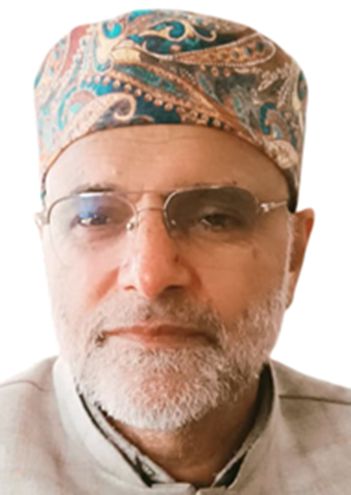
(The author a veteran academician is a former Professor and Head Department of Islamic Studies, Kashmir University. The views, opinions and conclusions expressed in this article are those of the author and aren’t necessarily in accord with the views of “Kashmir Horizon”)
[email protected]







