

Muzammil Ahad Dar
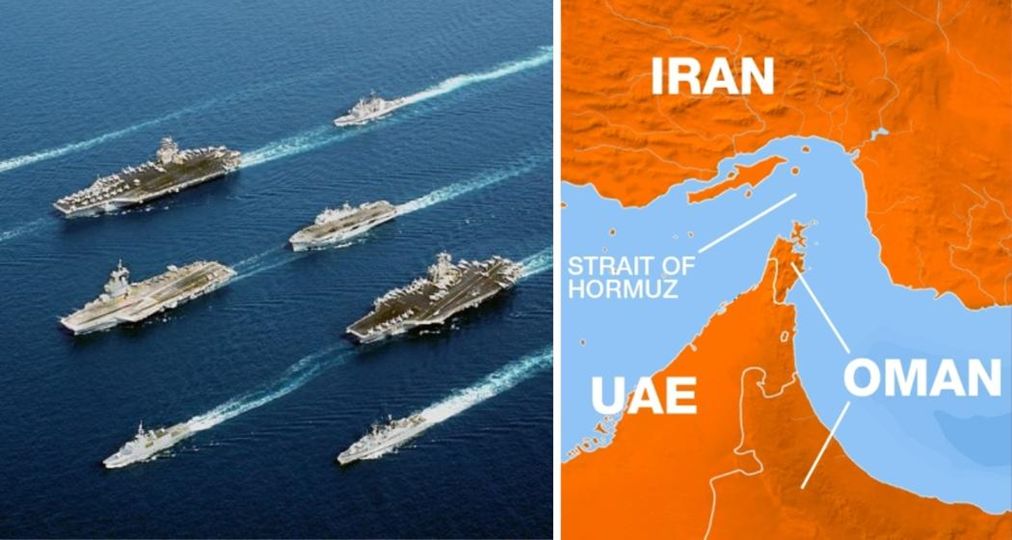
The Strait of Hormuz occupies a uniquely sensitive position in the architecture of the global political economy. Linking the Persian Gulf with the Gulf of Oman and the wider Indian Ocean, this narrow maritime corridor carries roughly one-fifth of the world’s oil supply and a substantial portion of global liquefied natural gas shipments. Its strategic importance lies not merely in its physical geography but in its vulnerability to disruption. In recent years, Iran’s actions around the strait have increasingly been interpreted as a form of economic–psychological warfare, a strategy that leverages uncertainty, financial markets, and maritime insurance regimes to exert pressure on adversaries without resorting to full-scale naval confrontation.
Economic–psychological warfare differs from traditional military conflict in that its primary objective is not territorial conquest but the manipulation of expectations and perceptions within economic systems. In the case of the Strait of Hormuz, Iran’s strategy operates through a calibrated pattern of signaling: naval exercises, the temporary harassment of vessels, rhetorical threats to close the strait, and occasional incidents involving drones, mines, or missile strikes. While these actions may appear tactically limited, their broader impact is amplified through the institutional infrastructure of global shipping and insurance markets.
Central to this dynamic is the role of maritime insurance, particularly the London-based marine insurance market centered around Lloyd’s of London. Modern global shipping cannot operate without insurance coverage; vessels, cargo, and crews require extensive financial protection against loss or damage. Within this framework, war-related risks are assessed by bodies such as the Joint War Committee, a group of marine insurance underwriters that periodically identifies “listed areas” where conflict risks are considered elevated. When a maritime region is designated as a high-risk zone, insurers impose additional war-risk premiums or, in extreme cases, withdraw coverage entirely. Iran’s strategic calculations exploit this institutional mechanism. The country does not necessarily need to physically close the Strait of Hormuz to disrupt global trade. Instead, even limited incidents can trigger cascading effects within the insurance and shipping sectors.
“The Strait of Hormuz serves as a prime example of how modern geography is converted into global leverage. By integrating maritime logistics, financial markets, and geopolitical “signaling,” Iran utilizes economic-psychological warfare to ensure local tensions have immediate global consequences. In this 21st-century landscape, strategic dominance is measured by the ability to influence market perceptions as much as by military force.”
If the strait is perceived as unsafe, insurance premiums surge dramatically, raising the cost of transporting oil and other commodities. In some cases, ship-owners may refuse to transit the region altogether if coverage becomes prohibitively expensive. Consequently, a relatively small act of maritime disruption can produce outsized consequences for global energy markets.
A broader transformation in contemporary conflict is thus revealed. Power is no longer exercised solely through military force but increasingly through the manipulation of risk regimes embedded in global capitalism. Insurance markets, financial speculation, and logistical infrastructures become instruments through which geopolitical actors can indirectly influence international trade flows. The Strait of Hormuz thus illustrates a form of asymmetric leverage, where a regional power with limited conventional naval capacity can nonetheless affect the strategic calculations of major global economies.
From the perspective of International Relations theory, Iran’s strategy can be understood as a form of chokepoint deterrence. Control over a narrow maritime passage enables a state to threaten systemic disruption without necessarily implementing it. The credibility of the threat is reinforced not by the scale of military action but by the sensitivity of global markets to uncertainty. Oil prices, shipping routes, and insurance premiums respond rapidly to perceived risk, thereby magnifying the psychological impact of limited tactical gestures.
Ultimately, the politics of the Strait of Hormuz demonstrates how the contemporary global economy transforms geography into strategic power. Through the interplay of maritime insurance institutions, financial markets, and geopolitical signaling, localized tensions can reverberate across the international system. Iran’s approach therefore exemplifies how economic-psychological warfare has become an increasingly salient feature of twenty-first-century strategic competition, where the battle for influence unfolds as much in markets and perceptions as it does on the battlefield.
(The author is Assistant Professor, Political Science at Kumaraguru College of Liberal Arts and Science, Coimbatore Tamilnadu. The views, opinions and conclusions expressed in this article are those of the author and aren’t necessarily in accord with the views of “Kashmir Horizon”)






