

We live in an era defined by relentless questioning. Every belief is scrutinized, every tradition challenged, and every inherited truth placed under intellectual trial. Social media has democratized opinion; everyone is now an author, a critic, a philosopher. In this climate, religion—especially Islam—stands at the center of intense debate. Accusations range from irrelevance to extremism, from intellectual stagnation to moral rigidity. At the same time, Islam continues to attract millions across continents. Amidst this plethora of claims and counterclaims, one must ask: does Islam merely survive criticism, or does it offer something enduringly excellent and compelling?
To explore this, we must move beyond polemics. Instead of reacting defensively or attacking skeptics, we can examine Islam on three fundamental levels: its intellectual coherence, its moral and spiritual transformation, and its civilizational contribution. A worldview that satisfies the mind, refines the soul, and elevates society deserves serious consideration.
The Intellectual Foundation| Faith, Reason: Islam’s primary source, the Qur’an, repeatedly invites reflection. It does not demand blind faith; rather, it calls upon human beings to observe the cosmos, contemplate causality, and examine their own consciousness. “Do they not reflect?” is a recurring refrain. In a time when science dominates intellectual discourse, this invitation remains relevant.
Modern cosmology suggests that the universe had a beginning. A beginning implies a cause beyond time and space. Islam describes God as eternal, uncaused, and independent—precisely the attributes philosophers associate with a necessary being. The harmony and fine-tuning of the universe also raise questions about purposeless accident versus intentional design. While debates continue, Islam presents a coherent theistic explanation: existence is not random but willed. Moreover, the human moral sense poses a profound challenge to pure materialism. If morality is merely evolutionary adaptation, then good and evil become flexible constructs. Yet most people instinctively recognize justice, compassion, and truthfulness as objectively valuable. Islam grounds these in divine reality. God is not only Creator but also Moral Lawgiver. Thus, ethical standards are not arbitrary social contracts but reflections of a higher order.
Life As Purpose, Not Accident: One of Islam’s most powerful claims is that life is meaningful. In a secular framework, existence can appear accidental and transient. Islam, however, frames life as a test—a moral and spiritual journey. Every choice carries weight. Every action echoes beyond death. This perspective transforms suffering. Pain is not meaningless cruelty but part of a larger narrative. Trials refine character, expose sincerity, and deepen reliance on God. Without transcendence, martyrdom is tragedy and sacrifice irrational. With transcendence, they become acts of profound significance. Consider the example of Ali ibn Abi Talib. Known for courage and wisdom, he reportedly knew the identity of his future assassin. When questioned why he did not preemptively eliminate the threat, his answer reflected submission to divine decree. Whether one approaches such accounts as historical narrative or spiritual symbolism, the underlying principle is striking: trust in God over fear of death. Such serenity in the face of mortality arises from deep conviction in the hereafter.
The Moral Imperative Of The Hereafter: The doctrine of resurrection and accountability is central to Islam. Without ultimate judgment, history appears morally incomplete. Tyrants may die peacefully; the oppressed may perish without justice. Islam insists that death is not annihilation but transition. Every injustice will be addressed. Every hidden act will be revealed. This belief strengthens moral responsibility. If actions carry eternal consequences, integrity becomes rational, not naive. Charity, honesty, and self-restraint are not merely socially beneficial but spiritually consequential. The early Muslim community embodied this ethic. Figures such as Fatimah and Zayd ibn Harithah are remembered for generosity, loyalty, and humility. Their stories, transmitted through centuries, depict a transformation that transcended tribal norms. Whether in poverty or power, they upheld values that even critics admire: compassion, courage, and justice.
Prophetic Character, Historical Impact: Central to Islam’s claim of excellence is the character of the Prophet himself. Muhammad is not presented merely as a preacher but as a living model of ethical conduct. Upon the peaceful conquest of Mecca—a city that had persecuted him for years—he reportedly entered with humility and declared general amnesty. In an era where victory often meant vengeance, such restraint was extraordinary. Skeptics may interpret events differently, yet even non-Muslim historians acknowledge his transformative influence. Within a single generation, a fragmented tribal society evolved into a civilization committed to law, scholarship, and spiritual discipline. The fruits of a worldview matter. A philosophy that produces moral discipline and social cohesion commands attention.
Continuity With Earlier Revelation: Islam does not position itself as an isolated phenomenon but as the culmination of a long prophetic tradition. It affirms the missions of Moses, Jesus, and Abraham. This continuity strengthens its theological narrative: the message has always been one—belief in one God and accountability before Him. In an age fractured by sectarianism, this universal claim resonates. Islam acknowledges diversity yet insists on shared moral foundations. It recognizes previous scriptures while asserting preservation in its final revelation.
“The excellence of Islam is defined by its transformative influence on the human character and society. By consistently fostering profound moral virtues, the faith moves beyond abstract theology to provide a concrete, life-changing alternative to a cynical world.”
Spiritual Depth: The Inner Dimension: Critics often evaluate religion solely by political manifestations or legal rulings. Yet Islam possesses an inner tradition devoted to spiritual refinement—known as tasawwuf or Sufism. This dimension emphasizes purification of the heart, sincerity of intention, and constant remembrance of God. Scholars such as Ibn Arabi and poets like Rumi articulated profound metaphysical insights that continue to attract global readership. Their works explore love, unity, and the human longing for transcendence. Even in secular universities, these figures are studied not merely as relics of the past but as contributors to enduring philosophical questions. Spiritual excellence, however, demands discipline. Fasting during Ramadan, nightly prayer, charity beyond obligation—these practices cultivate self-control. Unlike a delusion that flatters the ego, Islam challenges it. It requires restraint in desire, humility in success, and patience in hardship.
Civilizational Contributions: Beyond individual transformation, Islam historically fostered intellectual flourishing. From mathematics to medicine, from architecture to philosophy, Muslim civilizations contributed significantly to global heritage. While historical narratives can be contested, the broad impact is undeniable. Importantly, Islamic scholarship did not view reason as enemy. Theology, jurisprudence, and philosophy engaged Greek thought critically yet creatively. This balance between revelation and rational inquiry allowed dynamic engagement with changing circumstances. Today, Muslims grapple with modernity, globalization, and technological revolution. Failures and internal conflicts are real. Yet shortcomings of communities do not invalidate foundational principles. No ideology is judged solely by its worst adherents.
Addressing Contemporary Critiques: Modern critics such as the author of The God Delusion argue that religion is an evolutionary byproduct or psychological crutch. They point to extremism as evidence of inherent flaw. These critiques deserve thoughtful engagement. However, reductionism—explaining religion purely as biology or sociology—does not disprove transcendence. It merely describes possible mechanisms of belief. Explaining why humans believe does not determine whether what they believe is true. Moreover, the existence of misuse does not negate authentic expression. Political ideologies have produced violence, yet no one dismisses political philosophy entirely. The measure of a faith lies in its highest manifestations, not its distortions.
Why The Perception Gap? A pressing question arises: if Islam once produced moral giants, why do we not witness similar excellence widely today? The answer may lie in imbalance. When religion becomes ritual without reflection, law without love, or identity without introspection, its transformative power diminishes. Islamic tradition insists on both outer practice and inner purification. Neglect of either weakens the whole. Reviving ethical depth rather than merely defending external symbols may restore credibility in skeptical societies.
Islam In A Plural World: In a globalized age, coexistence is not optional. Islam’s historical record includes both conflict and cooperation. Its scriptural ethos emphasizes justice and dignity. Engaging constructively with pluralism requires confidence without hostility. The excellence of Islam does not lie in coercion but persuasion. It invites rather than compels. It argues rather than silences. Its scripture declares, “There is no compulsion in religion”—a principle that, when authentically upheld, aligns with universal human rights discourse.
Conclusion| Beyond Claims, Counterclaims: In the marketplace of ideas, loud voices often dominate. Yet truth is not determined by volume. Islam’s excellence emerges not merely from apologetic defense but from its integrated vision:
A rational conception of God.
A meaningful interpretation of life.
A just resolution of history through the hereafter.
A model of prophetic character.
A spiritual path of inner refinement.
A legacy of intellectual engagement.
Whether one ultimately accepts its claims or not, Islam presents a comprehensive worldview that addresses the deepest human questions with coherence and depth. In an age restless for meaning, this coherence itself is noteworthy. The debate between belief and skepticism will continue. Claims will meet counterclaims. But perhaps the more enduring measure lies in the human beings shaped by a worldview. If a faith consistently inspires humility, courage, generosity, and justice, it offers something more than illusion. In a world weary of cynicism, the excellence of Islam lies not merely in argument, but in transformation—of the mind, the heart, and society.
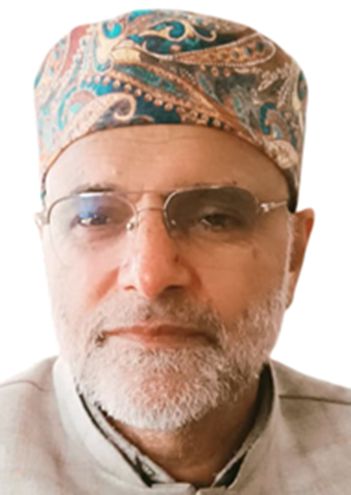
(The author a veteran academician is a former Professor and Head Department of Islamic Studies, Kashmir University. The views, opinions and conclusions expressed in this article are those of the author and aren’t necessarily in accord with the views of “Kashmir Horizon”)
[email protected]







