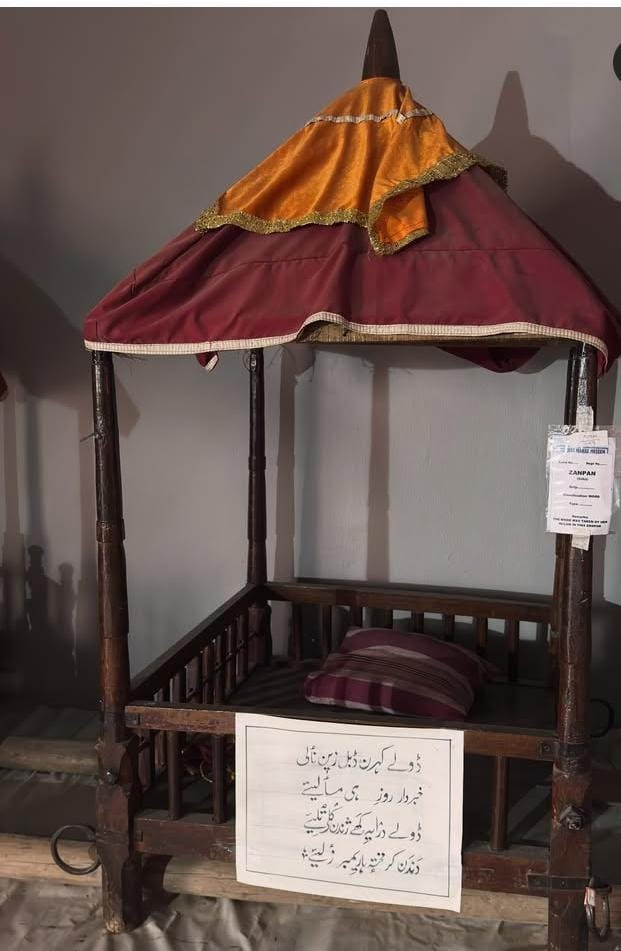
Anantnag : A centuries-old tradition once common in Kashmir is gradually disappearing as modern transport and changing lifestyles reshape social customs in the Valley. The Zanpaan, locally known as Dooli, a wooden palanquin used to carry brides, the elderly and the sick, has now almost vanished from everyday life.
In earlier decades, particularly in districts like Anantnag and Srinagar, Zanpaan served as an important means of transport in hilly areas where roads and vehicles were limited. Suspended on long poles and carried on the shoulders of two or four men, it was commonly used during weddings and for moving people across difficult terrain.
Elders recall that brides were traditionally carried from their parental homes in decorated Zanpaan during wedding ceremonies. The palanquins were usually made of sturdy wood and covered with embroidered cloth and colorful drapes, symbolizing dignity and respect.
“Before roads and vehicles reached many villages, this was the common way people travelled,” said Abdul Rahman, a 78-year-old resident of Anantnag. “Brides would leave their homes in a decorated dooli, and the whole neighborhood would gather to witness the moment.”
Apart from weddings, Zanpaan was also used to carry elderly or sick people to hospitals and to help pilgrims travel along steep or inaccessible routes in remote areas.
With the expansion of road connectivity and the increasing availability of vehicles, the traditional system gradually declined. Modern wedding processions now mostly rely on decorated cars, and the symbolic departure of brides in a palanquin has largely disappeared.
Local historians say the fading of the Zanpaan reflects broader changes in social life. As lifestyles modernize, many traditional practices that once defined community life are slowly fading away.
Unlike some handicrafts that have adapted to modern markets, the Zanpaan has almost disappeared as a transport system. Today it occasionally appears in cultural exhibitions or heritage displays and rarely during traditional-themed weddings.
Older residents also recall that carrying the palanquin required cooperation and participation from relatives and neighbors, strengthening community bonds during important family events.
For younger generations, the Zanpaan exists mostly in stories shared by elders. Few have seen an actual dooli procession.