

Reyaz Badana
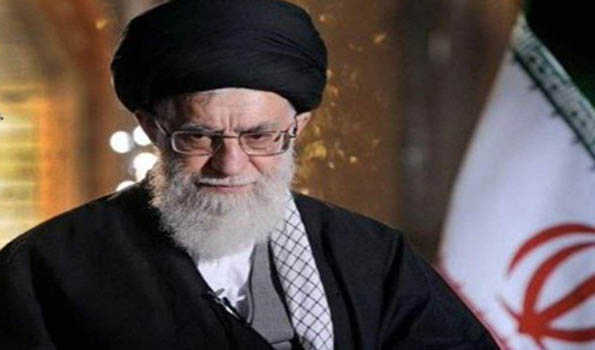
Ali Khamenei is regarded as one of the most consequential figures of the contemporary era an individual who not only left a profound and lasting imprint on the politics of his own country but also established a distinctive ideological and intellectual presence on the global stage. Serving as Iran’s Supreme Leader from 1989 onward, he guided the Islamic Republic for nearly four decades. His leadership is widely considered pivotal in sustaining the legacy of the Iranian Revolution, consolidating state authority, and shaping the balance of power in the Middle East. Born in 1939 in Mashhad, Iran, Khamenei came from a religious family. After completing his early education, he turned toward Islamic scholarship, pursuing advanced studies in jurisprudence, principles of Islamic law, and philosophy in the renowned seminaries of Qom and Mashhad. From a young age, he demonstrated a keen political consciousness. During the reign of the Shah of Iran an era marked by political repression he became actively involved in circles advocating revolutionary change.
His intellectual formation was deeply influenced by Ruhollah Khomeini. Under Khomeini’s leadership, the revolutionary movement provided Khamenei with both ideological direction and practical political engagement. His close association with the movement led to repeated arrests and imprisonment under the Shah’s regime. These experiences instilled in him a sense of resilience and a firm ideological disposition that would later define his leadership style. The 1979 Iranian Revolution marked a historic turning point in modern Muslim history. It ended centuries of monarchical rule in Iran and established an Islamic republican system. Khamenei was among the active participants and emerging leaders of the revolutionary movement. Following the revolution, he was entrusted with key responsibilities, including membership in the Supreme Defense Council and the position of Friday Prayer Leader.
In 1981, he was elected President of Iran and served until 1989. His presidency coincided with the prolonged and devastating Iran–Iraq War, a period that demanded extraordinary political and administrative resolve. Managing state affairs under wartime pressures proved to be a formidable challenge, yet it solidified his reputation as a cautious, disciplined, and pragmatic statesman.
In the immediate aftermath of the revolution, Iran dispatched representatives to various parts of the world to communicate its ideals and objectives. As part of this outreach, Ali Khamenei visited Srinagar, the capital of Kashmir, in 1980.
At the time, the people of Kashmir were familiar with the Iranian Revolution primarily through newspapers and radio broadcasts. However, the arrival of a prominent revolutionary leader intensified local interest. Upon his arrival at Srinagar Airport, he received a warm welcome. At the invitation of Mirwaiz Mohammad Farooq, he delivered a Friday sermon at the historic Jamia Masjid Srinagar. Though the speech lasted only about fifteen minutes, its depth and symbolism rendered it historically significant. Khamenei emphasized sectarian harmony, unity within the Muslim Ummah, and the foundational objectives of the Iranian Revolution. His call for Shia–Sunni unity resonated strongly within Kashmiri society. The moment transcended a routine address; it represented an intellectual bridge linking Iran and Kashmir at both religious and ideological levels.
“Ali Khamenei’s life was defined by a blend of ideological resolve and strategic political maneuvering. From symbolic early milestones like his visit to Srinagar to his long-standing leadership in Tehran, he remained a steadfast figure. Though your text notes the end of his era, it emphasizes that his intellectual and political influence continues to shape the region and global landscape.”
Supreme Leadership, Strategic Vision : Following the death of Ayatollah Khomeini in 1989, Ali Khamenei was selected as Iran’s Supreme Leader. In this role, he advanced policies centered on domestic stability, economic self-reliance, and resistance to external pressure. His speeches frequently highlighted themes such as a “resistance economy,” cultural sovereignty, and opposition to global hegemonic forces. His leadership style was characterized by institutional governance rather than populist mobilization. He preferred to operate within constitutional frameworks and state structures, shaping policy through established institutions. Iran’s foreign policy, nuclear strategy, and regional alliances bore the clear imprint of his strategic vision. Supporters viewed him as a symbol of steadfastness and ideological commitment, while critics questioned aspects of his domestic and foreign policies. Nonetheless, it is undisputed that he remained the central axis of Iranian politics for over three decades.
On 28 February 2026, Ali Khamenei was assassinated in joint U.S.–Israeli strikes amid escalating tensions in the Middle East. The incident sent shockwaves across the region and beyond. Iranian state authorities declared forty days of national mourning and a seven-day public holiday in his honor. His death triggered widespread international reactions. Iran condemned the attack as a violation of international law and signaled potential retaliatory measures. Political and religious leaders in India, and several other countries expressed condolences. In Jammu and Kashmir, demonstrations were reported in multiple cities, underscoring the transnational ideological influence Khamenei had cultivated over decades.
Khamenei’s assassination created a significant leadership vacuum within Iran. Although constitutional procedures led to the formation of an interim leadership arrangement, replacing a figure of such long-standing authority and ideological depth presents a complex challenge. He was not merely a political head of state but a symbol of state ideology, resistance doctrine, and religious authority. His departure compels Iran to recalibrate its internal stability, regional alliances, and global diplomatic posture. The broader Middle East may also experience shifts in strategic alignments as a result of this transition.
History, however, demonstrates that ideas often outlive individuals. Throughout his life, Ali Khamenei championed the principles of Muslim self-determination, resistance against oppression, and the assertion of an independent Islamic identity. His intellectual legacy continues to be debated, studied, and invoked across political and religious circles worldwide. Ali Khamenei’s life was a continuous narrative of struggle, ideological resolve, and calculated political strategy. Whether during his brief yet symbolic visit to Srinagar or throughout his extended tenure in Tehran, each chapter reflected a distinct dimension of his personality. His assassination marked the end of an era, yet his intellectual imprint remains embedded in the landscape of global politics. History is likely to remember him as a leader who remained steadfast to his convictions and decisively shaped the direction of his nation and region an influence whose echoes may continue to resonate for years to come.
(The author a social activist is a freelancer. The views, opinions and conclusions expressed in this article are those of the author and aren’t necessarily in accord with the views of “Kashmir Horizon”)







