

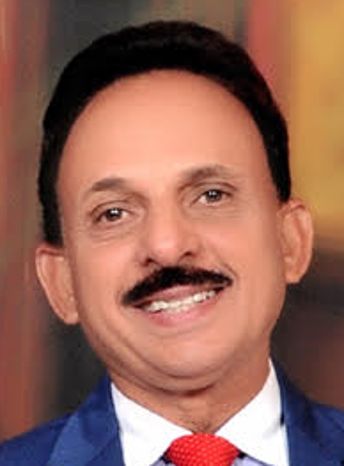
Prof R.K. Uppal
Every year on September 5, India celebrates Teachers’ Day with speeches, ceremonies, flowers, awards and social-media messages. Teachers are praised as the builders of the nation, the architects of the future and the guiding force behind every successful professional. But after the celebrations end, an uncomfortable question remains: Do we actually respect teachers, or have we reduced respect to a one-day ritual? A nation cannot genuinely honour teachers while simultaneously allowing them to work under excessive pressure, inadequate recognition, limited professional autonomy and growing administrative burdens. If teachers are the pillars of education, weakening those pillars inevitably weakens the entire educational system.
Teachers do not merely complete syllabi. They shape minds, develop character, encourage curiosity and help young people discover their potential. Behind every doctor, engineer, economist, scientist, entrepreneur, civil servant and social leader stands a teacher who contributed to that journey. The achievements of a society are therefore inseparable from the quality and dignity of its teachers.
Yet the profession is facing a serious contradiction. Society expects teachers to produce employable, innovative, ethical and technologically capable graduates, while teachers themselves are increasingly expected to perform numerous responsibilities unrelated to teaching. Administrative reporting, documentation, meetings, accreditation requirements, admissions responsibilities, examination duties, data management and institutional targets can consume valuable time that should be devoted to students and academic work.
When teaching becomes secondary to paperwork, education loses its soul. The problem becomes even more serious when teachers are treated simply as employees rather than as professionals. A good teacher needs academic freedom, intellectual space and the opportunity to experiment with new teaching methods. Excessive interference and constant monitoring can create an atmosphere of fear rather than innovation. Education cannot flourish where teachers are afraid to think differently. Another major concern is the economic insecurity faced by many educators, particularly in sections of the private higher-education sector. Highly qualified teachers may possess PhDs, NET qualifications, research experience and years of academic service, yet still face contractual employment, modest salaries, uncertain career progression and heavy workloads. In some institutions, teachers can find themselves under pressure to contribute not only academically but also to admissions, revenue generation and other institutional targets.
A teacher should not have to choose between professional dignity and economic survival. Teachers’ Day should therefore become an opportunity to examine the working conditions of educators rather than merely celebrate their contribution. The first requirement is dignity of work. Teachers deserve fair remuneration, timely salaries, transparent promotion policies and reasonable workloads. Institutions that expect quality teaching and research must create conditions in which teachers can actually deliver both.Second is academic autonomy. Teachers should be trusted as professionals. Accountability is necessary, but accountability should not become surveillance. Institutions need systems that evaluate genuine academic performance rather than simply counting attendance, meetings, forms or documents.
On Teachers’ Day 2026, let us therefore move beyond flowers, speeches and social-media posts. Let us ask whether our actions match our words. If teachers are truly the nation builders, then nation builders deserve dignity. If teachers are the pillars of society, then those pillars must be strengthened, not exploited. And if India wants an educated, innovative, ethical and developed nation, it must begin by respecting the people who educate the nation. Stop exploiting teachers. Start respecting them. Empower them. Trust them. Because when teachers rise, education rises—and when education rises, the nation rises.
Third is continuous professional development. Education is changing rapidly because of artificial intelligence, digital learning, automation and new employment patterns. Teachers must receive opportunities to update their knowledge and pedagogical skills. Technology should empower teachers, not make them feel replaceable. Artificial intelligence presents both an opportunity and a warning. AI can provide information, personalize learning and automate routine tasks, but it cannot fully replace the human dimensions of education. A machine can generate an answer; a teacher can inspire a student to ask a better question. A machine can provide information; a teacher can teach judgement, empathy, ethics and responsibility.
The future of education should not be teachers versus AI. It should be teachers empowered by AI. Teachers must also be given a stronger voice in educational policymaking. Too many reforms are designed around institutions, systems and technologies without sufficiently listening to those who stand in classrooms every day. Teachers understand students’ difficulties, learning gaps, social pressures and changing aspirations. Their experience should be treated as policy expertise. The education system must also recognize that teachers cannot transform students without institutional support. Asking educators to produce innovation while providing inadequate resources is unrealistic. Expecting world-class research without research infrastructure is equally unreasonable. Demanding employability without strong industry-academia connections places another burden on teachers.
India’s ambition to become a developed nation requires a powerful education system, and a powerful education system requires empowered teachers. There is no shortcut. Teachers’ Day 2026 should therefore mark a shift from symbolic appreciation to meaningful action. Instead of asking only how students can respect teachers, institutions and policymakers should also ask: Are teachers adequately paid? Are they professionally respected? Do they have academic freedom? Are their workloads reasonable? Are they provided modern infrastructure? Are their ideas heard? Can they balance teaching, research and personal development?
These questions are not anti-institutional. They are pro-education. It is also important for teachers themselves to embrace responsibility. Respect cannot be demanded without professional excellence. Teachers must continuously update their knowledge, adopt innovative pedagogy, maintain ethical standards, conduct meaningful research and remain connected with students and society. Rights and responsibilities must move together. But the central message must remain clear: Teachers cannot be expected to build a strong nation while being systematically undervalued. India does not need more ceremonial praise for teachers. It needs a culture that respects their time, knowledge, experience and professional judgement. It needs institutions where teachers can teach without unnecessary pressure, research without fear and innovate without excessive bureaucracy.
(The author is Principal, Guru Gobind Singh College of Management and Technology, Gidderbaha, Punjab. The views, opinions and conclusions expressed in this article are those of the author and aren’t necessarily in accord with the views of “Kashmir Horizon”)
[email protected]






