

The twentieth century confronted Muslim intellectuals with two dominant and competing global ideologies: capitalism and communism. Both emerged from European modernity, both claimed universal validity, and both offered comprehensive systems for organizing political, economic, and social life. Yet the Muslim intellectual response to these ideologies was not symmetrical. Major revivalist thinkers such as Abul A’la Mawdudi and Sayyid Qutb devoted significant intellectual energy to critiquing communism, particularly its atheistic materialism and denial of divine sovereignty. Capitalism, though certainly criticized for moral excesses, did not evoke the same degree of existential alarm. In the light of contemporary geopolitical realignments—especially the growing strategic coordination among Russia, China, and Iran—this asymmetry invites a serious reassessment. Was the early Muslim overemphasis on anti-communism strategically disproportionate? Did it underappreciate the structural power of capitalism? And what prospects might exist for future alignments between Islamic movements and Left-oriented forces in a rapidly shifting multipolar world? To appreciate the early emphasis on opposing communism, one must carefully reconstruct the historical context. Communism in the first half of the twentieth century was not merely an economic theory advocating state ownership of production; it was a militant ideological system grounded in dialectical materialism and historical determinism. It explicitly denied metaphysics, rejected transcendence, and sought to subordinate religion to political authority.
In several regions under Soviet control, religious institutions were dismantled and clerical authority marginalized. For Muslim thinkers deeply committed to tawḥīd as the foundation of civilization, communism appeared as a rival totalizing worldview. Mawdudi interpreted sovereignty (ḥākimiyyah) as belonging exclusively to God, and therefore regarded Marxist materialism as a direct assault on Islamic metaphysics. Qutb, especially in his later writings, framed modern jāhiliyyah as systems that displaced divine authority with human ideological constructs. In their intellectual universe, communism was not simply a policy alternative but a theological negation. Given the geopolitical climate of the time, this perception was understandable. The expansion of the Soviet Union and the visible repression of religious life in communist territories reinforced the view that Islam faced an existential ideological threat. Anti-communism thus became synonymous with defending faith itself. However, this intense focus on communism shaped Muslim political thought in a particular direction. Capitalism, while morally critiqued, was rarely analyzed with the same structural rigor. Islamic scholars condemned ribā, warned against exploitation, criticized colonial extraction, and cautioned against moral decadence. Yet capitalism was often seen as ethically flawed rather than ontologically hostile. It did not explicitly deny God; it permitted religious institutions to function within its framework. Therefore, it appeared reformable rather than irreconcilable.
This distinction, though coherent in its time, had long-term consequences. Capitalism’s transformative power operated subtly. It reshaped economic structures, normalized consumer culture, and entrenched global financial hierarchies without overtly attacking religious doctrine. In many Muslim-majority societies, post-colonial states became integrated into global capitalist networks through debt dependency, structural adjustment policies, and neoliberal reforms. Wealth concentration intensified, social safety nets weakened, and economic sovereignty eroded. The moral critique of capitalism proved insufficient to confront its systemic architecture. In hindsight, one may argue that while communism threatened religion overtly, capitalism reconfigured society pervasively. A contrasting intellectual current emerged in parts of Iran. Ali Shariati adopted elements of socialist vocabulary—class struggle, alienation, the plight of the oppressed—while rejecting atheistic materialism. Drawing upon Shiʿi symbolism and revolutionary memory, he framed Islamic history as a perpetual struggle against oppression. Influenced by the philosophical vision of Muhammad Iqbal, who admired Marx’s concern for justice while rejecting his deterministic materialism, Shariati articulated a synthesis in which Islam became the language of liberation. In the Iranian context, Western-backed capitalist modernization under the Shah appeared as the immediate instrument of domination. Thus, the critique of capitalism assumed greater urgency than opposition to communism.
“The transition to a multipolar world requires Islamic scholarship to evolve beyond simple ideological binaries. By developing a sophisticated political economy that addresses structural injustice through a metaphysical lens, the tradition can move from temporary tactical alliances to a principled, influential role in the new global order.”
The collapse of the Soviet Union dramatically altered the ideological landscape. The bipolar world of capitalism versus communism dissolved. China retained one-party rule but incorporated market mechanisms and global trade. Russia transitioned into a state-centered capitalist system intertwined with oligarchic structures. Contemporary alignments among Russia, China, and Iran are not rooted in classical Marxist solidarity but in strategic convergence. Their cooperation reflects shared interests in resisting Western sanctions, promoting multipolarity, and safeguarding sovereignty. Ideology, in the doctrinal sense, is no longer the principal organizing force of global blocs.
This shift compels a rethinking of earlier categories. If today’s global tensions revolve around technology, finance, sanctions regimes, and geopolitical influence rather than atheistic materialism versus religious theism, then inherited Cold War binaries appear inadequate. The emerging multipolar order demonstrates that states align pragmatically. Russia and China pursue national interests; Iran navigates complex regional dynamics. None of these actors operate primarily on the basis of Marxist doctrine.
Against this background, the early Muslim overemphasis on anti-communism can be reassessed more calmly. Theologically, the vigilance was justified. Communism directly challenged metaphysical foundations. Strategically, however, the relative underdevelopment of a comprehensive critique of capitalism left Muslim societies less prepared to confront neoliberal globalization. Islamic movements often resisted communism while functioning within capitalist economies, sometimes without articulating systemic alternatives.
The prospects for future Left–Islamic alliances must therefore be evaluated with nuance. On metaphysical questions, profound differences remain. Secular Left traditions frequently prioritize materialist analysis, whereas Islamic thought centers transcendence and moral accountability before God. Yet convergence is possible in areas of shared ethical concern. Both traditions critique economic inequality, corporate domination, and imperial interventions. Both express solidarity with marginalized communities. In various contexts, pragmatic cooperation has already emerged around labor rights, anti-war activism, and social justice initiatives.
The durability of such alliances depends on intellectual maturity.
Islamic actors must articulate social justice in ways that preserve theological integrity. Left movements must engage religious communities without reducing them to political instruments. Genuine partnership requires mutual respect and clarity about differences. Geopolitically, the Russia–China–Iran alignment signals the diffusion of global power and the emergence of multipolarity. For Muslim-majority societies, this may create space for strategic autonomy. Yet alignment with non-Western powers does not automatically ensure justice or internal reform. Authoritarianism and inequality can persist regardless of geopolitical orientation. Ethical evaluation must remain principled rather than reactive.
The future may unfold along several trajectories. Tactical cooperation between Islamic and Left forces may continue on specific issues. A deeper intellectual convergence may develop if Islamic political economy is reconstructed with greater structural clarity, engaging critically with both capitalist and socialist insights. Alternatively, alliances may remain pragmatic and state-centered, lacking normative depth. Ultimately, the reassessment of ideological priorities is not an exercise in retrospective criticism but a call for intellectual renewal. The question is not whether communism or capitalism was historically more dangerous, but whether Muslim political thought can generate frameworks adequate to contemporary realities. The emerging multipolar world presents both opportunity and uncertainty. If Islamic scholarship develops a nuanced political economy that critiques structural injustice while preserving metaphysical foundations, it may contribute meaningfully to global discourse. If not, alliances will remain tactical and transient. Revisiting ideological priorities, therefore, is essential for navigating the new global alignments. It requires moving beyond inherited binaries and cultivating analytical tools capable of addressing economic systems, power structures, and ethical imperatives simultaneously. In that endeavor lies the possibility of a more balanced and principled engagement with the evolving world order.
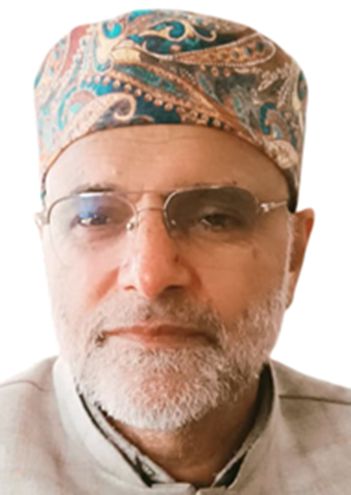
(The author a veteran academician is a former Professor and Head Department of Islamic Studies, Kashmir University. The views, opinions and conclusions expressed in this article are those of the author and aren’t ne cessarily in accord with the views of “Kashmir Horizon”)







