The month of Ramadan is the month of the Qur’an — the blessed month in which this eternal Book of guidance was revealed. Allah Almighty declares:
“The month of Ramadan is that in which the Qur’an was revealed — a guidance for mankind and clear proofs of guidance and criterion.” (Al-Baqarah 2:185)
And He says: “This is the Book in which there is no doubt; it is a guidance for the God-conscious” (Al-Baqarah 2:2). Thus, from the very beginning, Ramadan and the Qur’an are inseparably connected. One is the month of revelation; the other is the message revealed. One disciplines the body; the other illuminates the soul. And the shared objective of both is taqwa — living in the consciousness of Allah.
Allah says regarding fasting: “O you who believe! Fasting has been prescribed for you as it was prescribed for those before you, so that you may become righteous” (Al-Baqarah 2:183). Taqwa is the fruit of fasting, and it is also the condition for benefiting from the Qur’an. Ramadan trains us to restrain our desires; the Qur’an trains us to refine our beliefs and actions. Together they nurture a believer who is disciplined inwardly and guided outwardly.
Faith| Certainty Without Doubt: Faith means standing firm against every doubt, hesitation, and confusion. It is complete conviction. Allah describes true faith in these powerful words: “Say: Indeed my prayer, my sacrifice, my living and my dying are for Allah, Lord of the worlds” (Al-An‘am 6:162). In another place He says: “Say: In the bounty of Allah and in His mercy — in that let them rejoice. It is better than what they accumulate” (Yunus 10:58). People are busy collecting wealth, status, and worldly recognition. But Allah has declared that His mercy — the Qur’an — is better than everything people gather. In Surah Ar-Rahman, before mentioning the sun, moon, and worldly blessings, Allah begins: “The Most Merciful — He taught the Qur’an” (Ar-Rahman 55:1-2). The greatest mercy of Allah is not material provision — it is divine guidance.
Three Shared Characteristics Of Ramadan And Qur’an
1. Taqwa (God-Consciousness): As mentioned, fasting cultivates taqwa, and the Qur’an guides only those who possess taqwa. Both aim at purifying the inner self and awakening moral responsibility.
2. Intercession (Shafa‘ah): The Prophet (SAW) said: “Fasting and the Qur’an will intercede for the servant. Fasting will say: ‘O Lord, I prevented him from food and drink during the day.’ The Qur’an will say: ‘I prevented him from sleep at night.’ And their intercession will be accepted” (Reported by Ahmad and others).
Both become advocates for the believer on the Day of Judgment.
3. Nearness To Allah: Reciting the Qur’an brings a servant into intimate dialogue with his Lord. Likewise, Allah says in a Hadith Qudsi regarding fasting:
“Fasting is for Me, and I Myself shall reward it.” Both fasting and Qur’anic engagement elevate the believer spiritually and bring him closer to Allah.
The Special Bond Between Ramadan And The Qur’an: The Qur’an was sent down on a blessed night of Ramadan from the Preserved Tablet to the lowest heaven, and thereafter revealed gradually to the Prophet (SAW) over twenty-three years. “Indeed, We sent it down in a blessed night” (Ad-Dukhan 44:3). Each year in Ramadan, the Prophet (SAW) would review the revealed portions with Angel Jibril. In the year of his passing, he reviewed it twice (Bukhari and Muslim). This practice became the foundation of Tarawih, in which the Qur’an is recited in congregation throughout the month. During the caliphate of Sayyiduna ‘Umar (RA), congregational Tarawih with completion of the Qur’an became regularly established. The Companions and early generations showed extraordinary devotion to Qur’anic recitation in Ramadan. Imam Malik would suspend his Hadith lessons and devote himself almost entirely to recitation. Some of the pious predecessors would complete the Qur’an every three days — and even daily in the last ten nights. Ramadan is therefore not merely about abstaining from food — it is about immersing oneself in revelation.
“The global pandemic disrupted long-held assumptions about religious practice, revealing that while physical mosques may close, the Qur’an remains an unwavering source of guidance. Drawing on the philosophy of Allama Iqbal, the text argues that the Ummah’s challenges stem from a failure of “reception” rather than revelation. Ultimately, the Qur’an serves as a living constitution meant to spark a revolution within the heart, which is the true starting point for any meaningful transformation.”
The Five Rights Of The Qur’an: The Qur’an has five fundamental rights over every believer:
1. Belief : To believe that it is the final Word of Allah, revealed through the Prophet (SAW) as guidance until the Day of Judgment.
2. Recitation: Tilawah means “to follow.” True recitation is not only with the tongue, but with the heart and limbs. The Prophet (SAW) said: “Whoever recites a letter from the Book of Allah receives one good deed, and each good deed is multiplied ten times.” (Tirmidhi)
3. Reflection: Allah asks: “Do they not reflect upon the Qur’an, or are there locks upon their hearts?” (Muhammad 47:24). The Qur’an invites contemplation — of the universe, history, and the human soul. Understanding its language deepens its impact.
4. Action: Faith and righteous action are inseparable in the Qur’an. The early Muslims did not treat it as ceremonial recitation — they became living embodiments of it. That is why they rose from weakness to leadership.
5. Conveying The Message: The Prophet (SAW) said: “I leave among you two things; if you hold fast to them, you will never go astray: the Book of Allah and my Sunnah.” Scholars describe the Qur’an as the rope of Allah — one end with Allah, the other with humanity. Holding firmly to it prevents misguidance.
Hazrat Ali (RA) narrated that when asked about protection from future trials, the Prophet (SAW) replied: “The Book of Allah. In it is the news of those before you and after you, and judgment concerning matters among you. Whoever abandons it, Allah will break him; whoever seeks guidance elsewhere will be led astray.”
It is: The firm rope of Allah, The wise reminder, The straight path, A Book whose wonders never end, A Moment of Reflection. In Ramadan, millions recite the Qur’an in mosques, homes, and gatherings. Yet we must ask ourselves: Why do hearts not tremble? Why are eyes dry? Why is there little transformation in character? During global trials like the Coronavirus pandemic — when even sacred mosques were closed — we realized how fragile our assumptions were. We never imagined a Ramadan without open mosques or congregational Tarawih. Such moments are wake-up calls. The Qur’an remains unchanged. The guidance remains alive. The deficiency lies not in revelation — but in reception. Allama Muhammad Iqbal reminded the Ummah that the Qur’an is its true constitution and living wisdom — eternal and transformative. This Qur’an speaks more to the heart than to the intellect. And true revolution begins in the heart.
Returning To The Living Qur’an: In this blessed month: Cleanse your heart with the remembrance of Allah, Remove spiritual rust through recitation and reflection, Read the Qur’an as its first listeners read it — ready to change, Live it, embody it, and share it, Ramadan disciplines the body, The Qur’an awakens the soul, Together they rebuild the Ummah. May Allah grant us lives illuminated by fasting and guided by the Qur’an. May He restore to us its light, strength, honor, and healing. May He open the doors of our mosques and the doors of our hearts.
Ameen!
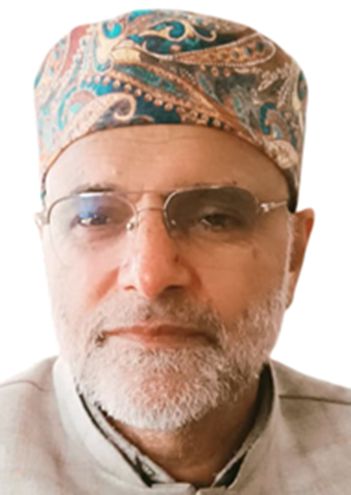
(The author a veteran academician is a former Professor and Head Department of Islamic Studies, Kashmir University. The views, opinions and conclusions expressed in this article are those of the author and aren’t necessarily in accord with the views of “Kashmir Horizon”)
[email protected]