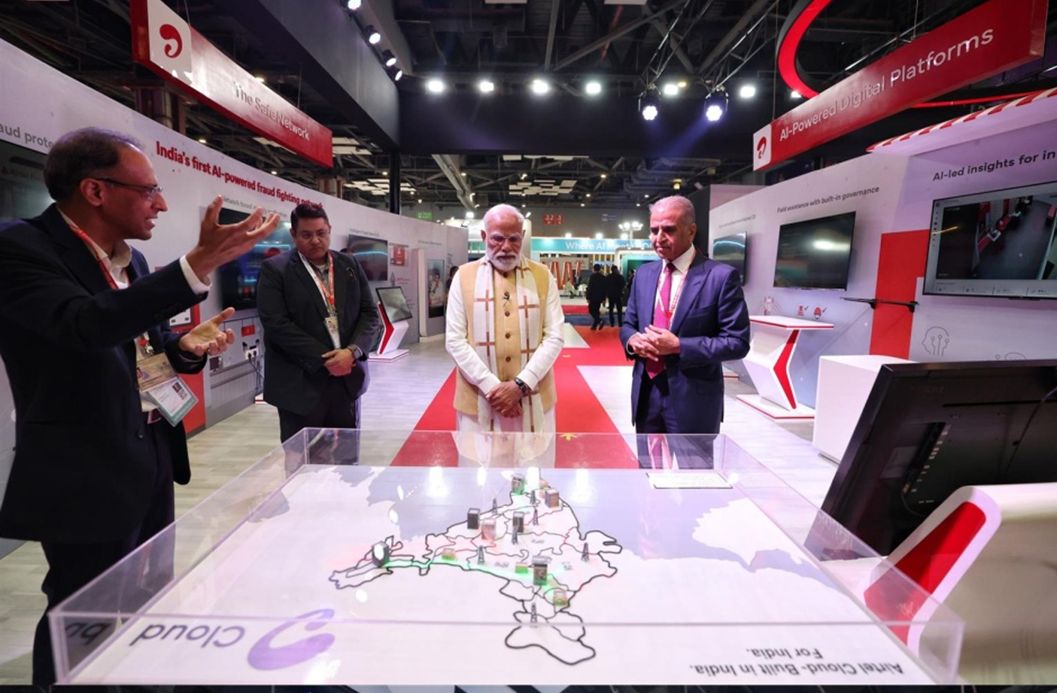
Srinagar: This week, in KH Snippets, our focus was on the India AI Impact Summit 2026, held at Bharat Mandapam in New Delhi, which concluded with landmark policy announcements, strategic global partnerships and multi-trillion-rupee investment commitments positioning India at the forefront of the artificial intelligence revolution.
PM Modi Unveils MANAV AI Framework: Prime Minister Narendra Modi introduced the MANAV framework — standing for Moral, Accountable, National, Accessible and Valid — outlining India’s sovereign AI vision. Emphasising “whose data, his right,” the framework prioritises data sovereignty, ethical governance and human-centric AI development. The model seeks to balance innovation with accountability and global cooperation.
Launch Of Indigenous AI Models: To reduce dependence on foreign technologies, three major indigenous AI platforms were unveiled. BharatGen, a 17-billion-parameter multilingual model, was launched alongside Sarvam AI’s large language models and Gnani.ai’s voice AI supporting 12 Indian languages. These launches signal India’s push toward building homegrown AI capabilities tailored to local linguistic and social needs.
Global Tech Leaders Announce Major Plans: Global technology leaders endorsed India’s AI ambitions with major commitments. Sundar Pichai announced plans for a full-stack AI hub in India under a $15 billion infrastructure initiative, while Sam Altman praised India as OpenAI’s second-largest market, highlighting rapid adoption and innovation potential. The endorsements reinforced India’s emerging status as a central node in the global AI ecosystem.
₹10 Lakh Crore AI Investment By Reliance: In one of the biggest announcements, Reliance Industries Chairman Mukesh Ambani committed ₹10 lakh crore over the next seven years to build India’s AI ecosystem. The investment will focus on establishing gigawatt-scale AI-ready data centres in Jamnagar and deploying a nationwide edge computing network through Jio. The move is expected to significantly expand India’s digital infrastructure and computing capacity.
India Joins US-Led “Pax Silica” Alliance: In a strategic geopolitical development, India formally joined the US-led “Pax Silica” alliance — a coalition of nine nations including the United Kingdom, Japan and Australia. The alliance aims to secure global semiconductor supply chains and critical minerals while reducing dependence on non-aligned countries. The move strengthens India’s position in the global semiconductor and high-tech manufacturing landscape.