

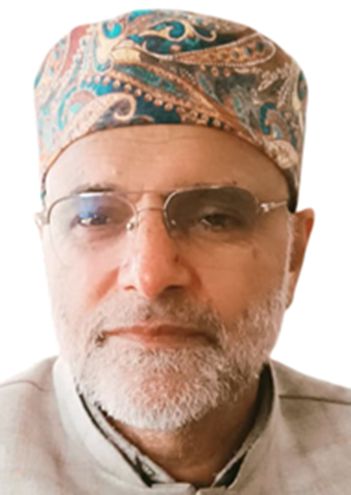
A One Day International Seminar on “Knowledge Transmission between the Arab World and South Asia” was held on 7 February 2026 at the Seminar Hall of Chandraketugarh Sahidullah Smriti Mahavidyalaya (CSSM), West Bengal, on the occasion of World Arabic Language Day. The seminar was organized by the Department of Arabic and the Internal Quality Assurance Cell (IQAC), Chandraketugarh Sahidullah Smriti Mahavidyalaya, in collaboration with the Calcutta University Arabic Alumni Association, and was conducted in a hybrid mode, enabling participation from scholars and academicians both within India and abroad. One of the central highlights of the seminar was the address delivered by me as the Guest of Honour, Department of Islamic Theology, Aliah University. My address provided a comprehensive intellectual framework for understanding the historical and contemporary significance of Arabic as a trans-civilizational language and its pivotal role in facilitating knowledge transmission between the Arab world and South Asia.
Drawing upon historical scholarship and classical sources, I emphasized that Arabic is not merely a linguistic medium but a civilizational instrument shaped by revelation, rational inquiry, and ethical reflection. As the language of the Qur’an and the Prophetic tradition, Arabic became the primary vehicle for the formulation and transmission of Islamic theology, jurisprudence, ethics, philosophy, and the natural sciences. Over the centuries, it evolved into a universal scholarly language that transcended ethnic, cultural, and geographical boundaries.
The address noted that the recognition of Arabic by UNESCO as one of the official world languages and the observance of World Arabic Language Day reflect the global acknowledgment of Arabic’s immense contribution to human knowledge. From the early Islamic centuries, Arabic functioned as the backbone of intellectual exchange, extending from Andalusia in the West to South Asia in the East. It served as a language of translation, synthesis, critique, and original authorship, absorbing and refining knowledge traditions from Greek, Persian, Syriac, and Indian sources.
A major focus of the address was the enduring relationship between Arabic and the Indian subcontinent.I clarified that while Persian played a significant role in administration, historiography, and literary culture, Arabic remained the authoritative language of the religious and rational sciences. Disciplines such as Qur’anic exegesis, Hadith studies, jurisprudence, legal theory, theology, logic, philosophy, astronomy, and medicine were all firmly rooted in Arabic. Consequently, meaningful engagement with South Asia’s Islamic intellectual heritage requires direct access to Arabic sources.
The address traced the historical interaction between the Arab world and South Asia, noting that although early contacts were established through trade, the advent of Islam transformed these interactions into systematic scholarly exchanges. Arab scholars, jurists, and Sufi figures introduced Arabic texts, pedagogical methods, and intellectual disciplines to the subcontinent. Madrasas, mosques, and khānqāhs emerged as important centers of Arabic learning, while South Asia simultaneously contributed its own intellectual resources to the broader Islamic world.
“The seminar at Chandraketugarh Sahidullah Smriti Mahavidyalaya highlighted Arabic’s historical role as a civilizational bridge. It argued that reviving Arabic as a dynamic academic language is vital for overcoming modern cultural polarization and fostering a shared, ethical intellectual future.”
A key example highlighted in the address was Abū Rayḥān al-Bīrūnī’s Kitāb al-Hind, composed in Arabic. This work was presented as a landmark in comparative and cross-cultural scholarship, offering a rigorous and empathetic study of Indian sciences, philosophies, and religious traditions. It exemplified Arabic’s capacity to function as a language of objective inquiry and intercivilizational understanding.
The Guest of Honour further underscored South Asia’s role as a major center of Arabic authorship. Works such as Shah Waliullah of Delhi’s Ḥujjatullāh al-Bālighah were cited as outstanding examples of Arabic intellectual production in the subcontinent. Written in refined Arabic, the text presents a sophisticated synthesis of Qur’anic wisdom, Hadith, jurisprudence, and social ethics, and continues to be studied in academic institutions across the Arab world.
In the field of Hadith studies, the address drew attention to seminal Arabic works produced by South Asian scholars, including Fayḍ al-Bārī by Shaykh Anwar Shah Kashmiri and Tuhfat al-Aḥwadhī bi Sharḥ Jāmiʿ al-Tirmidhī by Shaykh Abū al-ʿUlāʾ al-Mubārakpūrī. These works were presented as authoritative contributions that demonstrate South Asia’s mastery of Arabic as a language of advanced scholarship rather than mere transmission.
The address also highlighted the extensive scholarly networks that connected South Asia with major centers of learning in Makkah, Madinah, Cairo, Damascus, and Baghdad. Through travel, study, and intellectual exchange, South Asian scholars remained deeply integrated within the broader Arabic-Islamic scholarly tradition. In the modern period, the continuation of this legacy was illustrated through the contributions of Maulana Abul Hasan ʿAli Nadwi, whose Arabic writings introduced the intellectual and spiritual realities of South Asian Islam to the Arab world. His works addressed the moral and civilizational challenges of modernity and reaffirmed Arabic’s relevance as a living language of reform and thought. Special reference was made to the historical role of Bengal as a center of Arabic learning, manuscript preservation, and scholarly exchange. The address emphasized that institutions in the region have played a crucial role in sustaining Arabic scholarship, a tradition that continues to be upheld by Chandraketugarh Sahidullah Smriti Mahavidyalaya and similar academic institutions.
In conclusion, based on the Guest of Honour’s address delivered on 7 February 2026 at Chandraketugarh Sahidullah Smriti Mahavidyalaya, the seminar reaffirmed that Arabic historically functioned as a bridge between civilizations. In an age marked by intellectual fragmentation and cultural polarization, the revival and reinvigoration of Arabic as a dynamic academic language remains essential for meaningful scholarly dialogue and ethical engagement. The seminar underscored that Arabic is not merely a language of the past but a gateway to a shared intellectual future.
(The author a veteran academician is a former Professor and Head Department of Islamic Studies, Kashmir University. The views, opinions and conclusions expressed in this article are those of the author and aren’t necessarily in accord with the views of “Kashmir Horizon”)







