

A significant academic seminar bringing together scholars from India and abroad was held recently at Aligarh Muslim University from 2 February 2026 focusing on questions of historiography, ideology, and civilizational analysis in the study of society and religion. Organised under the Advanced Department of History , the seminar reflected AMU’s long-standing tradition of critical inquiry and intellectual openness. The deliberations explored diverse methodological approaches to history, with particular attention to Marxist historiography, classical Islamic contributions to the philosophy of history, and contemporary global perspectives on social theory. The seminar was marked by rigorous discussions and sustained scholarly engagement, situating historical inquiry at the intersection of philosophy, social sciences, and religious thought. Scholars examined how historical narratives are shaped, the limits of ideological interpretations, and the need for methodological balance in understanding social change. The sessions attracted faculty members, research scholars, and postgraduate students, contributing to a vibrant academic atmosphere.
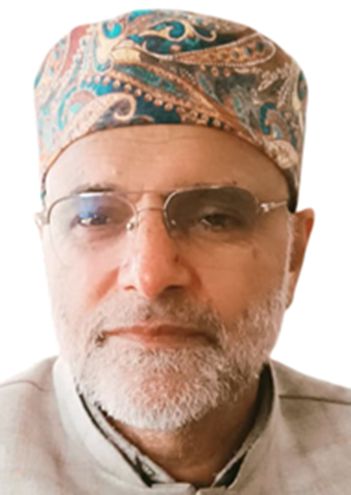
One of the central academic moments of the seminar was the presentation of a paper by me , and examined Marxist historiography in a critical and analytical framework. This paper explored the intellectual foundations of Marxist historical materialism, tracing its emphasis on economic structures, class relations, and modes of production as driving forces of historical development. While acknowledging the analytical strength of Marxist tools in uncovering power relations and material conditions, the paper also engaged critically with the limitations of economic determinism when applied universally across cultures and civilizations. I highlighted how Marxist historiography, while offering a powerful critique of capitalism and class exploitation, often risks reducing complex historical realities to single causal factors. I argued that societies are shaped not only by material conditions but also by ethical values, religious worldviews, cultural practices, and intellectual traditions.
Drawing upon comparative perspectives, the paper suggested that a more nuanced historiography must integrate material analysis with moral, spiritual, and civilizational dimensions. The presentation generated thoughtful discussion among participants, particularly on the relevance of Marxist categories in non-Western and religiously informed societies. In addition to presenting my paper,I also presided over one of the key academic sessions of the seminar. As session chair, I facilitated scholarly exchange with clarity and balance, ensuring that discussions remained focused, inclusive, and analytically rigorous. The session brought together multiple perspectives on historiography, civilizational studies, and social theory, reflecting the interdisciplinary character of the seminar. The session chaired by me featured international presenters, whose participation added a global dimension to the discussions. Among them was Prof. Abdelaziz Berghout, Professor of Philosophy and Civilizational Studies, who spoke on methodological issues in understanding civilization as a dynamic and moral process rather than a mere accumulation of historical events. His presentation emphasized the importance of ethical frameworks and collective values in shaping civilizational trajectories, drawing attention to the limits of purely material or positivist approaches to history.
Another international presenter, Prof. Syed Farid Al Attas, Professor of Sociology at the National University of Singapore, addressed comparative historiography with reference to non-Western intellectual traditions. His paper underscored the significance of classical Muslim thinkers, particularly Ibn Khaldun, in developing an analytical science of society long before the emergence of modern Western sociology. Prof. Al Attas argued that revisiting such traditions can help decolonize knowledge and challenge Eurocentric assumptions embedded in contemporary social sciences. The session also included a presentation by Dr. Nur Ayn, an academic researcher in Islamic thought and social theory, who examined the relevance of civilizational analysis in understanding modern social crises. Her paper highlighted how historical consciousness, when grounded in ethical responsibility and methodological rigor, can contribute to more humane and balanced social theories. A recurring theme throughout the seminar was the distinction between narrative history and analytical history. Several presenters emphasized that history should not be reduced to a mere chronological recording of events but should instead seek to uncover underlying patterns, causes, and social laws. This approach resonated strongly with classical Islamic historiography, particularly the work of Ibn Khaldun, whose concept of ʿIlm al-ʿUmrān (the science of civilization) was discussed extensively during the sessions.
“The seminar at Aligarh Muslim University served as a rigorous interdisciplinary forum, bridging Marxist, Islamic, and civilizational perspectives on history. By hosting international scholars and prioritizing critical inquiry, the event underscored the vital role of the humanities in navigating modern challenges. It ultimately framed historical study as an essential intellectual tool for responsible engagement with both the present and the future.”
Speakers noted that Ibn Khaldun’s method represented an early attempt to study society scientifically, integrating economics, politics, culture, and morality into a coherent analytical framework. His insights into the rise and decline of civilizations, social cohesion, and power dynamics were compared with modern theories, including Marxism, sociology, and political economy. The discussions highlighted both convergences and divergences between these traditions, encouraging participants to move beyond rigid ideological frameworks.
The seminar also addressed the problem of bias in historiography, particularly how ideological commitments—whether religious, nationalist, or materialist—can shape historical interpretation. Participants stressed the need for scholarly objectivity, methodological self-awareness, and openness to multiple perspectives. In this context, Marxist historiography was discussed not as a doctrine to be accepted or rejected wholesale, but as a critical tool that must be employed with caution and contextual sensitivity.
Another important dimension of the seminar was its engagement with interfaith and intercultural dialogue. By bringing together scholars of theology, philosophy, sociology, and history, the event fostered conversations across disciplinary and intellectual boundaries. The discussions demonstrated how historical inquiry can serve as a bridge between different traditions, enabling mutual understanding without erasing intellectual differences. The role of academic institutions like Aligarh Muslim University in sustaining such dialogue was repeatedly emphasized. Participants noted that AMU’s historical legacy as a center of reformist and critical thought continues to shape its academic culture. Seminars of this nature, they observed, contribute not only to scholarly advancement but also to the broader intellectual life of society by encouraging critical reflection on ideology, power, and ethics. As the seminar progressed, discussions increasingly turned toward contemporary relevance. Speakers reflected on how historical methodologies influence present-day political and social discourse, including debates on capitalism, social justice, religion, and identity. The need for historically informed perspectives in addressing modern crises—economic inequality, cultural fragmentation, and moral uncertainty—was underscored as one of the key takeaways of the event.
In my concluding observations as session chair ,I highlighted the importance of methodological plurality in historical studies. He noted that no single framework can adequately explain the complexity of human societies and that meaningful scholarship requires dialogue between traditions rather than intellectual isolation. His remarks encapsulated the spirit of the seminar, which sought not to promote a particular ideology but to deepen understanding through critical engagement.
Overall, the seminar stood out as a serious academic exercise marked by intellectual rigor, respectful dialogue, and interdisciplinary breadth. By examining Marxist historiography alongside Islamic and civilizational approaches to history, the event offered participants a richer understanding of how societies interpret their pasts and envision their futures. The presence of international scholars further enriched the discussions, situating local academic concerns within a global intellectual context. Such scholarly gatherings reaffirm the relevance of the humanities and social sciences in an age often dominated by technical and instrumental knowledge. They remind us that understanding history is not merely about the past but about cultivating the intellectual tools needed to engage responsibly with the present. In this sense, the seminar at Aligarh Muslim University contributed meaningfully to ongoing debates on history, ideology, and civilization, reinforcing the university’s role as a space for thoughtful and critical inquiry.
(The author a veteran academician is a former Professor and Head Department of Islamic Studies, Kashmir University. The views, opinions and conclusions expressed in this article are those of the author and aren’t necessarily in accord with the views of “Kashmir Horizon”)






