
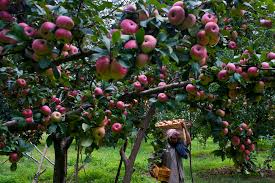
Jammu : Horticulture is not merely an agricultural activity in J&K it is the backbone of the rural economy here. Among its many produce, apple occupies a central place, supporting lakhs of farming families and anchoring allied livelihoods across the length and breadth of thevalley and some districts of Jammu region. Yet, despite producing apples renowned for their quality, the economic structure surrounding the crop remained constrained for decades. Traditionally, the apple economy of Jammu & Kashmir operated within a narrow and unforgiving window. Harvest season brought urgency rather than opportunity. With limited access to scientific grading, storage or organised marketing, fruit flooded the market in a short span, softening prices. Growers, even those producing premium-quality apples, had little say over when, where or at what value their produce would be sold.
That imbalance is being addressed through the interventions of HADP Under the Holistic Agriculture Development Programme (HADP), being implemented by the Agriculture Production Department (APD), the apple sector is being reorganised not as a seasonal activity, but as an integrated value chain, linking planting material, orchard design, post-harvest management and market access into a single economic framework.
The response from growers has been strong. HADP Project–21, focused on the ‘Production of designer plants for high-density plantations and orchard rejuvenation’, has received over 10,000 applications, with 4,500 approvals and more than 1,500 units already established across apple-growing districts within the first two years of implementation.
Rebuilding The Chain From The Root: One of the most consequential changes under HADP is taking place at the very beginning of the apple lifecycle, often out of public view. In several parts of south Kashmir, traditional nursery growers, once operating at small and informal scales, have transitioned into integrated propagation enterprises. Rootstock banks, mother orchards and modern nursery units are now supplying large volumes of uniform, disease-free planting material, supporting both orchard rejuvenation and high-density plantations. In one such instance, a nursery operator who earlier served a limited local market now supplies rootstocks, budwood and “designer” apple plants at volumes sufficient to support commercial orchards across multiple districts. The significance lies not merely in individual enterprise growth, but in what it enables—uniform orchards, predictable yields, faster adoption of modern planting systems and reduced long-term risk for growers.
When Design Matters More Than Land: The economic impact of this shift becomes most visible inside the orchard. High-density apple plantations promoted under HADP are demonstrating that productivity is no longer determined by landholding size alone. In central Kashmir, growers who earlier cultivated apples across hundreds of kanals under traditional systems are now reporting higher annual returns from a fraction of that land under high-density layouts. Uniform tree structure, concentrated output, consistent fruit size and improved quality are reshaping labour use, input efficiency and income outcomes. Gradually, this experience is influencing how growers evaluate their orchards by shifting the focus from how much land is under apples to how that land is designed, managed and connected to the market.
Capturing Value After Harvest : If orchard design determines potential, post-harvest systems determine outcomes. For years, the absence of scientific grading and storage meant that even superior-quality fruit was sold at averaged prices. HADP is changing this equation by bringing grading closer to the orchard gate. In several districts, small, locally run grading units now handle tens of thousands of apple crates each season, allowing quality differences to be identified rather than diluted. Thereby improving price realisation while generating steady rural employment. Parallel investments in controlled-atmosphere (CA) storage and refrigerated transport are giving growers greater flexibility over market timing. Decisions that were once driven by compulsion at harvest are increasingly shaped by demand trends and price signals. This transition has been reinforced by improved logistics connectivity. In 2025, Jammu & Kashmir dispatched its first railway-borne apple consignment from the Valley marking a structural expansion in market access and reducing dependence on road-based movement alone.
From Infra To Intelligence: Infrastructure alone does not change outcomes unless matched by information. Recognising this, HADP has embedded market and risk intelligence into the apple value chain through the Kisan Khidmat Ghar (KKG) digital ecosystem. Growers now have access to live mandi prices from major terminal markets, enabling them to track price movements in real time rather than rely on delayed or informal channels. An apple price forecasting model offers early indications of likely price trends by variety and grade, helping growers and entrepreneurs plan harvesting, grading, storage and sale strategies more effectively. The same platform is being used to anticipate production risks. Disease and pest forecasting, covering scab and key insect pests, is linked to local weather data, enabling orchard management to shift from post-damage response to timely, preventive action. This improves fruit quality while reducing avoidable losses and unnecessary input costs. Together, these intelligence tools convert physical infrastructure into strategic capacity. Apples are no longer moved simply because they must be sold; they are graded, stored or released based on signals that growers can see, interpret and act upon. Improved access to real-time market information has also coincided with a sharp rise in participation on national trading platfor E-NAM transaction values in Jammu & Kashmir have increased from ₹14 lakh in 2020–21 to over ₹670 Cr in the current financial year, reflecting deeper integration with national markets.
Lower Costs, Safer Produce : Alongside market reforms, HADP is addressing growing consumer concerns around pesticide use through targeted interventions aimed at cost and risk reduction. Model orchards are being developed to demonstrate how improved canopy management, precise spraying techniques and need-based application can significantly reduce chemical use without compromising yield or quality. Early results indicate that pesticide costs can be lowered while maintaining productivity by offering growers an economic incentive to adopt safer practices. Officials emphasise that the focus is not on certification or labels, but on demonstrating cost advantages that can be replicated widely across apple-growing regions.
From Transactions To Decisions : What ultimately connects these interventions is a shift in decision-making. Growers who once reacted to the market are increasingly able to plan by choosing when to harvest, whether to grade, whether to store and when to sell. This change is being reinforced through structured skilling and advisory systems that promote enterprise thinking rather than subsidy dependence.
The result is a gradual but meaningful transfer of control back to producers and local enterprises.
A System Taking Shape: Individually, none of these interventions is entirely new. What is unprecedented is their alignment. Nursery systems feed modern orchards; orchards supply uniform fruit; grading and storage enable quality-based pricing; and logistics reduce movement risk. With apple production exceeding 21 lakh metric tonnes annually, even modest improvements in grade distribution and market timing carry substantial economic impact. More importantly, they build resilience by helping growers absorb shocks and price volatility with greater confidence. Notably, practices such as high-density plantations and improved post-harvest handling are increasingly being adopted even without government subsidy, indicating that their economic logic is beginning to stand on its own. The apple economy of Jammu & Kashmir is still evolving, but its direction is now clear. By addressing long-standing constraints across the value chain, HADP is steering the sector away from distress-driven outcomes towards more deliberate and informed participation in the market. That shift is visible in nurseries, orchards and grading floors across the region marking the much anticipated transformation currently underway.