Plastic waste management units planned around Yatra transit camps
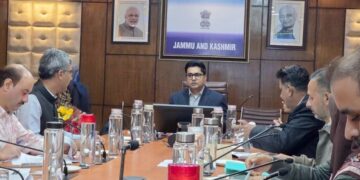
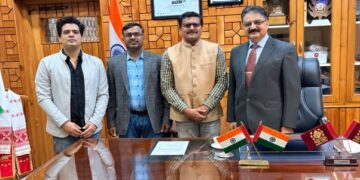
Srinagar: Secretary, Rural Development Department (RDD) and Panchayati Raj, Mohammad Aijaz Asad, Thursday chaired a high-level meeting to review the progress of the Swachh Bharat Mission–Gramin (SBM-G) and to deliberate on the formulation of the Annual Implementation Plan (AIP) 2026–27 for Jammu and Kashmir. The meeting was attended by Director General, Rural Sanitation, Anoo Malhotra; Additional District Development Commissioners (ADDCs); Superintending Engineers and Executive Engineers of REW; Assistant Commissioners Panchayats (ACPs); and other concerned officers.
Review the SBM-G Asad spoke about positive progress in community-level initiatives such as Community Compost Pits, Soak Pits, Sanitary Complexes, and Segregation Sheds, adding therein that however, larger infrastructure projects, including Plastic Waste Management Units (PWMUs) and Faecal Sludge Treatment Plants (FSTPs), are experiencing delays due to insufficient tendering and slow execution. The Secretary emphasized the importance of establishing PWMUs near Yatra transit camps to enhance sanitation and waste management, which would also aid in revenue generation and maintenance of Yatra infrastructure. Districts like Rajouri, Jammu, Reasi, Samba, and Udhampur have shown significant advancements in tender finalization and the completion of sanitation assets, while Bandipora and Kupwara are also improving, reflecting better coordination at the district level. The Secretary highlighted the urgent need for a permanent solution to debris management in rural and semi-urban areas and directed immediate completion of tendering for pending major assets, with a focus on resolving land-related issues. To ensure effective implementation, the Secretary mandated bi-weekly reviews of SBM-G asset progress and emphasized the critical nature of land availability and timely project initiation. District Commissioners were tasked with addressing persistent land issues, while engineering officials were instructed to prioritize the resolution of DPR-related challenges. The meeting also reviewed the progress of Individual Household Latrines (IHHLs) for 2025–26, stressing the importance of geo-tagging and timely clearance of long-pending cases to maintain ODF sustainability. Under the GOBARdhan initiative, plans for 18 biogas plants were discussed, with the Secretary urging expedited tendering and better contractor engagement to align with sustainable waste management goals. The status of Operations & Maintenance (O&M) and Faecal Sludge and Septage Management (FSSM) policies was reviewed, with draft policies currently under legal examination, highlighting their importance for the long-term sustainability of SBM-G assets. Looking ahead to the AIP 2026–27, the Secretary called for realistic planning and prioritization of incomplete works, particularly in large waste-management infrastructure. He urged a shift from target-centric implementation to a results-oriented approach, focusing on the timely completion and effective utilization of sanitation assets to sustain the achievements of SBM-G in rural Jammu and Kashmir. ADDCs were instructed to oversee unresolved land issues and conduct regular district reviews to ensure progress.