

Swami Vivekananda’s engagement with Islam represents one of the most respectful and insightful appreciations of the faith by a modern Indian thinker. His reflections emerge not from superficial observation, but from careful study, lived experience, and a deep concern for humanity’s moral and social uplift. Vivekananda approached Islam with intellectual honesty and moral seriousness, recognizing in it a living religious force that has shaped civilizations, transformed societies, and sustained the dignity of millions across centuries. His praise of Islam focuses particularly on its commitment to equality, brotherhood, moral discipline, and social cohesion—qualities he regarded as essential for any religion claiming universal relevance.
At the heart of Vivekananda’s admiration lies his conviction that no religion could survive across history unless it contained profound truth and enduring goodness. Islam, for him, was not merely a historical phenomenon but a living testimony to the power of ethical ideals translated into social reality. He repeatedly affirmed that “the good alone lives,” and that Islam’s vitality itself proves its intrinsic worth.
The Prophet Muhammad (SAW)as the Messenger of Equality and Brotherhood
Swami Vivekananda spoke of Prophet Muhammad (SAW)with deep respect, repeatedly emphasizing his role as a prophet of equality and brotherhood. He regarded the life of the Prophet as a concrete demonstration of social justice, human dignity, and moral courage. According to Vivekananda, Muhammad (SAW)did not merely preach equality; he lived it, embodied it, and institutionalized it within a community bound together by shared faith and ethical responsibility. Vivekananda highlighted the fact that in the Islamic vision there is no room for distinctions based on race, color, lineage, or social origin. He admired how Islam welcomed individuals from all backgrounds into a single brotherhood, bound not by blood or ethnicity but by shared moral commitment. In his writings, he repeatedly underscored that among Muslims, “there was no question of race, caste, creed, colour, or sex,” and that this radical equality was among the greatest achievements of Prophet Muhammad (SAW).
For Vivekananda, this universal brotherhood was not a theoretical ideal but a lived social reality. He saw in Islam a powerful moral force capable of dissolving deeply entrenched hierarchies and restoring human dignity. In praising the Prophet, Vivekananda recognized him as a transformative leader whose message reshaped society by affirming the worth of every human being.
Islam as a Living Religion of Social Equality
One of the most consistent themes in Vivekananda’s appreciation of Islam is its practical realization of equality. He regarded Islam as a religion that successfully translated moral ideals into social structures. In his view, Islam stands as a remarkable example of how religious belief can generate solidarity, discipline, and mutual respect among diverse peoples.
Vivekananda observed that when an individual embraces Islam, the entire Muslim community receives that person as a brother or sister, without hesitation or reservation. This immediate inclusion impressed him deeply, as it reflected a level of social integration rarely achieved by other religious traditions. He noted that within the Islamic world, social mobility is not blocked by birth or race, and that merit and character hold genuine significance.
This ethical universality led Vivekananda to describe Islam as a religion that acts upon its ideals. Its emphasis on communal prayer, shared rituals, and collective identity fosters a strong sense of unity and mutual responsibility. For Vivekananda, such cohesion was not incidental but central to Islam’s enduring strength.
Brotherhood as the Moral Core of Islam
Vivekananda repeatedly identified brotherhood as the essential heart of Islam. While acknowledging the diversity of beliefs and practices within the Muslim world, he insisted that the defining feature of Islam is its insistence on fraternity among believers. This brotherhood, in his view, transcends geography and culture, binding Muslims into a global moral community.
He admired how Islam cultivates a sense of belonging and shared purpose, ensuring that no individual stands isolated or abandoned. The Islamic emphasis on collective worship and communal obligation reinforces the idea that faith is not merely a private matter but a shared ethical commitment. For Vivekananda, this emphasis on brotherhood had profound social implications. It countered alienation, reduced social fragmentation, and fostered a sense of moral accountability. In a world increasingly marked by division and inequality, he saw in Islam a powerful model of social solidarity rooted in spiritual conviction.
“Swami Vivekananda deeply admired Islam for its commitment to human equality, social justice, and brotherhood. He viewed Prophet Muhammad (SAW) as a transformative leader who successfully merged spiritual conviction with ethical action. By highlighting Islam’s role as a moral force for social cohesion, Vivekananda’s perspective serves as a timeless call to overcome prejudice and embrace a more unified, equitable society.”
Islam And The Dignity Of Women: Swami Vivekananda was particularly keen to correct widespread misconceptions about Islam, especially regarding the status of women. He explicitly rejected the claim that Islam denies women spiritual dignity or the possession of a soul. Based on his study of the Qur’an, he affirmed that there is not a single word in the Qur’an that denies women their spiritual status. He expressed regret that such misconceptions were perpetuated, often out of prejudice rather than genuine understanding. Vivekananda’s defense of Islam on this point reflects his broader commitment to intellectual fairness and interreligious respect. He acknowledged that while Muslim societies, like all societies, may struggle with social issues, the foundational texts of Islam affirm the spiritual humanity of women. This acknowledgment forms part of his larger appreciation of Islam as a religion grounded in moral seriousness and ethical intention, rather than caricature or distortion.
The Qur’an As A Source Of Moral , Ethical Guidance: Vivekananda recognized the Qur’an as a living scripture that has shaped the ethical consciousness of vast populations. He approached it not as a foreign or antagonistic text, but as a genuine expression of humanity’s search for meaning, order, and moral direction. He consistently affirmed that Islam, like other great religions, possesses a “living heart”—a core of spiritual vitality that sustains it across generations. The continued relevance of the Qur’an, in his view, testifies to its moral depth and its capacity to address fundamental human concerns.
Vivekananda’s respect for the Qur’an was rooted in his broader philosophy that all enduring religions express aspects of a universal spiritual truth. For him, the Qur’an stands as one such expression, offering guidance, discipline, and ethical clarity to its followers.
Islam As A Practical Force For The Masses: A key aspect of Vivekananda’s praise lies in his recognition of Islam’s practical orientation. He repeatedly emphasized that lofty philosophies alone cannot uplift humanity unless they are accompanied by disciplined action and social organization. In this regard, he regarded Islam as exceptionally effective. Islam’s emphasis on daily practice, moral accountability, and communal responsibility impressed Vivekananda as a religion deeply attuned to the needs of ordinary people. Its clarity of belief and simplicity of structure enable it to guide large populations without excessive abstraction. For Vivekananda, this practical strength made Islam an indispensable force in the moral education of humanity. He believed that its emphasis on equality, discipline, and social cohesion rendered it uniquely capable of addressing the ethical challenges faced by societies.
Islam As A Universal And Enduring Religion: Vivekananda consistently rejected the notion that Islam was a narrow or sectarian faith. On the contrary, he regarded it as a universal religion, capable of embracing people from all backgrounds and cultures. Its historical expansion, he argued, was not merely political but moral, driven by its capacity to offer dignity, belonging, and purpose.
He emphasized that the survival and vitality of Islam across centuries prove that it has fulfilled its spiritual mission. Despite historical challenges, internal differences, and external opposition, Islam has retained its moral core and continues to inspire devotion and ethical commitment.
Conclusion: Swami Vivekananda’s appreciation of Islam is marked by sincerity, depth, and moral clarity. He recognized in Islam a religion that powerfully affirms human equality, fosters brotherhood, upholds moral discipline, and sustains social cohesion. His praise of Prophet Muhammad (SAW)as a messenger of equality reflects his admiration for leadership grounded in ethical action and social transformation. For Vivekananda, Islam stands as a living testament to the possibility of uniting spiritual conviction with social justice. His reflections invite readers to move beyond prejudice and superficial judgment, and to recognize Islam as a profound moral force in human history. In an age still struggling with division and inequality, Vivekananda’s respectful and affirmative vision of Islam remains both relevant and inspiring.
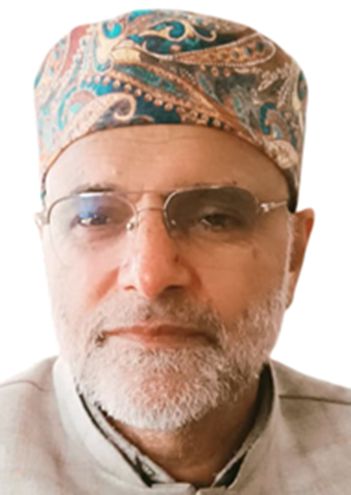
(The author a veteran academician is a former Professor and Head Department of Islamic Studies, Kashmir University. The views, opinions and conclusions expressed in this article are those of the author and aren’t necessarily in accord with the views of “Kashmir Horizon”)
[email protected]







