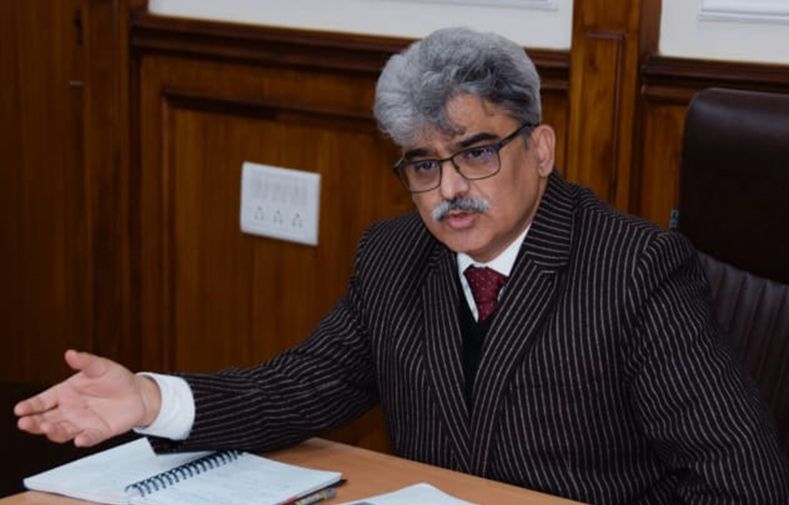
Jammu : Chief Secretary, Atal Dulloo Thursday chaired the 9th Executive Council Meeting of the Jammu & Kashmir Rural Livelihood Mission (JKRLM) to undertake a comprehensive review of its performance under the UMEED (National Rural Livelihood Mission – NRLM) framework and to chart out a roadmap for strengthening rural livelihoods and women-led development across the UT. The meeting was attended by Secretary, Rural Development Department (RDD); Managing Director, JKRLM; Director General (Resources); Director General (Budget); Chief Operating Officer, HIMAYAT; Convenor, UTLBC, and other senior officers of the department.
During the deliberations Chief Secretary emphasized the need to enhance credit linkages and strengthen Self Help Groups (SHGs) to transform them into sustainable rural enterprises, highlighting that enterprise development is the primary goal of SHG formation. He called for the establishment of Community Managed Training Centres (CMTCs) in every district to provide high-quality training for SHG members, fostering an environment for skill acquisition and development. Financial inclusion at the grassroots level was underscored, with directives to increase the income of Banking Correspondents (BCs) and to onboard Common Service Centres (CSCs) and J&K Bank to boost transaction volumes. The Chief Secretary urged the effective utilization of the Lal Ded Stree Shakti Scheme and Mission YUVA, setting a target to double the number of ‘Millionaire Didis’ from 50 to 100 within six months. The Secretary of RDD reported that the UMEED program is active in 285 blocks across Jammu & Kashmir, mobilizing over 784,000 rural households into 96,000 SHGs, which are further organized into Village Organizations and Cluster Level Federations. Significant financial support has been provided to community-based organizations, with over ₹2,912.66 Cr in bank credit accessed by SHGs since 2013-14, enhancing financial inclusion and livelihood opportunities. The Managing Director of JKRLM shared that the Start-up Village Entrepreneurship Programme (SVEP) has supported 8,231 rural enterprises, with ₹18.71 Cr disbursed as Community Investment Fund (CIF). Farm-based livelihood interventions have benefited over 515,000 women farmers through improved agricultural practices. In the current financial year, achievements have surpassed targets for SHG support and financial assistance. The Lal Ded Stree Shakti Scheme has sponsored 2,356 cases, with 709 already sanctioned, providing entrepreneurial support to women. Doorstep banking services have engaged 710 SHG members as Banking Correspondents, enhancing rural banking outreach. The Lakhpati Didi Mission has identified 2.60 lakh potential beneficiaries, with over 2.01 lakh women transformed into LakhpatiDidis through skill development and financial support. Key interventions include skill training for 17,511 SHG members and the promotion of SHG products through exhibitions and e-commerce platforms. The roadmap for JKRLM includes focusing on enterprise scaling, cluster-based growth, and financial literacy, alongside exposure visits to successful livelihood models in other states and the establishment of processing units in various districts.