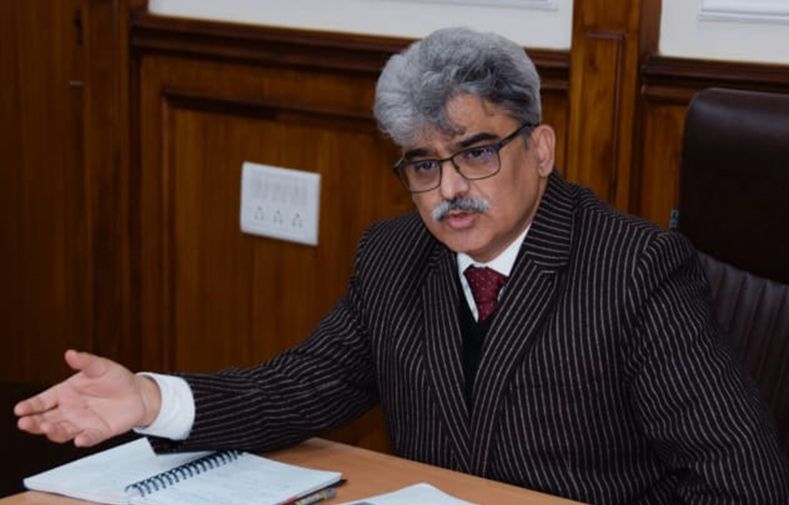
Jammu : Chief Secretary, Atal Dulloo today presided over a meeting of the Multi-Disciplinary Committee (MDC) on Traffic Management Systems for Jammu and Srinagar, to take a comprehensive look at the measures already undertaken and those proposed for easing congestion, strengthening road safety, and improving overall urban mobility in both cities. The meeting witnessed participation of senior administrative and police officials, including ACS, PWD, Principal Secretary, Home; Commissioner Secretary, H&UDD; Divisional Commissioner, Jammu/Kashmir; IGP, Traffic; Secretary, Transport; DIG, Traffic, Jammu/Kashmir; SSPs Traffic, Srinagar/Jammu; Commissioner, Municipal Corporation, Jammu/Srinagar; VC, LCMA; Vice-Chairman, JDA/SDA, besides officers from other concerned departments.
During recent deliberations, the Chief Secretary emphasized the need for immediate and targeted interventions in Jammu and Srinagar to improve the commuter experience, given their status as key tourist destinations. He highlighted the importance of timely execution of traffic management plans and the early implementation of Intelligent Traffic Management Systems (ITMS) and Integrated Traffic Light Systems (ITLS). The Divisional Commissioners were tasked with closely monitoring these initiatives and addressing any identified bottlenecks based on feedback from citizens and stakeholders. Chief Secretary also reviewed the current status of traffic improvement initiatives, with Divisional Commissioners reporting on various measures taken, including traffic diversions, new roundabouts, strategic traffic signals, enhanced parking facilities, and the establishment of dedicated bus stops. They also discussed the regulation of honking zones and the planned introduction of dedicated corridors for minibuses, along with additional charging points for electric buses. Concerns regarding traffic violations, particularly lane discipline, were raised by the Chief Secretary, who called for strict enforcement actions. The Transport Commissioner reported on the identification of 9,204 repeat offenders through e-challans, with 600 driving licenses already suspended. The meeting also covered efforts to decongest city roads, including zoning for e-rickshaws and the implementation of one-way traffic in select areas. The municipal corporations of Jammu and Srinagar provided updates on urban space management, including the establishment of designated hawker zones and the relocation of street vendors. The Chief Secretary instructed all departments to provide detailed accounts of their on-ground measures, particularly in areas with high tourist traffic, emphasizing the need for designated parking and the use of smaller vehicles to alleviate congestion. Further discussions included plans for expanding road capacity through elevated corridors and flyovers, constructing multi-level parking structures, and removing encroachments that hinder traffic flow. Road safety measures were also reviewed, focusing on the establishment of no-honking and no-parking zones, construction of medians, and addressing identified black spots. The Chief Secretary inquired about the operational status of a newly procured bus fleet aimed at enhancing public transportation. The meeting also addressed the procurement of enforcement equipment for traffic police and discussed manpower concerns, safety audits for school buses, and improvements in urban transport planning. The Secretary of Transport highlighted capacity-building initiatives supported by national institutions to train stakeholders in urban mobility and transport management. The Chief Secretary reiterated the importance of coordinated efforts among all departments, stressing that improved logistics and mobility planning are crucial for sustainable urban development. Progress is being tracked through the e-Samiksha portal, with a focus on implementing citizen-centric solutions to achieve lasting improvements in traffic conditions in Jammu and Srinagar.