Raipur Rises as the Nerve Centre of India’s Security Future
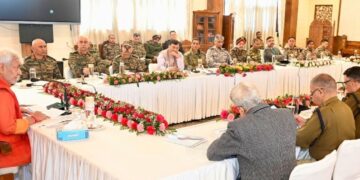
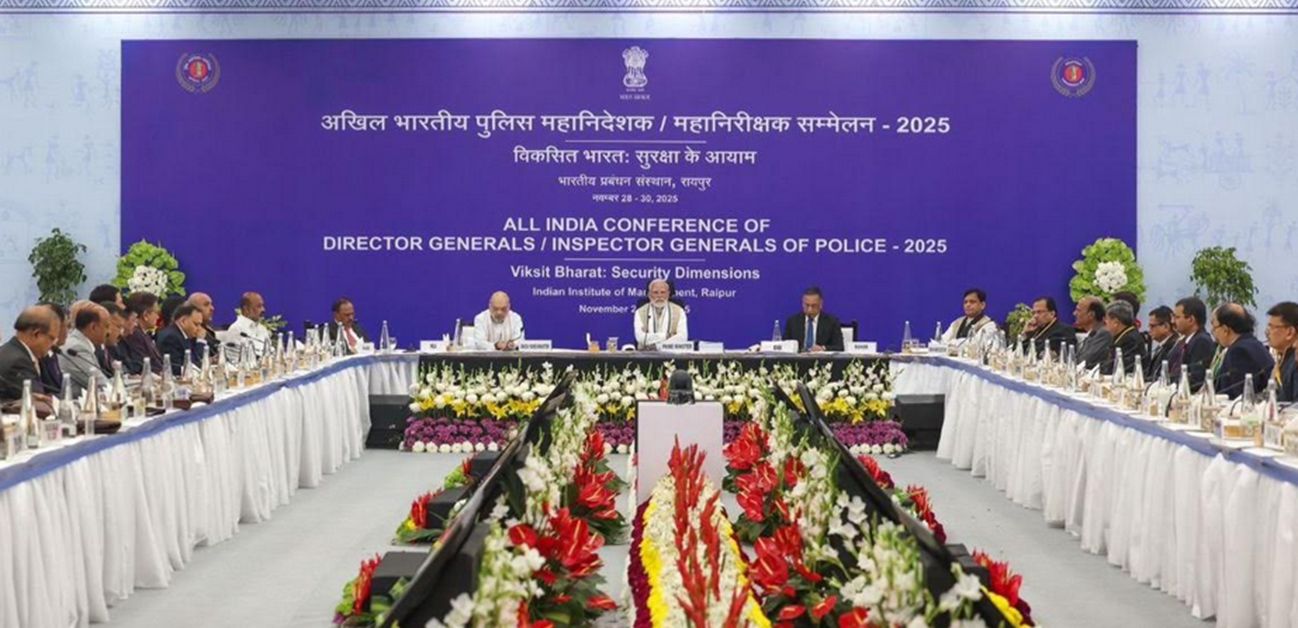
Srinagar: Prime Minister Narendra Modi on Saturday chaired the 60th annual conference of Directors General and Inspectors General of Police in Raipur, marking one of the most crucial national-level security deliberations in recent years. The three-day conclave—held at the Indian Institute of Management Raipur—drew senior police leadership from across India for intensive discussions on evolving internal security challenges, policing reforms, and future-ready law enforcement strategies.
PM Holds Marathon Closed-Door Security Review: According to government officials, the Prime Minister spent several uninterrupted hours in closed-door sessions on Saturday, engaging directly with the country’s top police and intelligence officers. The closed-door format, a hallmark of the conference, enables candid discussions on sensitive national security concerns—from insurgency to cyber warfare—without public glare. This year’s edition witnessed a record number of participants, with nearly 600 officers attending. The increased scale, officials said, signals the government’s emphasis on widening the national security conversation and incorporating diverse on-ground experiences from different parts of the country.
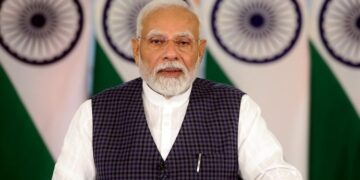
A Forum For Best Practices, Collaborative Policing: Addressing the conference, Modi called the annual gathering “a great forum to share best practices and innovations,” urging police forces to adopt technology-driven tools and strengthen cooperation between states and central agencies. He highlighted that India’s security architecture must evolve rapidly to keep pace with new forms of crime, cross-border threats, and the expanding digital landscape. Modi, who arrived in Raipur late Friday night, joined early morning sessions on Saturday and interacted with officers across ranks. He stressed that policing should move beyond a reactive, force-centric approach to more intelligence-backed, predictive models powered by artificial intelligence and forensic science.
Top Security Brass In Attendance: Among the key attendees were National Security Advisor Ajit Doval, Intelligence Bureau Director Tapan Kumar Deka, and CBI Director Praveen Sood, along with Directors General of Police from all states and representatives of central police organisations. Their presence, officials noted, underscores the importance the central government places on coordinated national security responses. The platform allowed intelligence and law enforcement agencies to evaluate the progress of existing action plans and discuss emerging patterns in extremism, narcotics trade, and organised crime.
PM Modi Highlights Security Reforms In Social Media Post: After the first day’s sessions, Modi took to social media platform X to share his thoughts. He wrote that the Raipur sessions had seen “extensive deliberations on different aspects of India’s security system,” adding that the conference has become synonymous with interactive dialogue and collective problem-solving. His message reflected the Centre’s focus on building a collaborative security environment rather than a siloed, agency-centric approach.
HM Amit Shah Flags ‘Permanent Solutions’ To National Security Challenges: Union Home Minister Amit Shah inaugurated the conference on Friday, asserting that the government had delivered “permanent solutions” to several long-standing security problems, including Naxalism, challenges in the Northeast, and the situation in Jammu and Kashmir. Citing official data, he said that the number of Naxal-affected districts in the country had drastically reduced over the past decade. Shah credited a combination of political resolve, development-driven governance, and coordinated policing for weakening left-wing extremism. He also emphasised that security forces must remain vigilant, as the remnants of such movements often attempt to reorganise in smaller pockets.
Call For All-Out War On Narcotics: During his address, Shah issued a clarion call for a “360-degree fight” against narcotics and organised crime. He urged police forces to collaborate seamlessly with the Narcotics Control Bureau and other agencies to dismantle entire drug and trafficking networks. “Strike at the roots. Go after the masterminds, not just the couriers,” he told delegates, underscoring the need for intelligence-led investigations and inter-state coordination. He warned that drug cartels have increasingly adopted digital platforms, cryptocurrencies, and encrypted communication systems—making traditional policing tactics inadequate.
Raipur Meet Takes Place Amid Rising Urban Terror Concerns: This year’s conference is particularly significant as it follows the busting of a “white-collar” terror module linked to the car blast near Delhi’s Red Fort on November 10, which killed 15 people. The incident, involving sophisticated planning and technology-based execution, has reignited national discussions on urban radicalisation, sleeper cells, and digital recruitment. These themes are expected to receive considerable attention in the closed-door sessions, with agencies sharing intelligence on evolving terror networks that operate beyond conventional extremist frameworks.
Theme|‘Viksit Bharat – Security Dimensions’: The overarching theme for this year’s conclave is “Viksit Bharat: Security Dimensions,” aligning national security strategies with India’s broader developmental vision. Session topics include left-wing extremism, counter-terror operations, border security, cybercrime, disaster preparedness, women’s safety, and the increasing relevance of advanced forensic tools. Officials said that with India’s rapid digital expansion, the police need to embrace data analytics, automated surveillance, and cyber forensics as essential components of everyday law enforcement.
Wider Representation|Young Officers Included For First Time: Breaking from tradition, this year’s conference has expanded participation to include home secretaries of states and Union territories as well as officers at the DIG and SP levels. This inclusion, organisers said, aims to decentralise policymaking and bring field realities to the table. Senior officials believe that these insights from mid-level officers—those who directly manage district-level policing—will offer practical perspectives on crime patterns, community policing, and resource challenges.
A National Barometer OF Internal Security: Over decades, the annual police chiefs’ conference has served as a vital national barometer for internal security. Each year, officers evaluate past performance, outline new action plans, and present recommendations to the Prime Minister for follow-up action. The conclave has historically influenced national strategies on terror management, border policing, cyber readiness, and internal disturbances.
Showcasing Innovations, Best Policing Practices: Delegates from states and Union territories are also showcasing best practices adopted in their jurisdictions. These include innovations in crime analytics, community policing models, emergency response systems, and training upgrades. Officials say cross-learning of this nature has helped many states modernise their police forces and streamline administrative processes.
Conference Venues Taken Beyond Delhi Since 2014: Since 2014, the Modi government has intentionally moved the conference outside Delhi to foster local engagement and break the capital-centric approach. Previous venues have included Guwahati, Hyderabad, Pune, Lucknow, Jaipur, Bhubaneswar, and the Rann of Kutch. This year’s venue—Raipur, once a Naxal stronghold—carries symbolic weight, highlighting the region’s improved security landscape.
Focus on Tech-Driven Policing, Emerging Threats: Saturday’s discussions were dominated by themes such as cybersecurity, AI-enabled surveillance, predictive analytics, drone technology, and integrated intelligence frameworks. Officers also examined disaster response coordination, cross-border smuggling trends, and the need for specialised cyber units in every state.
PM to Deliver Valedictory Address Today The Sunday: The conference will conclude on Sunday with Modi’s valedictory address, during which he is expected to outline a roadmap for a “Surakshit Bharat,” emphasising accountability, innovation, and inter-agency coordination. His closing remarks traditionally set the tone for policing priorities in the coming year.