
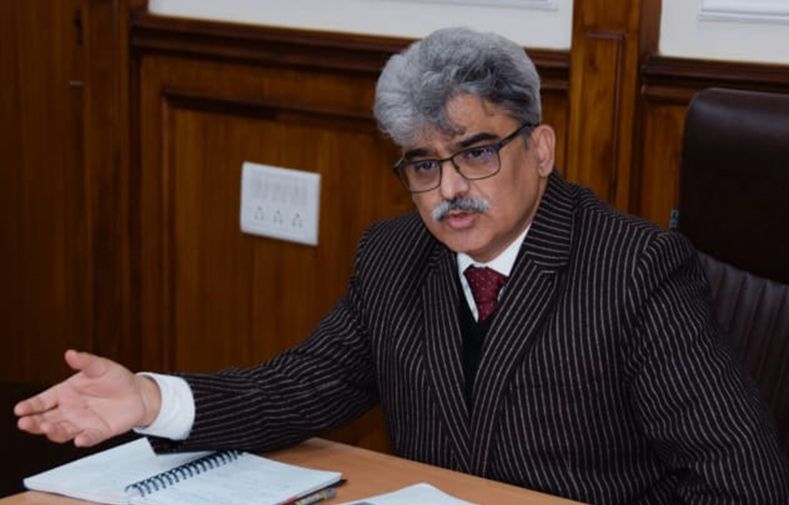
Srinagar: Chief Secretary Atal Dulloo on Monday mandated the Forest Department to implement geo-tagging of all water bodies in Jammu and Kashmir to enhance their protection, conservation, and management. This directive was issued during a high-level meeting focused on the Jal Shakti Abhiyan: Catch the Rain (JSA: CTR) campaign, which aims to improve water conservation efforts across the Union Territory. The meeting was attended by top officials from various departments, emphasizing the importance of collaboration among the Jal Shakti Department, Forest Department, and Rural Development Department to identify and geo-reference water bodies within a month.
Addressing the meering Dulloo highlighted the urgency of this initiative, stressing the need to complete the geo-tagging before winter to inform future conservation strategies. He called for immediate action to address climate change challenges and secure water resources for future generations, urging all departments to fulfill their roles in the Catch the Rain program. Additional Chief Secretary Shaleen Kabra noted that the Jal Shakti Abhiyan is transitioning from planning to community-driven implementation, with water security and sustainability as its primary goals. He reported that District Water Conservation Plans have been developed for all 20 districts and are available on the JSA Portal, providing a scientific basis for effective water management. The meeting also reviewed progress in several districts and discussed post-monsoon reports from Central Nodal Officers. The campaign focuses on five key interventions: water conservation and rainwater harvesting, renovation of water bodies, water reuse and recharge structures, watershed development, and intensive afforestation. Officials confirmed that the campaign promotes inter-sectoral convergence, utilizing existing resources and funding without requiring separate JSA funds. The ‘Catch the Rain’ initiative is a critical component of the government’s strategy to combat water scarcity and ensure sustainability, advocating for a comprehensive approach that integrates scientific planning, geo-tagging, and community involvement to enhance climate resilience and water security for future generations.