By Aamir Ahmad Teeli
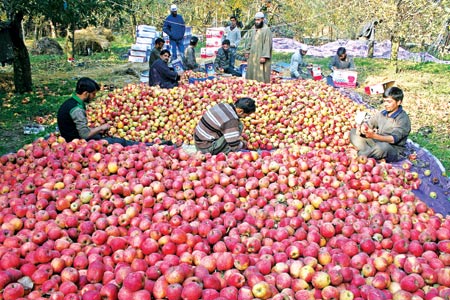
Scenario: Kashmir’s economy breathes through its orchards. Jammu & Kashmir is the largest producer of apples in India, contributing more than 70% of total production. Apples alone support more than 35 lakh people, and contribute significantly to the UT’s GSDP. Prices have collapsed. A premium five-layer apple box which earlier used to be worth ₹1,200 now fetches barely ₹500 other grades have been witnessing the same. Meanwhile, costs of pesticides, packaging, and transport have soared. This season has been not less than a nightmare for the growers of valley as they have suffered massive losses. Blame game has been going on as some blame poor road connectivity—with the Srinagar-Jammu highway often closed—but also while some other believe it to be deliberate attempt for economic or political moves.
Impact: While the immediate losers are the farmers, as a year’s worth of labor now returns less than their costs. But the damage will not stop there. If this trend continues, apple orchards may face the same fate as kashmiri almonds have faced. Once a major crop, almonds disappeared from Kashmir after years of price collapse. Farmers cut down their trees and moved on. Apples could be next. If that happens, the shock will first hit exporters, forwarding agents, and transporters—those who earn far more from the apple business than an ordinary apple grower earns. Entire chains of economic activity from output, to employment will be at risk. And in the long run, even current political regimes cannot escape the blame and impact. People will remember which government looked away while Kashmir’s apple economy was strangled.
“Kashmir’s apple industry is vital, supporting the livelihoods of lakhs of people, providing regional pride, and significantly contributing to India’s economy. Addressing the current crisis is crucial to prevent the collapse of this key agricultural sector.”
Way Out: It is high time to act now. All stakeholders—growers, exporters, forwarding agents, and transporters—must raise their voice together. The government must step in with urgent measures:
Introduce MSP For Apples To Protect Farmers From Price Crashes: A Minimum Support Price (MSP) for apples will ensure that growers receive a guaranteed return, shielding them from market manipulation and sudden price collapses. This policy can give farmers financial stability and encourage them to sustain apple cultivation.
Expand Cold Storage In Every District, And Subsidize Small Units For Farmers: Building government cold storage facilities in all districts will allow growers to store produce and sell it later at better prices. Alongside this, subsidies for small-scale cold stores can empower farmers to preserve their harvest at the village level.
Fix transport bottlenecks, ensuring the Srinagar-Jammu highway stays open year-round: The Srinagar-Jammu highway is the lifeline for perishable apple shipments, but frequent closures delay consignments and cause massive losses. Developing alternate routes and ensuring all-weather connectivity can safeguard timely transport of apples to outside markets.
Provide Relief Through Kcc Loan Waivers For Struggling Farmers: Many apple growers are burdened with debts under the Kisan Credit Card scheme, unable to repay after successive price crashes. Partial loan waivers or restructuring can ease their financial distress and restore confidence in continuing cultivation. Kashmir’s apple is more than a fruit—it is the livelihood of lakhs, the pride of a region, and a vital part of India’s economy. Ignoring this crisis today could mean losing the orchard belt tomorrow.
(The author Ph D Scholar is a freelancer. The views, opinions and conclusions expressed in this article are those of the author and aren’t necessarily in accord with the views of “Kashmir Horizon”)
[email protected]