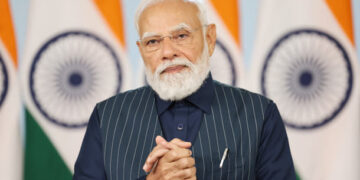
New Delhi : Prime Minister Narendra Modi on Tuesday expressed profound concern over the escalating violence in Nepal, which has resulted in at least 22 fatalities and the resignation of Prime Minister KP Sharma Oli. Emphasizing the importance of stability, peace, and prosperity in Nepal, Modi called on the Nepali citizens to promote calm amidst the unrest.
In a message on social media platform “X” Prime Minister lamented the loss of young lives and urged unity for peace. The violence erupted as security forces clashed with demonstrators attempting to storm parliament, leading to the use of rubber bullets and tear gas. Following the turmoil, the government lifted a prior social media ban, yet protests persisted despite an indefinite curfew. Oli, in his resignation to President Ramchandra Paudel, stated his intention to facilitate a political resolution to the crisis. Paudel has initiated discussions to appoint a new prime minister and has reached out to protest leaders for dialogue. The protests, characterized as “Gen Z demonstrations,” have mobilized tens of thousands of young Nepalis who are voicing grievances over government corruption, economic inequality, and lack of opportunities. With over 20% of the population living in poverty and youth unemployment exceeding 22%, the discontent is palpable. Protesters defied curfews, engaged in violent confrontations with police, and targeted political figures, leading to significant unrest, including the temporary closure of Kathmandu’s main airport due to smoke from fires. The political landscape in Nepal remains precarious, with a history of instability since the abolition of the monarchy in 2008, resulting in 14 different governments. Modi’s concerns are underscored by India’s strategic interests in the region, particularly in light of China’s increasing influence in Nepal. The current unrest not only highlights the internal challenges facing Nepal but also poses implications for regional stability and India’s diplomatic relations.