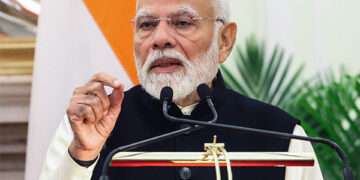
New Delhi: Prime Minister Narendra Modi on Wednesday termed rationalization of the Goods and Services Tax (GST) the biggest reform since Independence, saying therein that it aims to benefit the middle class by reducing taxes on various items and eliminating them entirely for essential goods such as bread and life-saving medications.
Saying that the reform being the “biggest reform since Independence,” will transition from four tax slabs to two, effective September 22, coinciding with the start of Navratri, Prime Minister Modi in his address at the National Teachers Awards emphasized the positive impact of these changes, suggesting that the upcoming Dhanteras celebration will be more vibrant due to the financial relief provided by the new GST structure. He reiterated his commitment to implementing next-generation GST reforms, which he had previously promised during his Independence Day address, aiming to enhance India’s global standing and promote self-reliance.
The GST reforms are built around five key principles, referred to as “Panch Ratna,” which include simplifying the tax system, improving citizens’ quality of life, boosting consumption and economic growth, fostering investment and job creation through easier business operations, and reinforcing cooperative federalism for a more developed India. Modi also criticized the previous Congress government for its extensive taxation on essential goods, contrasting it with the current administration’s approach to support citizens. The recent GST Council announcement has led to reduced taxes on a range of items, including food, medicines, essential goods, agricultural products, green energy, and small vehicles. Notably, life and medical insurance, life-saving drugs, and staple food items like dairy products and bread will now be tax-free.