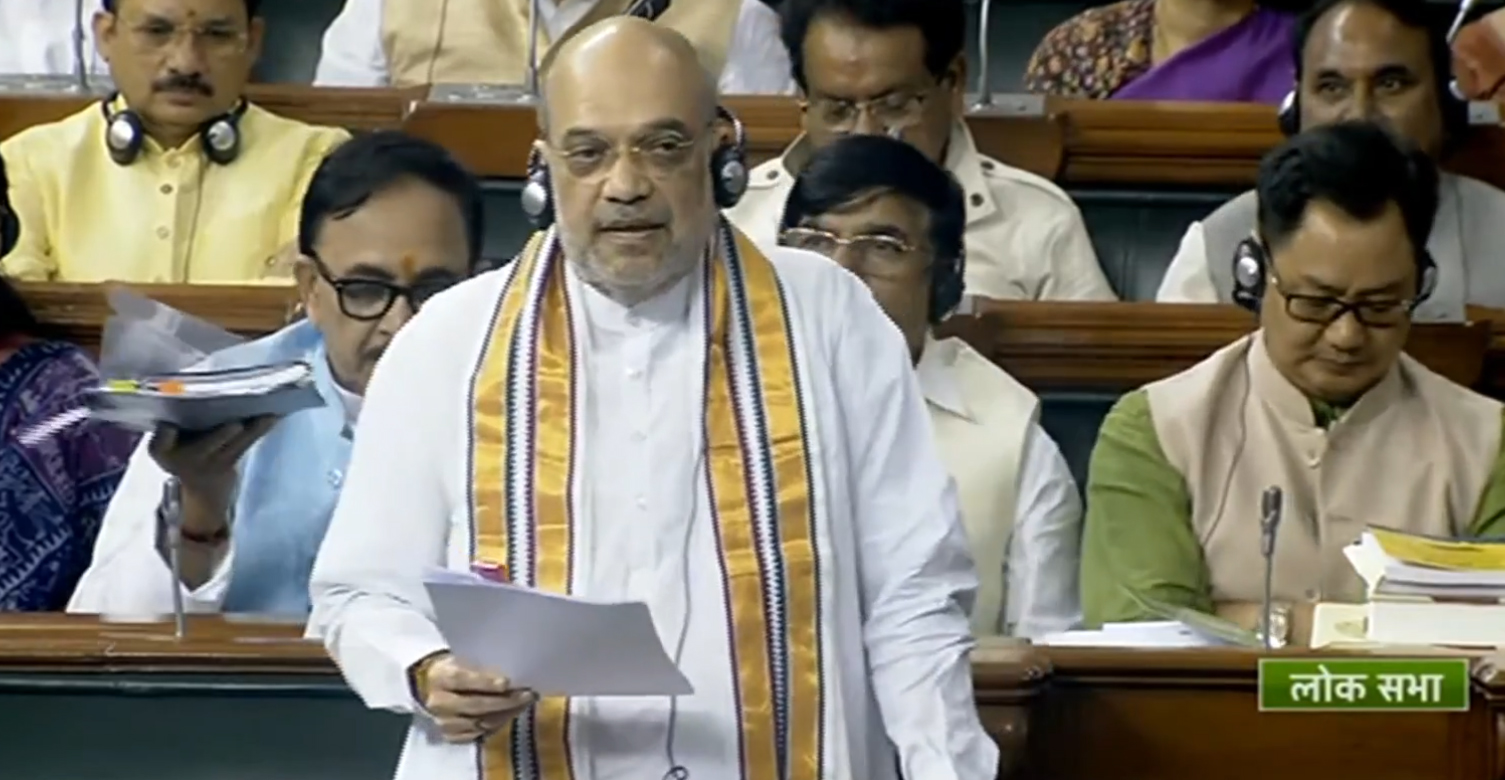
New Delhi | Aug,20 : Three significant bills were introduced in the Lok Sabha by Union Home Minister Amit Shah: the Constitution (One Hundred and Thirtieth Amendment) Bill, the Government of Union Territories (Amendment) Bill, and the Jammu and Kashmir Reorganisation (Amendment) Bill. These bills aim to establish a legal framework for the removal of Prime Ministers or Chief Ministers facing serious criminal charges and detention for 30 consecutive days.
After the introduction of the said bills the Lok Sabha was adjourned due to disruptions caused by opposition members, who expressed their dissent by tearing and throwing copies of the bills. The Speaker Lok Sabha, Om Birla, emphasized the need to maintain the dignity of the House and noted that the opposition’s behavior was being observed by the public. The bills were subsequently referred to a Joint Committee of Parliament, which will consist of 21 members from the Lok Sabha and 10 from the Rajya Sabha. Opposition leaders, including AIMIM MP Asaduddin Owaisi, criticized the bills for undermining democratic principles and the separation of powers, arguing that they grant excessive authority to executive agencies based on unsubstantiated allegations.
A heated exchange occurred between Congress MP K C Venugopal and Amit Shah regarding the morality of the bills, with Venugopal questioning Shah’s past actions during his tenure as Home Minister in Gujarat. Shah defended his record, stating that he had resigned on moral grounds prior to his arrest and did not accept any constitutional position until he was cleared by the court. The introduction of these bills and the ensuing debate highlight significant tensions in Indian politics regarding governance, accountability, and the rule of law.