Cries Of Pahalgam Terror Victims Heard In Lok Sabha
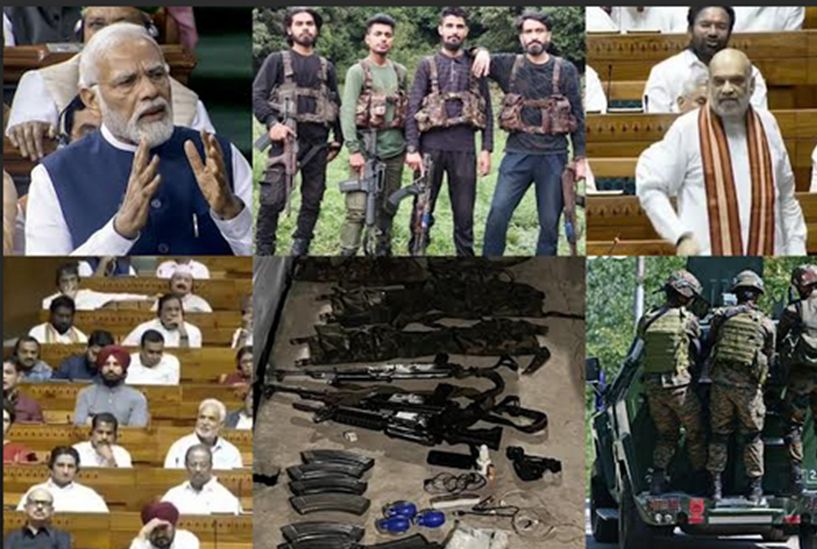
Srinagar: This week, three Pakistani terrorists responsible for the brutal April 22 terror attack in Jammu and Kashmir’s Pahalgam were killed on Monday in a meticulously coordinated operation in the Dachigam forest area, the Union government informed Parliament. In back-to-back statements in the Lok Sabha, Prime Minister Narendra Modi and Home Minister Amit Shah confirmed the deaths of the Lashkar-e-Taiba operatives, calling it an unequivocal message that India will hunt down those who spill innocent blood on its soil.
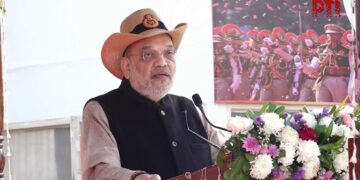
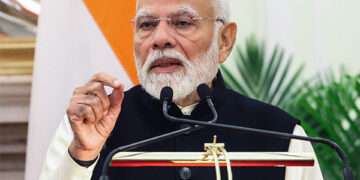
Addressing the House during a debate on Operation Sindoor, Prime Minister Modi criticised sections of the Opposition for questioning the timing of the counter-terrorist operation, warning that petty politics over national security weakens the morale of the security forces and emboldens the handlers of terror across the border. “What has happened to these people? They are asking questions when our brave soldiers have risked their lives to bring justice to 26 families,” the Prime Minister said, referring to the civilians massacred at Baisaran meadow in Pahalgam, a popular tourist destination. Home Minister Amit Shah provided extensive details of the operation, codenamed Operation Mahadev, stating that the terrorists were Pakistani nationals who infiltrated Kashmir to execute attacks designed to destabilise the region and intimidate locals. He identified the slain terrorists as Suleman alias Faizal Jatt, Hamza Afghani, and Zibran, all senior Lashkar-e-Taiba operatives. “These three terrorists murdered our civilians in cold blood. Since locals have refused to join terrorist ranks in recent years, Pakistan is sending its own nationals to wage this war,” Shah told MPs.
According to the Home Minister, Suleman was no ordinary foot soldier. An A-category terrorist with a record of orchestrating multiple attacks, he was also involved in the Gagangir strikes of October 2024. Indian intelligence agencies had placed a reward of Rs 20 lakh on his head after the Pahalgam attack shocked the nation.
Shah explained that the breakthrough in tracking the group came on May 22, when the Intelligence Bureau received human intelligence suggesting the presence of the three men deep inside Dachigam’s dense forests. From that day onward, a combination of surveillance drones, high-range thermal sensors, and painstaking foot patrols were deployed to narrow down their precise location. The security grid included the Intelligence Bureau, the Indian Army’s 4 Para Special Forces unit, the Central Reserve Police Force, and the Jammu and Kashmir Police. “Between May 22 and July 22, we intercepted their communication signals. Every day, our agencies tried to pinpoint their hideout. It was only on July 22 that we got the first confirmation of their exact position through the sensors,” Shah said. Once the terrorists were cornered, the joint teams moved swiftly to prevent them from slipping back across the Line of Control. The operation culminated on July 28 in a fierce exchange of fire that lasted several hours. According to official accounts, Suleman, Hamza, and Zibran were all killed in the firefight.
Two AK-47 rifles and an M4 carbine rifle were recovered from the site. The Home Minister revealed that ballistic experts confirmed that the same weapons had been used in the Pahalgam attack. “The spent cartridges collected at Baisaran meadow matched precisely with the weapons recovered in Dachigam,” Shah said. “I was on a video call with six forensic experts at 5 a.m. today, and they confirmed this link.” He further stated that Pakistani voter identity cards and chocolates manufactured in Pakistan were seized from the bodies, conclusively establishing their nationality. Witness testimony also corroborated their involvement. Four witnesses, including two accused who gave them shelter a day before the attack, confirmed their identities.
The National Investigation Agency, which is probing the Pahalgam attack, had earlier arrested two men—Bashir and Parvez—who allegedly hosted the terrorists in a dhok (hut) two kilometres from Baisaran on the night of April 21. Shah recounted that the men had served the terrorists tea, food, and later watched them leave carrying a bag of spices. “This was the night before they massacred our innocent citizens,” Shah said grimly. The Minister said the NIA has so far interviewed 1,055 people in connection with the attack, including survivors, their family members, pony riders, photographers, and other witnesses who worked in the meadow area. More than 3,000 hours of video-recorded statements have been compiled as part of what officials described as one of the most exhaustive investigations ever conducted in a terror incident in Kashmir.
The Prime Minister described the Dachigam encounter as a demonstration of India’s capability to systematically dismantle cross-border terror networks, even when they operate in remote, rugged terrain. He also warned Pakistan against sponsoring attacks on Indian civilians. “They think they can push their terrorists across the border to kill our women and children and then melt away. Let me make it very clear: we will not rest until every last terrorist and every last mastermind behind such attacks is brought to justice,” Modi said. He also accused certain Opposition leaders of indulging in “irresponsible speculation” about the timing of Operation Mahadev, hinting that such statements could be exploited by adversaries to fuel propaganda. “This is the time to stand with the families of the victims, not to question the integrity of those who fight for the nation,” he said. Security officials described Suleman as the mastermind who planned the Pahalgam attack in meticulous detail.
Known by multiple aliases, including Hashim Moosa, Suleman is believed to have served in the Pakistan Army before being recruited by the Lashkar-e-Taiba to oversee high-profile terror strikes in Kashmir. After the Baisaran massacre, he was tracked through a trail of communications and informant networks.
Senior Army officers who participated in the operation said that the terrorists had dug concealed hideouts in Dachigam’s upper reaches and had planned to stay hidden until the security focus shifted elsewhere. “They were patient and well-equipped, which is why it took us over two months to confirm their presence and plan a clean operation that minimised risks to civilians,” a senior Army officer said on condition of anonymity.
Operation Mahadev was named to symbolise both retribution and protection—a counter-strike designed to avenge the victims while preventing future attacks. Officials said the operation’s planning drew lessons from past encounters, particularly the importance of fusing real-time human intelligence with technical surveillance. Among the slain terrorists, Hamza Afghani and Zibran were also considered high-value targets, believed to have entered Kashmir earlier this year as part of a renewed Lashkar-e-Taiba offensive. Intelligence intercepts suggested their handlers in Pakistan had ordered them to repeat the pattern of high-casualty civilian attacks, hoping to trigger panic and undermine the recent tourist surge in Kashmir.
Following the Pahalgam attack, security across the Union Territory had been tightened, with additional checkpoints, drone monitoring, and coordinated patrolling by the Army, CRPF, and police. Officials said these layered countermeasures helped corner the terrorists and limit their mobility. As the Lok Sabha debate concluded, Home Minister Shah appealed to all political parties to speak in one voice against terrorism. “We have a duty to our citizens to ensure that no family has to live through the nightmare the victims of Pahalgam faced,” he said.
In Kashmir, families of the victims welcomed the news of the terrorists’ deaths, although many said it would never fully erase the trauma of losing their loved ones. “At least now we know that the men who destroyed our lives have met their fate,” said Bashir Ahmad, who lost his brother and nephew in the April attack. Security officials warned that infiltration attempts would continue, but insisted that Operation Mahadev had dealt a significant blow to Lashkar’s plans. The success of the operation, they said, underscored India’s commitment to pre-empt and neutralise any threat to the lives of ordinary citizens. With the elimination of these three Pakistani terrorists, the government said it had fulfilled a promise to the families of the victims and sent a clear signal to Pakistan-based groups: those who wage war on innocents will not escape India’s resolve.