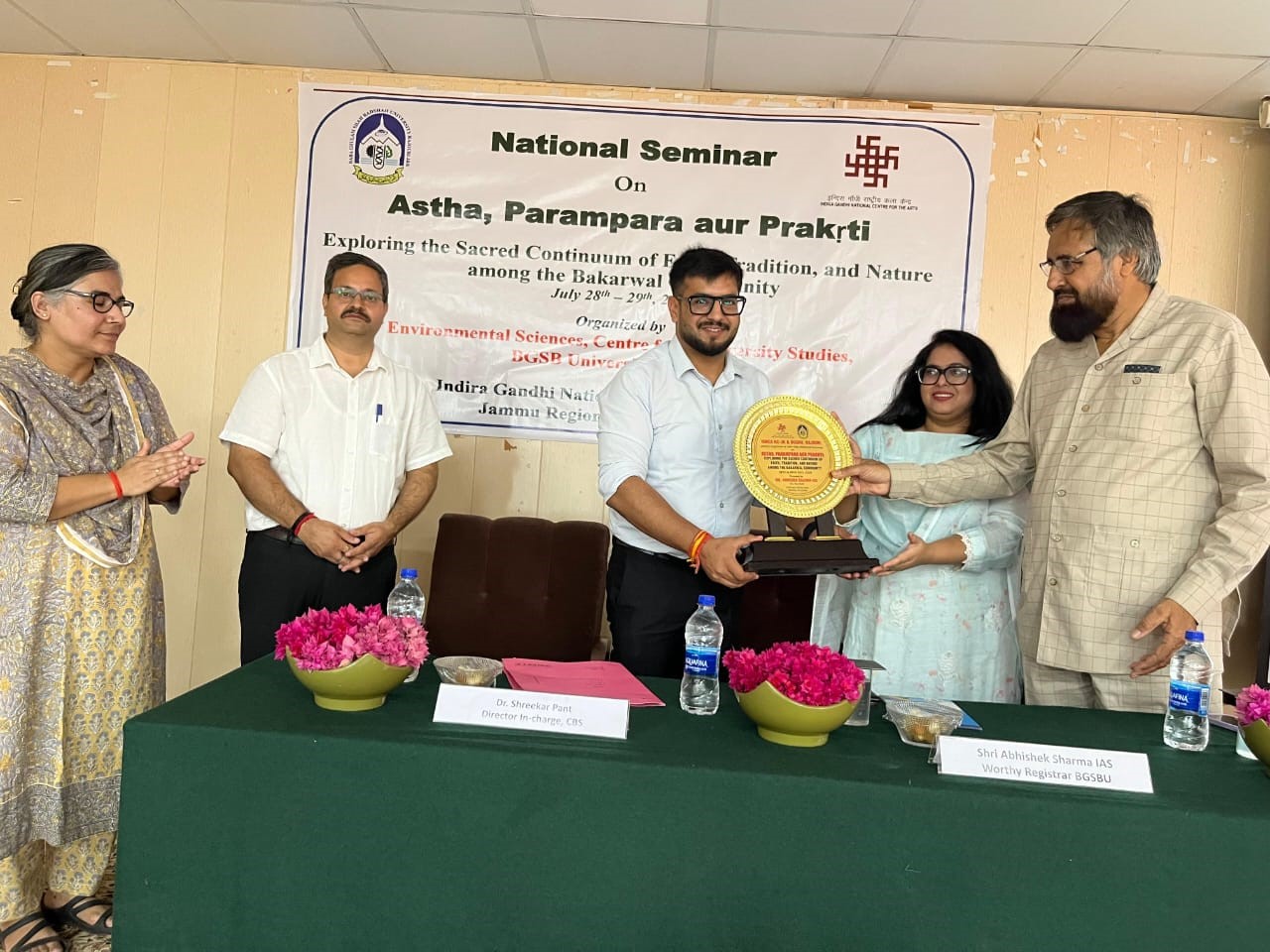
Rajouri | : Environmental Sciences, Centre for Biodiversity Studies, Baba Ghulam Shah Badshah University (BGSBU), in collaboration with the Indira Gandhi National Centre for the Arts (IGNCA), Regional Centre Jammu, organized a thought-provoking two-day National Seminar titled “Astha, Parampara aur Prakṛti: Exploring the Sacred Continuum of Faith, Tradition, and Nature among the Bakarwal Community.”
In his key note address at the inaugural session Abhishek Sharma, Registrar of BGSBU who attended the event as Chief Guest highlighted the critical need to preserve and promote indigenous knowledge systems, particularly in the context of modernisation, climate change, and cultural homogenisation. He emphasized the sustainable lifestyle of the Bakarwal community, which is rooted in ecological balance and spiritual wisdom, asserting that their traditions provide valuable lessons in environmental conservation and community cohesion. Sharma called for academic institutions, policymakers, and civil society to recognize and integrate indigenous voices into mainstream development narratives, advocating for platforms that celebrate and protect the intangible heritage of nomadic communities. Dr. Shreekar Pant, Director of CBS, welcomed attendees and noted the event’s goal of illuminating the beliefs, practices, and ecological knowledge that characterize the Bakarwal community’s cultural life. Shruti Awasthi, Regional Director of the Indira Gandhi National Centre for the Arts, described the Bakarwal community as a living archive of Himalayan wisdom, emphasizing their seasonal mobility and sacred relationship with the land as essential to sustainable living. Professor M. K. Waqar praised the university’s initiative to focus on marginalized knowledge systems and commended the organizers for their efforts. Distinguished speakers, including Dr. Bhanu Kumar Vats, Dr. Harish Dutt, Dr. Danish Iqbal Raina, and Shri Brajesh Jha, addressed the challenges faced by the Bakarwal community, such as sedentarisation, shrinking pasturelands, lack of representation in policy frameworks, and the impacts of climate change on their traditional routes and water sources. The session concluded with a strong call to action for inclusive research and policy interventions to safeguard the cultural and ecological heritage of pastoral nomadic communities in India. Special thanks were extended to Professor Jawaid Iqbal, Vice Chancellor of BGSB University, for his ongoing support.