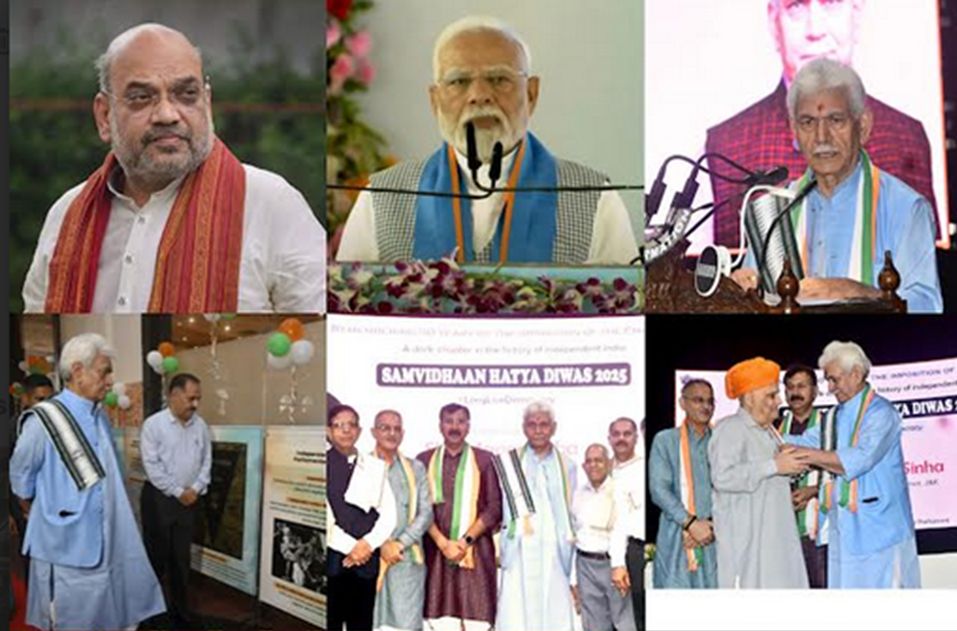
- From PM & HM In Delhi To LG In Valley All Top Helmsmen Pledge To Uphold Democracy
“Lieutenant Governor Manoj Sinha inaugurated the 1975 Emergency Exhibition at the Convention Centre in Jammu, marking the 50th anniversary of the Emergency imposed in India in 1975. This event commemorates a significant and challenging period in India’s democratic history, during which constitutional freedoms were suspended for 21 months. The exhibition serves as a solemn reminder of the importance of safeguarding India’s democratic principles against future threats. The commemoration is officially recognized as Samvidhan Hatya Diwas, or Constitution Assassination Day, and is part of a broader national reflection initiated by the current government to honor and protect democratic values.”
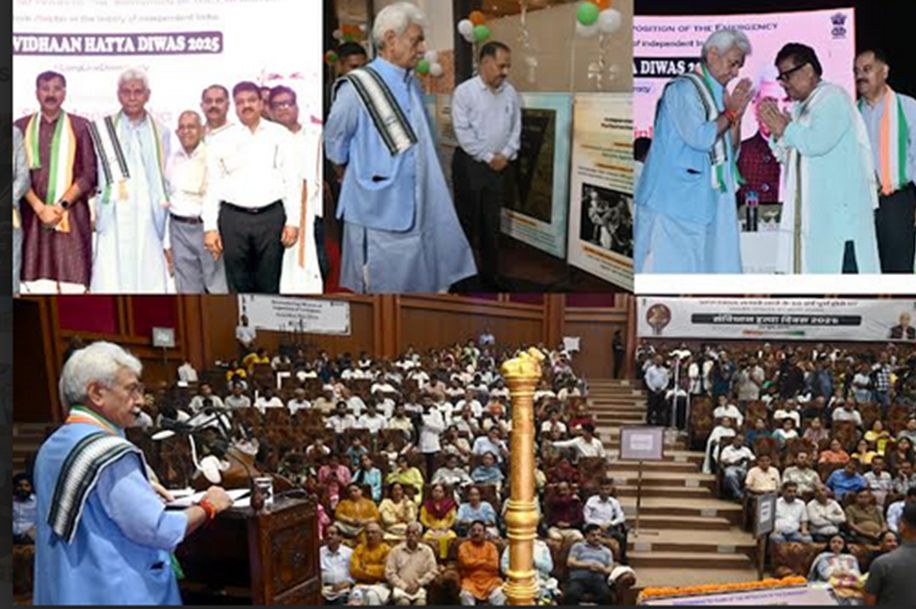
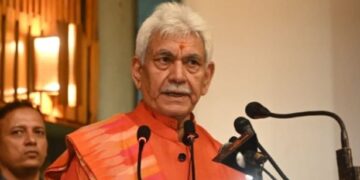
Marking the 50th anniversary of one of the most tumultuous and darkest chapters in India’s democratic history—the imposition of the Emergency in 1975 Lieutenant Governor Manoj Sinha inaugurated the 1975 Emergency Exhibition at the Convention Centre in Jammu this week. The event served not only as a solemn remembrance of the 21-month period when constitutional freedoms were suspended but also as a clarion call to safeguard India’s democratic fabric from any future threats. This commemoration, officially observed as Samvidhan Hatya Diwas (Constitution Assassination Day), is part of a wider national reflection initiated by the current government. Through his remarks, LG Sinha underscored the imperative of learning from history’s darkest moments to fortify the values enshrined in India’s Constitution.
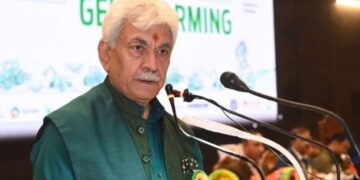
Lieutenant Governor Manoj Sinha: A Vigilant Guardian Of Democracy: At the inauguration, Lieutenant Governor Manoj Sinha delivered a powerful message emphasizing the Emergency as “the most inhuman act in Indian democratic history.” He called upon all citizens to engage in a collective reflection on that period and to reaffirm their commitment to democracy and constitutional morality. “The Emergency is not just a past event to be remembered, but a warning against any future attempts to undermine our democratic ethos,” Sinha stated. His words resonated deeply in a region like Jammu and Kashmir, where democracy and constitutional values have often faced intense challenges. The Lieutenant Governor’s reflections were laced with a sense of urgency and responsibility, especially towards educating younger generations about the perils of dictatorship. Highlighting the sacrifices of political leaders, journalists, activists, and ordinary citizens who stood firm against authoritarianism, LG Sinha saluted their courage and perseverance. “In that darkest chapter, the soul of the nation was crushed. Civil liberties were assaulted, constitutional safeguards violated, and the dreams of nation-building buried,” he said, drawing a somber picture of the suspension of fundamental rights, press censorship, and the incarceration of dissenters. Sinha’s call to action was clear: “We must learn from those incidents and prepare future generations to prevent such atrocities. This day serves as an opportunity to raise awareness about constitutional values across all sections of society, ensuring that no dictatorial mentality can repeat such acts.” He also shared his personal reflections on the Emergency, emphasizing the intrinsic democratic spirit of India. “Democracy is in our veins. India is called the ‘Mother of Democracy’ because of its rich tradition of safeguarding democratic values. I have full faith that the sacrifices made by our satyagrahis during the Emergency will continue to inspire us to build a truly developed India.” The event also featured a release of the Dogri translations of key legal texts — the Bharatiya Nyaya Sanhita (Indian Penal Code), Bharatiya Nagarik Suraksha Sanhita (Code of Criminal Procedure), and Bharatiya Sakshya Adhiniyam (Evidence Act) — underscoring the importance of legal awareness in protecting rights and liberties. LG Sinha’s thoughtful leadership in Jammu and Kashmir demonstrates a commitment to democratic resilience, especially in a region grappling with complex political realities. His emphasis on constitutional education and vigilance against authoritarianism reinforces the ongoing national conversation about India’s democratic future.
PM Modi; Reminding A Nation Of Its Democratic Fragility: Coinciding with the LG’s inauguration, Prime Minister Narendra Modi marked the 50th anniversary of the Emergency with pointed remarks, labeling June 25 as SamvidhanHatyaDiwas. In a series of posts on the social media platform X (formerly Twitter), Modi called the Emergency a period when the Indian Constitution was effectively “put under arrest” by the Congress-led government of the time. Modi’s narrative was uncompromising: the suspension of fundamental rights, the silencing of the press, and the mass arrests of political opponents constituted a “systematic dismantling of constitutional order.” He referred specifically to the 42nd Constitutional Amendment during the Emergency as an example of institutional overreach, which tried to curb parliamentary debate and control the judiciary. “The spirit of the Constitution was violated,” Modi said, “and the poor and marginalized were particularly targeted.” His focus on the vulnerable sections reflected the government’s broader discourse that the Emergency period was not merely a political crisis but a profound humanitarian and democratic violation. Paying homage to the brave citizens who resisted the authoritarian regime, Modi saluted the unity across ideological lines that eventually led to the restoration of democracy through fresh elections, which resulted in a decisive rejection of the Congress party. Beyond reflection, Modi called on those who endured or had family members who suffered during the Emergency to share their stories to educate and inspire younger generations. Drawing on his own experiences as a young RSS pracharak during that period, the Prime Minister described the anti-Emergency movement as a “learning experience” that strengthened his conviction in preserving democratic institutions. His engagement with the Emergency’s history also included supporting publications such as the book released by BlueKraft Digital Foundation, which compiles first-person accounts of the Emergency, underscoring the importance of archival memory in nation-building.
HM Amit Shah;Condemning Authoritarianism And Upholding Constitutional Vigilance: Union Home Minister Amit Shah lent a sharp critique of the Emergency, branding it an “era of injustice” driven by the Congress party’s “hunger for power.” Shah’s remarks on X underscored the BJP-led government’s effort to institutionalize the memory of this period as a warning against dictatorship. “The Emergency was not a national necessity but a reflection of the anti-democratic mindset of Congress and one individual,” Shah asserted, explicitly condemning the Congress leadership for crushing press freedom, undermining the judiciary, and imprisoning social activists. He praised the resilience of the people who rose in protest, invoking the rallying cry of “Vacate the Throne” that symbolized the popular uprising which ultimately ended the Emergency. Shah’s tribute extended to all “brave souls who sacrificed their lives in this struggle,” cementing the narrative of the Emergency as a mass resistance against authoritarian overreach. Further, Shah emphasized the need for the younger generation to understand this history deeply to ensure that “when power turns into dictatorship, the people have the strength to uproot it.”
Institutional Response; Cabinet Resolution, National Reflection: In a symbolic act of remembrance, the Union Cabinet observed a two-minute silence to honour those whose rights were trampled during the Emergency. The Cabinet, chaired by Prime Minister Modi, passed a resolution highlighting the 50th anniversary of SamvidhanHatyaDiwas, condemning the Emergency as an attempt to “subvert the spirit of the Indian Constitution.” Union Information and Broadcasting Minister Ashwini Vaishnaw briefed reporters, underscoring the resolution’s focus on defending constitutional values and democratic federalism. The resolution specifically pointed out that the Emergency began with the suppression of popular democratic movements such as the Navnirman Andolan and the Sampoorna Kranti Abhiyan. Reaffirming India’s identity as the “Mother of Democracy,” the Cabinet’s statement emphasized that all citizens, young and old, should draw inspiration from those who resisted dictatorial tendencies. The resolution called for renewed national resolve to protect India’s Constitution and its democratic and federal spirit.
The Emergency’s Enduring Lessons For Democracy: The Emergency, imposed on June 25, 1975, by then Prime Minister Indira Gandhi, lasted 21 months and remains an indelible scar on India’s democratic journey. During this period, civil liberties were suspended, press freedom crushed under censorship, and thousands of political opponents arrested. The collective remembrance and critique by LG Manoj Sinha, Prime Minister Narendra Modi, and Home Minister Amit Shah highlight how the present government is using the 50th anniversary not just to recall history but to educate, warn, and strengthen democratic vigilance. LG Sinha’s emphasis on constitutional literacy and the personal sacrifices of freedom fighters at the Jammu event complements the Prime Minister’s nationwide outreach to youth and survivors. Meanwhile, Amit Shah’s candid denunciation of authoritarianism adds a firm political dimension to the discourse. Together, these voices underscore the fragile nature of democracy and the constant need for active citizen engagement, institutional checks, and public awareness to prevent any erosion of constitutional freedoms.
Democracy In J&K; A Region Poised Between Past And Present Challenges: Jammu and Kashmir’s particular history and ongoing political sensitivities make LG Sinha’s leadership and message especially critical. As the Union Territory continues its path towards political normalcy and democratic consolidation, the remembrance of Samvidhan Hatya Diwas offers an opportunity for reflection on the universal value of democracy and constitutional safeguards. The Emergency reminds all stakeholders in the region that democracy requires continuous nurturing and protection, especially in the face of authoritarian impulses, social unrest, or political instability. The educational initiatives launched alongside the exhibition, including translations of legal codes into Dogri, seek to empower citizens with knowledge of their rights and the legal frameworks that protect them.
“Lieutenant Governor Manoj Sinha, Prime Minister Narendra Modi, and Home Minister Amit Shah collectively stress the importance of vigilance against authoritarianism. They highlight the necessity of educating citizens, particularly the youth, about their constitutional rights and the historical sacrifices made to safeguard these freedoms. This education is crucial for fostering a resilient democracy. To strengthen democratic foundations, initiatives such as legal awareness campaigns, historical exhibitions, and inclusive dialogues in all regions, including politically sensitive areas like Jammu and Kashmir, are deemed essential. As India reflects on the Emergency’s dark chapter, it is reminded that democracy requires ongoing nurturing, courage, and commitment from every citizen. The leaders’ voices underscore a shared understanding that democratic freedoms are invaluable and must be defended resolutely.”
Vigilance, Memory, Commitment To Democracy: The commemoration of the Emergency’s 50th anniversary by Lieutenant Governor Manoj Sinha in Jammu, alongside national reflections by Prime Minister Narendra Modi and Home Minister Amit Shah, marks a pivotal moment in India’s democratic consciousness. It serves as a stark reminder that democracy is not an inherited gift but a fragile achievement requiring vigilance, courage, and collective responsibility. The Emergency’s legacy, with its suppression of civil liberties and constitutional order, teaches that democratic freedoms must be cherished and defended at every turn. Through these commemorations, the government and civil society hope to inspire generations to resist authoritarianism, uphold constitutional morality, and strive relentlessly towards a more just, free, and democratic India.
Kashmir Horizon View: The 50th anniversary of the Emergency is not just a moment to look back but a critical juncture to chart a path forward for India’s democracy. The reflections shared by Lieutenant Governor Manoj Sinha, Prime Minister Narendra Modi, and Home Minister Amit Shah collectively emphasize the need for constant vigilance against any form of authoritarianism. Educating citizens, especially the youth, about their constitutional rights and the sacrifices made to protect these freedoms is essential to building a resilient democracy. Initiatives such as legal awareness campaigns, historical exhibitions, and inclusive dialogue across all regions including politically sensitive areas like Jammu and Kashmir are vital tools in strengthening democratic foundations. As India commemorates the dark chapter of the Emergency, it is reminded that democracy is a living, breathing entity that requires nurturing, courage, and an unwavering commitment from every citizen. The voices of leaders like LG Manoj Sinha and the national leadership highlight a shared understanding: democratic freedoms are precious and must be protected against all odds.
(In commitment to continuous improvement the “Team Kashmir Horizon” invites it’s valuable readers to share their valuable feedback and suggestions with the “Team Kashmir Horizon”. The insights of readers will surely play a vital role in improving the content quality of “Kashmir Horizon” and contribute more for the empowerment of people. Please feel free to reach out to us at editor@ thekashmirhorizon.com. Team “Kashmir Horizon” eagerly anticipates thoughts and ideas of it’s readers, which will help us serve people and even more effectively. The inputs of valuable readers are highly valued as “Kashmir Horizon” strives to provide it’s readers the best possible experience.)