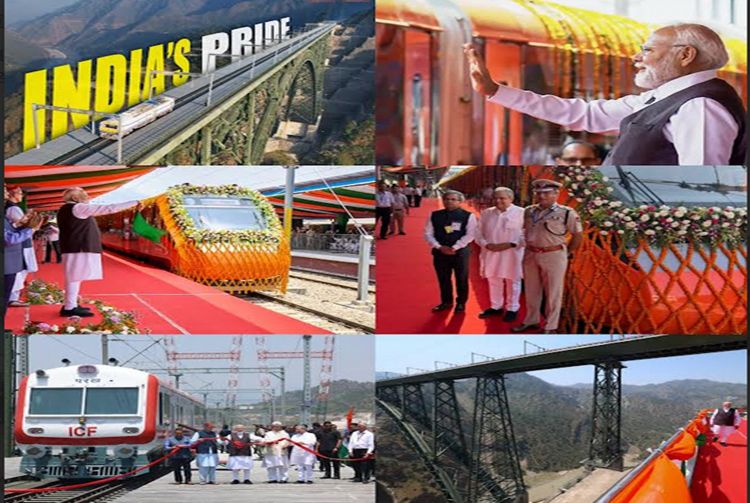
“Inaugurated by Prime Minister Narendra Modi on June 6, 2025, the launch of the Katra-Srinagar Vande Bharat route signifies not just a technological achievement but also a significant advancement towards national integration. This milestone fulfills the long-awaited aspiration of linking the Kashmir Valley with the rest of the nation through a reliable all-weather railway line. The event, which was graced by prominent figures such as Jammu and Kashmir Chief Minister Omar Abdullah and Lieutenant Governor Manoj Sinha, highlighted a collective vision of progress, unity, and empowerment.”
The dawn of a new chapter in India’s transportation history has begun with the arrival of the Vande Bharat Express in Jammu and Kashmir. Flagged off by Prime Minister Narendra Modi on June 6, 2025, the inauguration of the Katra-Srinagar Vande Bharat route marks not only a technological marvel but also a major step toward national integration. This development completes the long-anticipated dream of connecting the Kashmir Valley with the rest of the country via an all-weather railway line. The occasion, attended by key dignitaries including Jammu and Kashmir Chief Minister Omar Abdullah and Lieutenant Governor Manoj Sinha, underscored a shared vision of progress, unity, and empowerment.
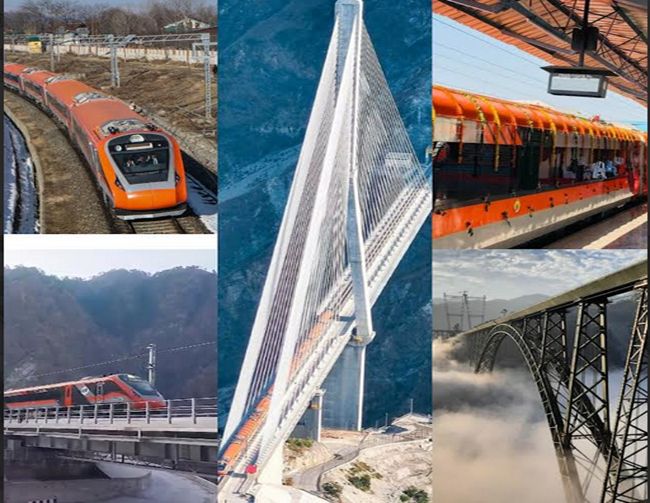
Vande Bharat Express; Redefining Indian Railways: The Vande Bharat Express, originally introduced in 2019 under the ‘Make in India’ campaign, was conceived as a revolutionary leap for Indian Railways. Built indigenously by the Integral Coach Factory (ICF) in Chennai, this semi-high-speed train, also known as Train 18, is capable of reaching speeds of up to 160 kmph. Its futuristic design, aerodynamic nose, and intelligent braking system represent a sophisticated evolution of rail travel in India. Equipped with modern amenities like onboard Wi-Fi, GPS-based passenger information, automatic doors, bio-vacuum toilets, and ergonomic seating, the Vande Bharat has transformed the passenger experience. Importantly, the version tailored for Jammu and Kashmir is engineered to function seamlessly in the region’s harsh climatic conditions. The train features advanced heating systems, snow-defrosting windshields, and anti-spall materials to withstand freezing temperatures as low as -20°C, ensuring uninterrupted service during the severe Himalayan winters. Covering a 189-kilometer stretch from Katra to Srinagar in just under three hours, this train slashes travel time significantly—down from five to six hours by road or conventional rail services. Its route navigates through a region renowned for its rugged terrain and unpredictable weather, making this engineering accomplishment even more commendable. The highlight of the journey is undoubtedly the world’s highest railway arch bridge over the Chenab River and the Anji Khad Bridge, India’s first cable-stayed railway bridge—two crown jewels of the Udhampur-Srinagar-Baramulla Rail Link (USBRL) project.
Historic Inauguration By PM Modi: The inaugural ceremony at Shri Mata Vaishno Devi Katra Railway Station was as symbolic as it was strategic. Prime Minister Narendra Modi flagged off the train in the presence of Railway Minister Ashwini Vaishnaw, Chief Minister Omar Abdullah, Lieutenant Governor Manoj Sinha, and Union Minister Jitendra Singh. This marked the culmination of the 272-km USBRL project, a herculean feat of engineering and logistical perseverance that withstood political, geographical, and natural hurdles. Regular operations of the Katra-Srinagar Vande Bharat began on June 7, 2025, with train numbers 26404/26403 and 26401/26402 running six days a week. These trains stop at Banihal, a crucial transit point, ensuring broader accessibility within the Valley. This moment has been described as a game-changer for the region’s economy and social integration. For the people of Jammu and Kashmir, it symbolizes more than just mobility—it signifies inclusion, progress, and recognition.
Omar Abdullah;A Dream Realized: Chief Minister Omar Abdullah’s association with the project is deeply personal and political. Speaking during the inaugural event, he recalled first hearing about the proposed railway link when he was in seventh grade. Decades later, as CM, he stood beside the nation’s prime minister to welcome the first Vande Bharat into the Valley. “This is not just a train. It’s a promise fulfilled,” Abdullah said, calling the project a “game-changer” that would benefit all sections of society. He used the occasion to renew his call for the restoration of statehood to Jammu and Kashmir, asserting that the region’s developmental needs and political aspirations must be addressed in tandem. “I’m hopeful that PM Modi will soon grant statehood back to J&K,” he stated, making clear that while infrastructure projects were welcome, the political identity of the region must also be acknowledged. Omar Abdullah’s father and National Conference president, Farooq Abdullah, was also on board the inaugural train. Overwhelmed with emotion as the train crossed the Chenab Bridge, he called the service “the biggest gift to the people of J&K.” His tearful reaction conveyed the depth of significance this achievement holds for Kashmiri families long isolated by geography and conflict.
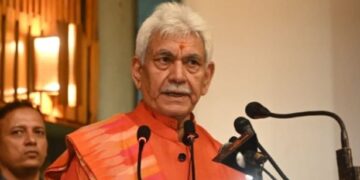
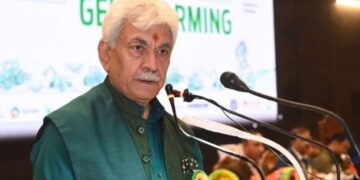
LG Manoj Sinha; From Vision to Reality: Lieutenant Governor Manoj Sinha lauded the Vande Bharat Express as a monumental step in realizing the dream of connecting “Kashmir to Kanyakumari.” For LG Sinha, this project is not merely an infrastructure milestone, but a manifestation of unity, integration, and modern governance. “This bridge is not just made of iron and steel, but of aspirations,” Sinha said, referring to the Chenab Bridge and the entire USBRL corridor. He credited Prime Minister Modi for envisioning a modern India where even the most remote corners are not left behind. LG Sinha emphasized that the train would catalyze tourism, enhance trade, and provide employment to thousands. He also reassured citizens of continued focus on safety, especially in light of heightened security concerns following the Pahalgam terror attack earlier in April 2025.
Engineering Excellence, Operational Strength: The USBRL project is among the most complex and ambitious in India’s railway history. Navigating three major geological thrust zones—Reasi, Murrie, and Panjal—the project spans 97 kilometers of tunnels and over 7 kilometers of bridges. The Chenab Bridge, standing 359 meters above the river, is taller than the Eiffel Tower. Constructed with ‘Tekla’ software for intricate structural detailing, this bridge alone stands as a testament to India’s growing engineering capabilities.
Chenab Bridge;A Global Engineering Marvel: The Chenab Bridge, one of the most iconic elements of the Katra-Srinagar Vande Bharat route, stands as a testament to India’s engineering excellence. Spanning the deep gorge of the Chenab River in the Reasi district of Jammu and Kashmir, the bridge is not just the tallest railway bridge in the world but also a symbol of resilience and innovation. Towering 359 meters above the riverbed, it surpasses even the height of the Eiffel Tower, making it a globally recognized landmark in railway infrastructure. Construction of the bridge was part of the ambitious Udhampur-Srinagar-Baramulla Rail Link (USBRL) project, aimed at providing all-weather connectivity to the Kashmir Valley. Designed to withstand high winds of up to 266 kmph and seismic activities, the bridge incorporates some of the most advanced civil engineering practices. Built using Tekla Structures software for accurate structural modeling and employing over 28,000 metric tonnes of steel, the Chenab Bridge is both a technical and aesthetic marvel. The arch of the Chenab Bridge stretches 467 meters, making it the longest span for a railway arch bridge in the world. The deck is supported by pylons anchored to the riverbanks and connected via a sophisticated system of cables, ensuring stability even in extreme climatic and geological conditions. Chenab Bridge not only shortens the travel time between Jammu and Srinagar but also acts as a strategic asset, enhancing connectivity and bolstering national integration in a region.
Daily Timing Of Vande Bharat Express: The Katra-Srinagar Vande Bharat operates four trips daily. Train No. 26401 departs from Katra at 8:10 AM, reaching Srinagar by 11:08 AM. The return journey (Train No. 26402) starts from Srinagar at 2:00 PM and reaches Katra at 4:58 PM. Running six days a week, the schedule provides flexibility for various travel needs, from tourism to business and education. Safety remains a critical component. Given the lighter leading coaches of the Vande Bharat, there is a push for more robust fencing along the route to prevent incidents with stray animals. The Indian Railways is actively addressing these challenges to ensure continued safety without compromising speed or efficiency.
“Looking ahead, the path forward involves bolstering supporting infrastructure and guaranteeing seamless and secure operations along the route. Plans are in place to expand services to Jammu Tawi and ultimately launch a direct Srinagar-Delhi Vande Bharat Express, promising even greater connectivity for the area. Ongoing monitoring and upkeep of the tunnels, bridges, and tracks, especially in hilly and weather-sensitive regions, will be vital for the long-term success of this initiative. Furthermore, additional strategies such as adequate fencing along the tracks, enhanced last-mile connectivity, and sustainable tourism infrastructure can significantly amplify the train’s impact. As more individuals enjoy the comfort and efficiency of the Vande Bharat Express, it has the capacity to foster confidence, unity, and optimism throughout the region.”
Economic, Strategic Significance: The Katra-Srinagar Vande Bharat Express is not just a convenience—it is a strategic asset. Its launch has the potential to reshape the economy of Jammu and Kashmir by making movement of goods, people, and services more seamless. The all-weather connectivity reduces dependency on vulnerable mountain roads and boosts local commerce, especially in tourism, handicrafts, and agriculture. The pilgrimage economy centered around Vaishno Devi is expected to benefit enormously, while Srinagar could emerge as a year-round tourist hub due to improved accessibility. The real estate market in areas surrounding the railway stations is also likely to experience a surge, adding another layer of economic dynamism. The Vande Bharat route further strengthens India’s defense logistics, as it allows for faster troop and equipment movement to critical sectors near the Line of Control. The strategic value of this connectivity cannot be understated, especially in a region frequently impacted by cross-border tensions. Looking ahead, the Indian Railways plans to extend the Vande Bharat service directly from Srinagar to Delhi, once redevelopment of the Jammu Tawi station under the Amrit Bharat Scheme is complete by September 2025. This would further integrate the Valley with the rest of India, making long-distance travel smoother, faster, and more economical.
Political Context, Dual Visions: The inauguration served as a stage for contrasting political narratives. While CM Omar Abdullah used the occasion to advocate for restoration of Statehood, LG Manoj Sinha emphasized development, security, and national unity. These dual perspectives reflect the ongoing negotiation between local aspirations and central priorities.
Kashmir Horizon View: The launch of the Vande Bharat Express on the Katra-Srinagar route marks a historic milestone in the journey toward enhanced connectivity and development in Jammu and Kashmir. This modern, high-speed train, equipped with advanced features and built to endure the region’s challenging terrain and climate, reflects India’s growing capabilities in infrastructure and innovation. The seamless integration of engineering marvels like the Chenab Bridge stands as a proud symbol of the nation’s commitment to bridging distances and bringing regions closer—both physically and emotionally. The new rail link is expected to bring substantial benefits to the people of Jammu and Kashmir. By significantly reducing travel time, the Vande Bharat Express offers a safe, fast, and comfortable travel option for residents, tourists, and pilgrims alike. It will boost tourism, especially to places like Vaishno Devi and Srinagar, while also opening new economic avenues for local businesses and service providers. For students, healthcare seekers, and traders, this train offers greater mobility and improved access to essential services and markets. Looking ahead, the way forward includes strengthening supporting infrastructure and ensuring smooth and secure operations across the route. With plans to extend services to Jammu Tawi and eventually introduce a direct Srinagar-Delhi Vande Bharat Express, the future holds even greater connectivity for the region. Continuous monitoring and maintenance of the tunnels, bridges, and tracks, particularly through hilly and weather-sensitive zones, will be crucial in ensuring the long-term success of this initiative. Additional measures like proper fencing along the tracks, improved last-mile connectivity, and eco-friendly tourism infrastructure can further enhance the train’s impact. As more people experience the comfort and efficiency of the Vande Bharat Express, it has the potential to inspire confidence, unity, and optimism across the region.
(In commitment to continuous improvement the “Team Kashmir Horizon” invites it’s valuable readers to share their valuable feedback and suggestions with the “Team Kashmir Horizon”. The insights of readers will surely play a vital role in improving the content quality of “Kashmir Horizon” and contribute more for the empowerment of people. Please feel free to reach out to us at editor@ thekashmirhorizon.com. Team “Kashmir Horizon” eagerly anticipates thoughts and ideas of it’s readers, which will help us serve people and even more effectively. The inputs of valuable readers are highly valued as “Kashmir Horizon” strives to provide it’s readers the best possible experience.)