Telaviv, Tehran, New Delhi : Israeli Prime Minister Benjamin Netanyahu on Saturday vowed to intensify strikes on Iran, warning that “what they have felt so far is nothing compared with what they will be handed in the coming days.” His comments came after Israel launched one of its most extensive aerial offensives under Operation Rising Lion, targeting Iran’s nuclear and military infrastructure in cities including Natanz, Isfahan, and Tehran. Iranian media reported a fire at the South Pars gas field following fresh Israeli strikes on Saturday, though the blaze was later contained.
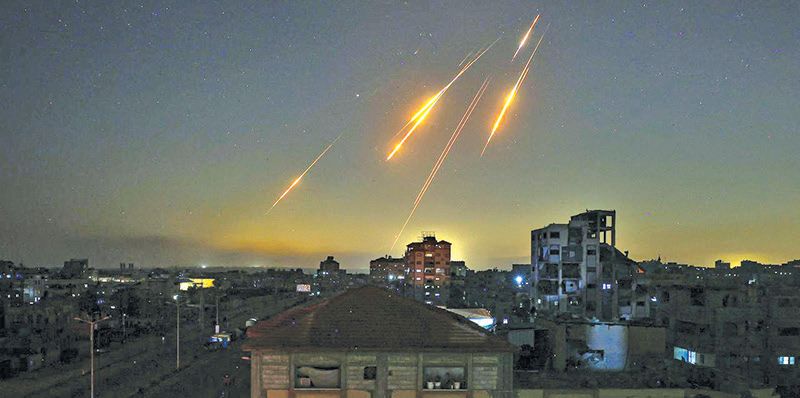
The offensive, which reportedly killed several high-ranking Iranian generals and nuclear scientists, triggered a swift and forceful retaliation from Tehran. Within 24 hours, Iran launched over 200 ballistic missiles and drones at Israeli cities, accusing Israel of pushing the region into a “dangerous cycle of violence”. It also called off its upcoming nuclear negotiations with the United States, calling them “unjustifiable” under the current circumstances. Tehran warned that if Israeli strikes continue, its response will grow “more severe” and may include military bases of Israel’s regional allies.
Israeli Prime Minister Benjamin Netanyahu has commanded a significant aerial offensive against Iran, focusing on nuclear installations, military assets, and prominent leadership figures. Reports indicate that strikes have impacted over 150 locations, including Natanz and Isfahan, resulting in the deaths of several high-ranking military officials and nine nuclear scientists. Netanyahu asserted that Iran’s nuclear ambitions were “in the 90th minute” and promised further strikes, stating, “What they have experienced thus far is trivial compared to what they will encounter in the upcoming days.” In response, Iran launched approximately 200 ballistic missiles and drones at Israeli positions in four successive waves. Israel claimed that most of these were intercepted, aided by US defense systems, although at least three individuals lost their lives and dozens sustained injuries. Iran also cautioned that any foreign military base participating in the interception of its missiles, including those of Israel’s allies, would be targeted. Despite the assault, Tel Aviv’s beaches were crowded by Saturday, as residents returned to public areas. Iranian media reported that Israeli airstrikes struck the South Pars gas field in southern Bushehr province, igniting a fire and halting the production of 12 million cubic meters of gas from Phase 14. Iran has reported significant civilian casualties resulting from Israel’s two-day offensive. Iranian state television indicated that a missile strike on a 14-story residential building in Tehran resulted in approximately 60 fatalities, including 20 children. A total of 78 deaths were reported on the first day of Israeli attacks. Visual evidence displayed flattened buildings and upper floors collapsing onto the street. Netanyahu stated that Israeli Air Force jets would soon be visible “over the skies of Tehran” and reiterated that his administration would target “every site and every target of the Ayatollahs’ regime.” Defence Minister Israel Katz further intensified the rhetoric, warning, “If Khamenei persists in launching missiles at the Israeli home front, Tehran will be set ablaze.” Iran has suspended planned nuclear negotiations with the United States following Israel’s air campaign. Confirming