“Pakistan The Enemy of Progress Stands Defeated, Peace, Won’t Allow Pahalgam Attack To Hinder Development In J&K”
“Pahalgam Attack was Pakistan’s Attempt to Shatter Peace, Harmony,
India’s Firm Response to Pakistan’s Aggression A Clear Message To World
“Salute The Heroes, Warriors Who Stood Tall Against Terrorism, Op Sindoor—India’s Fierce Strike Against Terror Networks
Strengthening Borders, Igniting Defence Innovation in J&K”
“Chenab, Anji Bridges Symbolize the Strength, Resilience of New India, Vande Bharat Trains Revolutionize J&K’s Connectivity”
- PM Modi fulfilled dream of national integration envisioned by Sardar Patel, Dr Syama Prasad Mookerjee: LG Sinha
“Kashmir to Kanyakumari no longer a mere slogan’; PM changed J&K in last 6 years, its holistic development Centre’s top priority”Says LG
- “PM, his policies, speedy implementation, industrialization brought J&K to focal point of growth”, Says LG
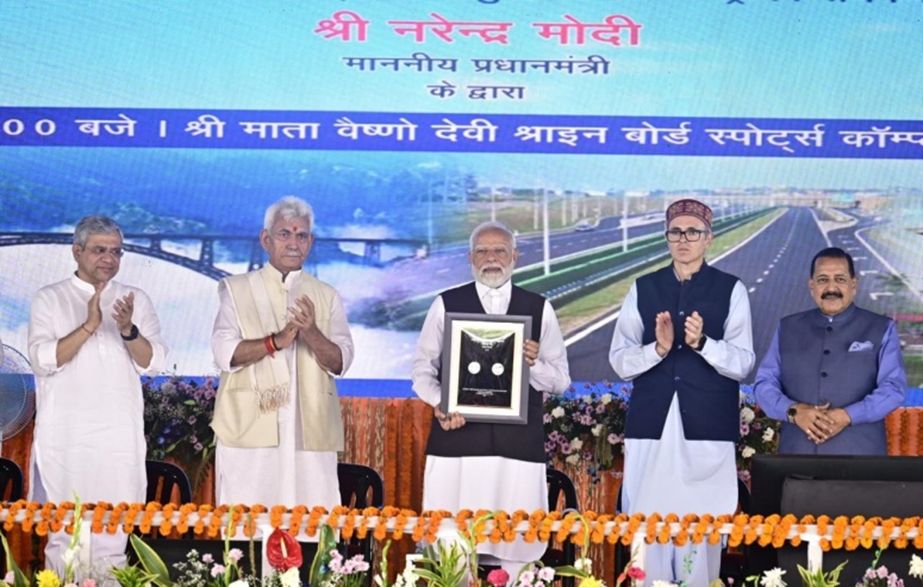
Srinagar: Prime Minister Narendra Modi on Friday officially dedicated the long-awaited Udhampur-Srinagar-Baramulla Railway Link Project to the nation, marking a historic milestone in India’s infrastructure and national integration.
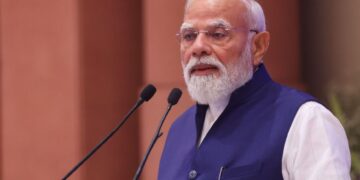
Addressing a massive crowd at Katra, PM Modi declared that the vision of a seamless India stretching from Kashmir to Kanyakumari—once a distant dream—has now become a reality. Calling this monumental achievement a “festival of India’s unity, strength, and integration,” the Prime Minister described the project as a testimony to India’s engineering prowess, commitment to inclusive growth, and resilience in the face of adversity. This momentous occasion was Modi’s first visit to Jammu and Kashmir since the government’s successful “Operation Sindoor,” a decisive counter-terrorism campaign launched in response to the brutal terror attack in Pahalgam on April 22, which claimed 26 innocent lives, mostly tourists.
The Dream Of Connecting India From End To End: “For decades, the dream of connecting Kashmir by rail to the rest of India remained unfulfilled due to challenging geography, hostile weather, and security concerns,” PM Modi said. “But today, that dream has been realized. The long-cherished ambition of linking Kashmir with the rest of the country by rail is no longer a distant hope but a proud reality.” The Udhampur-Srinagar-Baramulla Rail Link (USBRL) project, spanning some 345 kilometers through rugged mountain terrain, deep valleys, and seismic zones, has faced numerous technical and logistical challenges. Yet, through sheer perseverance, advanced engineering, and dedicated manpower, the project has been completed—redefining the very idea of connectivity in India’s northernmost Union Territory. “The names Udhampur, Srinagar, and Baramulla are no longer just geographical locations,” Modi noted. “They have become symbols of a new Jammu and Kashmir—modern, connected, and poised for growth.” The Prime Minister underscored how this connectivity would transform lives, opening up economic opportunities, improving accessibility, and fostering a stronger sense of belonging among the people.
Iconic Bridges;Engineering Marvels , National Symbols: At the heart of this infrastructure marvel are two iconic railway bridges—Chenab and Anji—whose completion symbolizes India’s technological advancement and indomitable spirit. “The Chenab Bridge is taller than the Eiffel Tower,” PM Modi proudly announced. “It is not just a bridge but a symbol of India’s power, determination, and resolve. This engineering marvel rising from the inaccessible hills of the Pir Panjal range will become a landmark and a future tourist attraction.” The Chenab Bridge, spanning over 1.3 kilometers and towering 359 meters above the Chenab River, stands as the world’s highest railway arch bridge. It is an extraordinary achievement in civil engineering and a symbol of India’s ability to overcome even the most daunting natural challenges. Similarly, the Anji Bridge, another engineering feat in the USBRL project, complements Chenab as a critical link enabling the railway’s safe passage through mountainous terrain. “These bridges are not merely steel and concrete. They embody the strength and resilience of a new India,” the Prime Minister said, lauding the engineers, workers, and designers who persevered through extreme conditions to bring these structures to life.
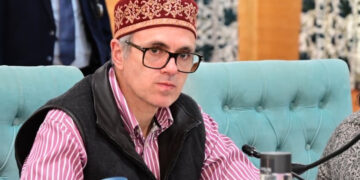
Voices From The Heart Of Kashmir; A Dream Fulfilled: Reflecting on the decades-long yearning of Kashmiris for better connectivity, Modi shared heartfelt stories that capture the project’s human impact. He quoted Jammu and Kashmir Chief Minister Omar Abdullah, who had awaited the railway project since his school days. “This dream, shared by millions across generations, has finally come true,” Modi said. He also recounted words from a young student from Sangaldan village, who had never seen a real train before the project. “For us, this railway is not just transport; it is the promise of change, opportunity, and progress,” the student told the Prime Minister in a letter. Another young girl wrote, “Now, the weather will no longer decide if roads remain open. The train will connect us all, come rain or snow. This is the power of connectivity.” These stories illustrate how the railway is more than just infrastructure—it is a lifeline that will transform social and economic realities for Kashmir’s people.
Accelerating Education, Healthcare In J&K: The Prime Minister also highlighted Jammu and Kashmir’s remarkable progress in key social sectors, driven by infrastructure and governance reforms. “We now have National Institutes of Technology (NITs), Indian Institutes of Technology (IITs), All India Institutes of Medical Sciences (AIIMS), and central universities across Jammu and Kashmir,” Modi said. “Seven new medical colleges have been established, with MBBS seats increasing to 1,300, offering our youth better opportunities in education and healthcare.” He announced the foundation stone for a new medical college in Reasi, to be built with support from Mata Vaishno Devi devotees, emphasizing the government’s commitment to expanding health infrastructure. “These institutions are not just buildings; they are centers of knowledge, hope, and healing,” the Prime Minister remarked, signaling Jammu and Kashmir’s emergence as a hub for quality education and medical care.
Eleven Years Of Transformative Governance: Looking back over the past decade under BJP-led governments, Modi praised the focused efforts to uplift India’s poor and middle class. “More than 25 crore Indians who once lived below the poverty line have now joined the growing middle class,” he said. “This is not just a statistic; these are real lives transformed through focused policies, targeted welfare schemes, and economic reforms.” He challenged those engaged in political rhetoric to recognize the tangible benefits reaching millions, asserting, “For the first time since independence, there has been sustained, determined work to empower the poor and uplift the middle class.”
Defying Terrorism; A Nation United: At the event, PM Modi delivered a sharp rebuke of Pakistan’s role as an adversary of peace and progress in the region. Referring to the April 22 Pahalgam terror attack, he stated, “Pakistan sought to destroy Kashmir’s economy and sow communal discord. But they failed, because the people of Jammu and Kashmir stood united.” “Tourism is a bridge that connects hearts, yet our neighbor has persistently tried to sever that bond. Their attack on innocent civilians was an attack on Kashmiriyat, on humanity itself,” Modi said firmly. The Prime Minister honored the bravery of individuals like Adil, a poor worker killed while resisting terrorists. “He was simply trying to earn his living but stood firm in the face of terror. This courage defines the spirit of Jammu and Kashmir,” Modi said. He praised the youth for rejecting fear, saying, “There was a time when terrorism burned schools and hospitals, and people stopped dreaming. Today, the youth are dreaming again—and making those dreams a reality.”
Operation Sindoor; A Message to Terror Networks: PM Modi highlighted “Operation Sindoor,” India’s swift and powerful response to terror networks operating from across the border. “Only a month ago, terrorists in Pakistan faced their reckoning. Operation Sindoor dismantled terror infrastructure deep inside enemy territory. It was a message of India’s resolve and strength,” Modi said, underlining that this operation marked a significant humiliation for terrorist groups. He condemned cross-border shelling targeting civilians and religious places in border districts such as Poonch, pledging enhanced compensation for affected families: “We are providing ₹2 lakh for fully destroyed houses and ₹1 lakh for partial damages, in addition to previous aid.”
Supporting, Protecting Border Communities: Emphasizing the government’s focus on border residents as “frontline citizens,” Modi detailed infrastructure upgrades aimed at ensuring their safety and well-being. “We have constructed bunkers that have saved many lives during shelling. We have raised two men’s and two women’s battalions and are strengthening our border infrastructure continuously,” he said. He called on youth to engage in defence innovation, linking national security with employment opportunities: “Operation Sindoor showcased the strength of our armed forces and the success of ‘Make in India.’ I urge the youth to contribute to defence manufacturing and make India a leading defence exporter.”
No Force Can Stop J&K’s Progress: Closing his address with an emphatic pledge, PM Modi said, “No force in the world can halt Jammu and Kashmir’s development. I will not let progress be slowed—neither today nor tomorrow. Anyone trying to obstruct J&K’s growth will face me first.” His firm commitment signaled a new era of development, security, and hope for the people of Jammu and Kashmir.
LG Sinha Praises New India’s Reality: Lieutenant Governor Manoj Sinha applauded the Prime Minister’s vision and leadership in physically and emotionally connecting the nation’s extremes—from Kashmir to Kanyakumari. “By inaugurating the Chenab and Anji bridges and launching the Vande Bharat trains, PM Modi has fulfilled the vision of leaders like Sardar Vallabhbhai Patel and Dr. Syama Prasad Mookerjee,” he said. Sinha highlighted the pace of development, noting that over ₹1,16,000 crore worth of projects have been completed in the last three years alone. “These bridges, highways, tunnels, and rail links are more than infrastructure—they are pillars of a new Jammu and Kashmir,” he said. Reflecting on recent security challenges, Sinha praised Operation Sindoor’s swift response to terrorism, saying, “The message is clear—terrorism will not be tolerated here.” He expressed gratitude to the Prime Minister for inspiring hope, pride, and opportunity among the people of Jammu and Kashmir. PM Modi Inaugurates Chenab Bridge, Vande Bharat Trains, and Launches Development Projects . In addition to the USBRL project inauguration, PM Modi unveiled two new Vande Bharat Express trains connecting Jammu and Kashmir, further revolutionizing transport in the region. “With the blessings of Mata Vaishno Devi, today the valley of Kashmir is connected to India’s vast rail network,” Modi said. “These trains are equipped with advanced features to cater to the unique climatic and operational challenges of Jammu and Kashmir.” He laid the foundation stone for a new medical college in Jammu and announced ongoing projects worth ₹46,000 crore to accelerate development. PM Modi highlighted the transformative impact of rail connectivity on Jammu and Kashmir’s economy.
“Railways will boost tourism, support local businesses, and ensure timely delivery of Kashmir’s famous apples, dry fruits, and handicrafts across India at lower costs,” he said. He praised the resilience of the people in overcoming pandemic challenges, adverse weather, and difficult terrain to bring the project to completion. The Prime Minister also reaffirmed welfare schemes such as the Pradhan Mantri Awas Yojana, Ujjwala Yojana, and Ayushman Bharat, which have benefited the poor and middle class in Jammu and Kashmir.
A Bright Future Ahead: Concluding on a hopeful note, PM Modi urged the youth of Jammu and Kashmir to actively participate in India’s defence manufacturing ecosystem and broader national development. “Your innovation and skills will take India’s security and economy to new heights,” he said. “Promoting ‘Make in India’ products is a form of patriotism. With the blessings of Maa Vaishno Devi, the path of peace and prosperity for Jammu and Kashmir will continue unabated. A golden future awaits this land and its people.” This historic day marked not just the inauguration of railway lines and bridges, but a renewed commitment to unity, progress, and security for Jammu and Kashmir and all of India. The journey from Kashmir to Kanyakumari—once a dream—is now the proud reality of a new India.