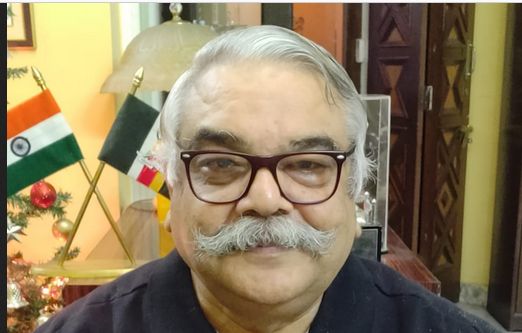
Jammu| June,1:In response to growing political discourse and public speculation over the reported losses of Indian Air Force (IAF) aircraft during Operation Sindoor, a top army veteran and defence analyt Brigadier (Retd) Anil Gupta on Saturday issued a detailed clarification, defending the operation’s planning, execution, and outcomes. He asserted that while the operation carried inherent risks, the decision to avoid targeting Pakistan’s military infrastructure was deliberate and strategically sound.
Brigadier Gupta, a decorated former officer, responded to voices—both domestic and international—that questioned the cost of the IAF’s bold cross-border strikes, undertaken in retaliation for the April 22 Pahalgam terror attack. He emphasized that India’s military achieved all its operational objectives within four days, without crossing the international border—a feat he described as “unparalleled.”
In a statement issued here on Sunday Brigadier Gupta said “To those who are surprised over the loss of IAF aircraft, we must recognize the larger picture. The decision to strike only terrorist camps and not enemy military or air defence targets on the first night had certain tactical disadvantages, but it was a calculated risk taken in the interest of strategic restraint”.
The retired army veteran said that aerial combat, even without breaching enemy airspace, carries the constant risk of being detected and targeted by Beyond Visual Range (BVR) missiles. “This is a risk that is accepted in any such mission, regardless of the political climate,” he said. Typically, military operations of this nature include Suppression of Enemy Air Defences (SEAD) or Destruction of Enemy Air Defences (DEAD) to minimize such threats. However, Operation Sindoor was designed with strict limitations, avoiding full-scale military escalation while ensuring Pakistan-based terror camps were neutralized.“Surprise was of paramount importance. The operation was launched without striking Pakistan’s air defence systems, knowing well that this would expose our aircraft to greater risks. Yet, the leadership made that choice, weighing the diplomatic and military dimensions carefully,” Gupta stated. He further said the leadership was aware that some losses might occur, but that the mission objectives outweighed those costs. The outcome, he said, justified the risk. Responding to claims—particularly from Pakistan’s media and some Indian opposition leaders—that India lost multiple aircraft in the operation, Brigadier Gupta labeled such reports as “misinformation.” He stated categorically that the losses were minimal, and no Indian pilot lost their life. “The important fact is this: none of our pilots were killed. That alone is testament to the professionalism and courage of our forces,” he said. After Pakistan launched retaliatory strikes targeting Indian military installations, the Indian Armed Forces, Gupta said, responded with overwhelming force. “We unleashed hell on their air defence networks. Several of their air bases were rendered inoperative, and the world watched India’s precision and preparedness,” he noted.
Some political leaders and commentators have criticized the government and defence establishment for not revealing exact details of aircraft losses during the operation. Brigadier Gupta addressed these concerns, suggesting that the issue must be understood within the context of a polarized political environment. “There was a vicious campaign to portray the operation as a failure based solely on aircraft losses. It was as if the enormous strategic and military success of Operation Sindoor meant nothing to them,” he said. He also referred to the statement by the Director General Air Operations (DG Air Ops) on May 9, who acknowledged losses but emphasized mission success. “We are in a combat scenario and losses are part of combat. However, we have achieved all our objectives and all our pilots are back home,” the DG had said at the time. Brigadier Gupta criticized those who dismissed that statement as insufficient, saying it reflected a lack of understanding of military realities and combat dynamics. “In the 30 months leading up to 2024, we lost more than 20 brave soldiers in anti-terror operations. These are the unfortunate but inevitable costs of defending the nation,” he said. He added that it was unfair to single out air operations for scrutiny without acknowledging the broader context and sacrifices made regularly by the armed forces.
Reaffirming the significance of Operation Sindoor and calling it a historic military achievement Brigadier (Retd) Anil Gupta said “In just four days of precise, intense fighting—without crossing the border—we inflicted heavy damage on the enemy and forced them to request a ceasefire. That speaks volumes about our military strength and strategic clarity”.
CM Omar Abdullah inaugurates three-day Kashmir Marathon Exposition at Polo View

Urges people to participate enthusiastically in Sunday’s marathon; says participation matters more than winning SRINAGAR, OCTOBER 22: Chief Minister Omar...
Read moreDetails