Srinagar: In the wake of the April 22 terrorist attack in Pahalgam that left 26 civilians dead, including tourists and foreign nationals, Jammu and Kashmir is once again grappling with questions of security, strategy, and the evolving nature of terrorism.
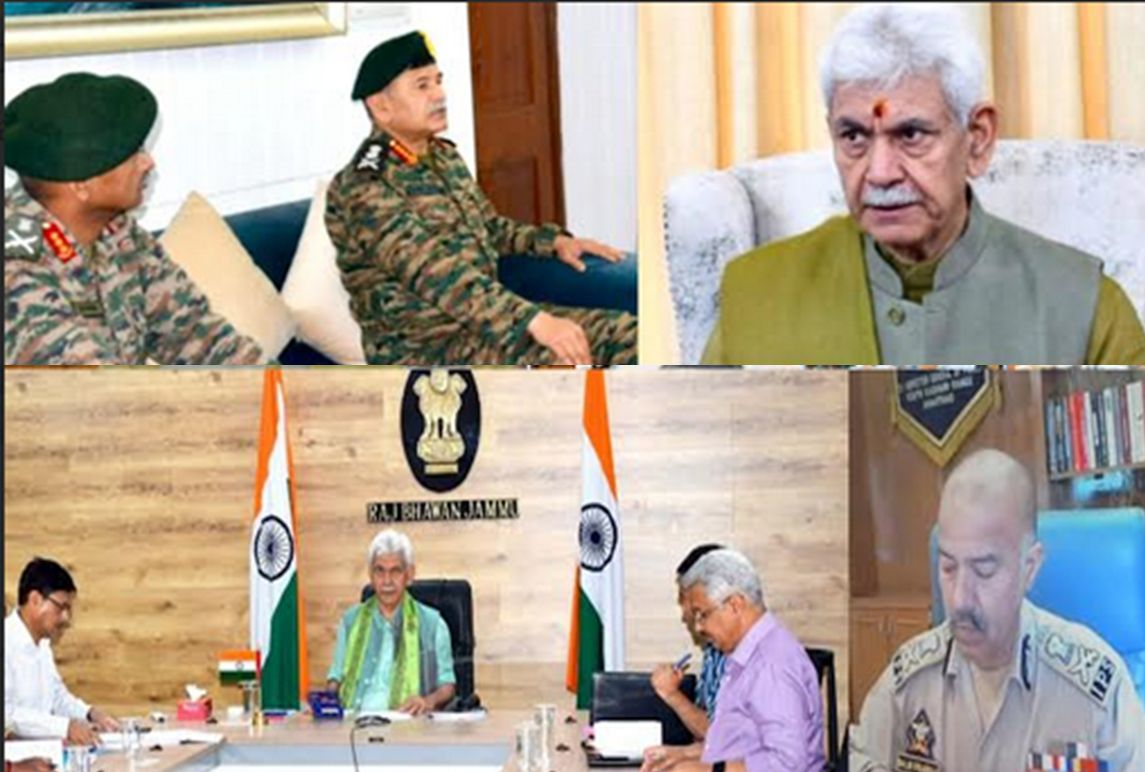
The meeting was attended by Nalin Prabhat, DGP J&K Chandraker Bharti, Principal Secretary Home, Nitish Kumar, ADGP CID J&K; Dr Mandeep K. Bhandari, Principal Secretary to Lieutenant Governor; Shri Bhim Sen Tuti, IGP Jammu and Shiv Kumar Sharma, DIG Jammu-Samba-Kathua Range. The Lieutenant Governor directed for strong and coordinated measures to completely wipe out terrorism and its entire ecosystem from Jammu Kashmir. “It is the collective resolve of the people of J&K and the nation to destroy the root of terror emanating from our neighbourhood. We must be resolute to fulfill this mission. Take strong action against OGWs who are providing logistics to terrorists, identifying targets for them and helping them to escape. Infrastructure and support system of terrorism in every nook and corner of Union Territory has to be dismantled permanently. It should be our priority to ensure a sense of security to the common man,” the Lieutenant Governor said. The Lieutenant Governor also directed to further strengthen the security grid and stressed upon the need for better coordination and synergy among the security agencies. The closed-door meeting focused on reviewing ground-level security preparedness, cross-border threat assessments, and operational recalibrations in response to the recent attack that has reignited national concerns over security vulnerabilities in Kashmir’s southern districts.
A Strategic Convergence At Raj Bhawan: The convergence of senior security officials and civil administration in Srinagar marked one of the most significant post-attack responses in recent years. While meetings of this nature are not new to Jammu and Kashmir, the high-profile presence of the Army Chief—within 48 hours of the Pahalgam massacre—signifies a visible shift in Delhi’s posture. The government appears determined to preempt any escalation, whether externally orchestrated from across the LoC or driven by sleeper cells within. According to sources familiar with the discussions, the review included an in-depth analysis of intelligence lapses, potential flaws in inter-agency coordination, and emerging terrorist strategies. There was particular focus on the changing pattern of attacks shifting from traditional confrontations with security forces to targeted civilian killings in soft zones such as tourist belts. The choice of Baisaran forest village near Pahalgam—a globally recognized tourist destination—as the site of the carnage was seen as a deliberate move aimed at creating panic, damaging the tourism economy, and reigniting communal tensions.
Army Chief Briefed On Border And Hinterland Threats: Earlier in the day, General Upendra Dwivedi was briefed at the Srinagar-based 15 Corps Headquarters. The session detailed the overall security situation along the Line of Control and within the hinterland, especially in South Kashmir where terror networks appear to be regrouping. Discussions reportedly included intelligence inputs on infiltration attempts supported by the Pakistan Army, ceasefire violations, and renewed activity in traditional terror hotbeds such as Anantnag, Pulwama, and Kulgam. The Indian Army has so far maintained that the current ceasefire agreement along the LoC, established in February 2021, has largely held. However, officials pointed out an uptick in attempts to push terrorists across under the cover of bad weather and forested terrain. Some of these infiltrators, intelligence reports suggest, are part of newly reorganized hybrid outfits with support from across the border.
Ground-Level Assessment In Pahalgam: Following the security review meeting in Srinagar, officials visited Pahalgam to personally assess the situation on the ground. His visit to the Baisaran forest area—a region once considered pacified—was both symbolic and operationally critical. By directly engaging with troops, survivors, and local officials sought to send a message of reassurance while also gathering firsthand insights into potential intelligence failures. Initial reports suggest that the attackers were well-acquainted with the terrain and had planned the ambush with surgical precision. Eyewitness accounts indicate the use of small arms and grenades, and an intent to cause maximum civilian casualties rather than engage in sustained firefights with security personnel.
LG Sinha’s Balancing Act: For LG Manoj Sinha, the meeting was not just about security—it was also a test of political stewardship at a time of heightened public fear and emotional turmoil. Over the past year, Kashmir had seen a gradual revival in tourism, infrastructure investment, and political normalization. The Pahalgam attack has not only dealt a blow to that momentum but also put the spotlight back on the continuing threat posed by terrorism in the region. Meanwhile authorities has directed security agencies to bolster both overt and covert intelligence grids, especially in tourist areas, religious pilgrimage routes, and highway corridors. There is also a renewed push to involve local communities in counter-terror efforts through village defence committees and community policing models.
Emerging Security Architecture In Valley: The presence of the Deputy Chief of Army Staff, Lt Gen Pratik Sharma, and Northern Army Commander points to an evolving multi-layered strategy. The Indian Army, under General Dwivedi’s leadership, is reportedly focusing on key priorities:
Neutralizing Sleeper Cells: With hybrid terrorism becoming the new norm, traditional cordon-and-search operations are being supplemented with intelligence-based targeting of overground workers (OGWs) and logistics handlers. Strengthening border fencing and surveillance: Technological upgrades, including drone-based surveillance and AI-assisted intrusion detection, are being fast-tracked along vulnerable LoC sectors. Moreover, security analysts point out that the upcoming Amarnath Yatra will serve as a critical test of the revised security protocols. With lakhs of pilgrims expected to traverse through sensitive areas of South Kashmir, the government’s ability to assure safety will be closely watched both domestically and internationally. The events following the April 22 terror attack have underscored a painful reality: while the outward indicators of peace may have improved in Jammu and Kashmir, the threats lurking beneath remain potent and adaptive. The high-level meeting in Srinagar, led by LG Manoj Sinha and General Upendra Dwivedi, is a critical first step in reasserting control, realigning strategies, and restoring public confidence. Whether the government can convert this resolve into sustained ground-level transformation remains to be seen. But one thing is clear—Jammu and Kashmir is once again at an inflection point, where the balance between security and stability hangs in the outcome of the next few months.