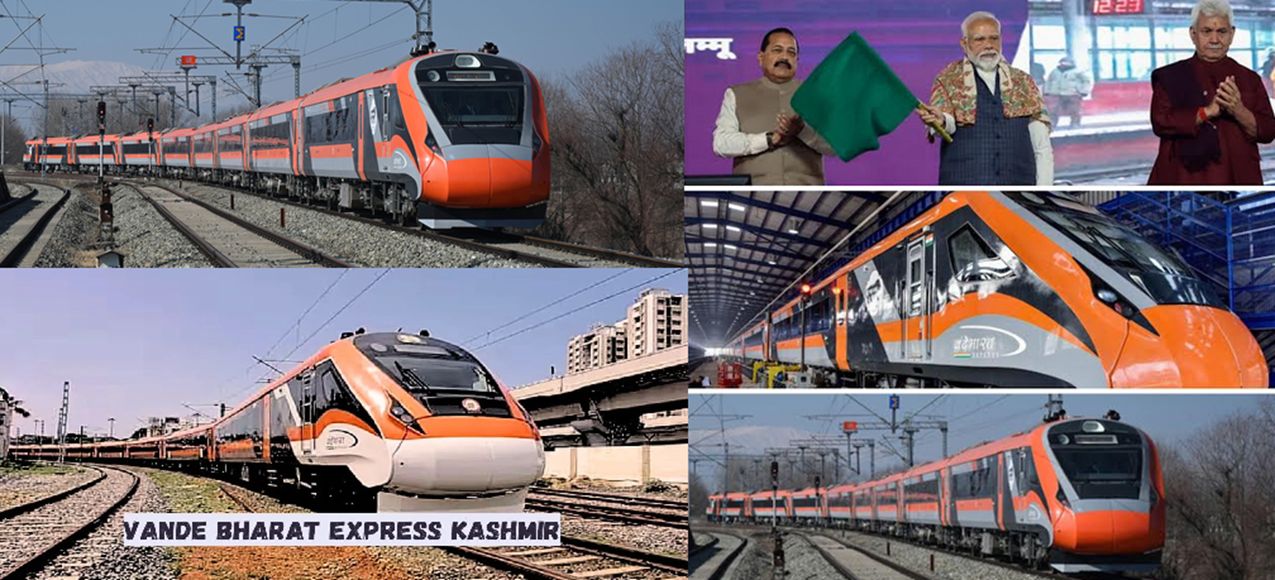
Srinagar: Major logistical and infrastructural preparations are underway across Jammu and Kashmir as Prime Minister Narendra Modi is expected to inaugurate the first Vande Bharat Express to the Kashmir Valley on April 19, marking the formal completion of the Udhampur-Srinagar-Baramulla Rail Link (USBRL)—one of the most ambitious railway infrastructure projects in the country’s history.
Officials from the Indian Railways confirmed that groundwork has intensified at key locations, particularly Katra Railway Station, where the high-profile launch ceremony is likely to be held. The event is set to underline the strategic and developmental importance of bringing Kashmir into India’s high-speed rail network.
Final Touches, Coordination in Progress: Chief Public Relations Officer (CPRO) of Northern Railways, Himanshu Shekhar Upadhyay, told Kashmir Horizon that final preparations are ongoing across multiple stations along the newly integrated route. “Passenger amenities are being upgraded, tracks are being thoroughly inspected, and additional security layers are being deployed to ensure the safety and seamless functioning of the train services,” he said. Upadhyay added that trial runs have been completed successfully and that technical inspections are being conducted to clear the train for public operations. While the final schedule and operational timings for the launch event are still awaited, all preparatory protocols are being observed in anticipation of the Prime Minister’s visit.
First Vande Bharat To Operate in Valley Conditions: According to senior officials, the Vande Bharat Express service to Kashmir has been custom-designed to operate under extreme weather conditions that are typical of the Valley, particularly during winter months when traditional connectivity routes often face disruptions. The train—developed at the Integral Coach Factory (ICF) in Chennai under the ‘Make in India’ initiative—is equipped with a range of features suited for sub-zero operations. These include silicone heating pads under coach floors, heated water pipelines, and auto-draining mechanisms to prevent freezing. Safety features include embedded windshield heaters for defrosting, anti-spall protection layers, and fully insulated cabins. Officials noted that the coaches will provide fully air-conditioned comfort with advanced systems like air dryers to maintain brake performance in cold temperatures, wide gangways, automatic doors, infotainment screens, CCTV surveillance, and mobile charging ports. “This will ensure passenger convenience and operational efficiency even in adverse conditions,” a senior railway engineer said.
Connectivity Through Rugged Terrain: The Vande Bharat Express will run along the 326-km Katra-Baramulla corridor. This stretch passes through some of the most rugged terrain in the Himalayan region and includes numerous long tunnels and high-altitude bridges. Among the engineering highlights of this route is the Chenab Bridge, which holds the distinction of being the world’s highest railway bridge, rising 359 meters above the riverbed. The route also includes the T-49 tunnel, India’s longest railway tunnel, and multiple seismic and avalanche-prone zones where precision engineering was required to maintain safety and structural integrity. The Indian Railways said the entire project, with a sanctioned cost of ₹41,000 crore, was completed in December 2023 and includes 38 tunnels totaling 119 kilometers and 927 bridges, making it one of the most complex railway undertakings in the country.
Two Vande Bharat Trains Planned Initially: Dilip Kumar, Executive Director (Information and Publicity) of the Railway Board, confirmed that two Vande Bharat Express trains are scheduled to operate initially after the formal inauguration. “One train will run from Srinagar and another from Katra. The idea is to provide seamless, daily connectivity across the length of the corridor,” he said. Kumar emphasized the symbolic importance of the project, saying it had been “a dream of every Indian to see a train run into the Kashmir Valley.” He also highlighted the multifaceted significance of the USBRL, adding, “This region is vital not only from a connectivity point of view, but also for religious tourism and strategic integration.”
Economic, Strategic, Tourism Implications: The completion of the USBRL and the launch of the Vande Bharat Express is expected to have a significant impact on the socio-economic landscape of Jammu and Kashmir. Economists and transport planners believe that the improved connectivity will enhance regional trade, enable quicker movement of goods and people, and encourage investment in sectors like tourism, horticulture, and logistics. The Kashmir Valley, which has long faced isolation during winters due to closure of highways and flight disruptions, will now have a reliable, all-weather transportation corridor. “The Vande Bharat to Kashmir is not just about rail travel; it’s about ending the region’s seasonal isolation,” said a senior official from the Planning Commission of J&K. Tourism stakeholders have also welcomed the development. “This is a game-changer for Kashmir tourism. We expect better footfall not only during the peak seasons but also in the off-peak periods, as accessibility improves,” said Nazir Ahmad, member of Kashmir Hotel and Restaurant Association.
Security, Readiness: In light of the high-profile nature of the event and the region’s history of security concerns, elaborate arrangements are being made to ensure safety during the Prime Minister’s visit and the inaugural journey. Sources from the Jammu and Kashmir Police said that coordination with central forces and intelligence agencies is ongoing. Additional deployment of Railway Protection Force (RPF) and Government Railway Police (GRP) personnel is underway, especially at sensitive points along the rail line. Station premises, platforms, tunnels, and bridges are being subjected to multiple rounds of security checks and drills in preparation for the launch. With the likely flag-off of the first Vande Bharat Express to Kashmir on April 19, India is set to script a new chapter in the story of national integration, regional empowerment, and infrastructure development. For Jammu and Kashmir, long marred by geographical isolation and conflict, the sound of a high-speed train rolling into the Valley will echo far beyond the tracks—it will signal a step toward normalcy, opportunity, and connection.