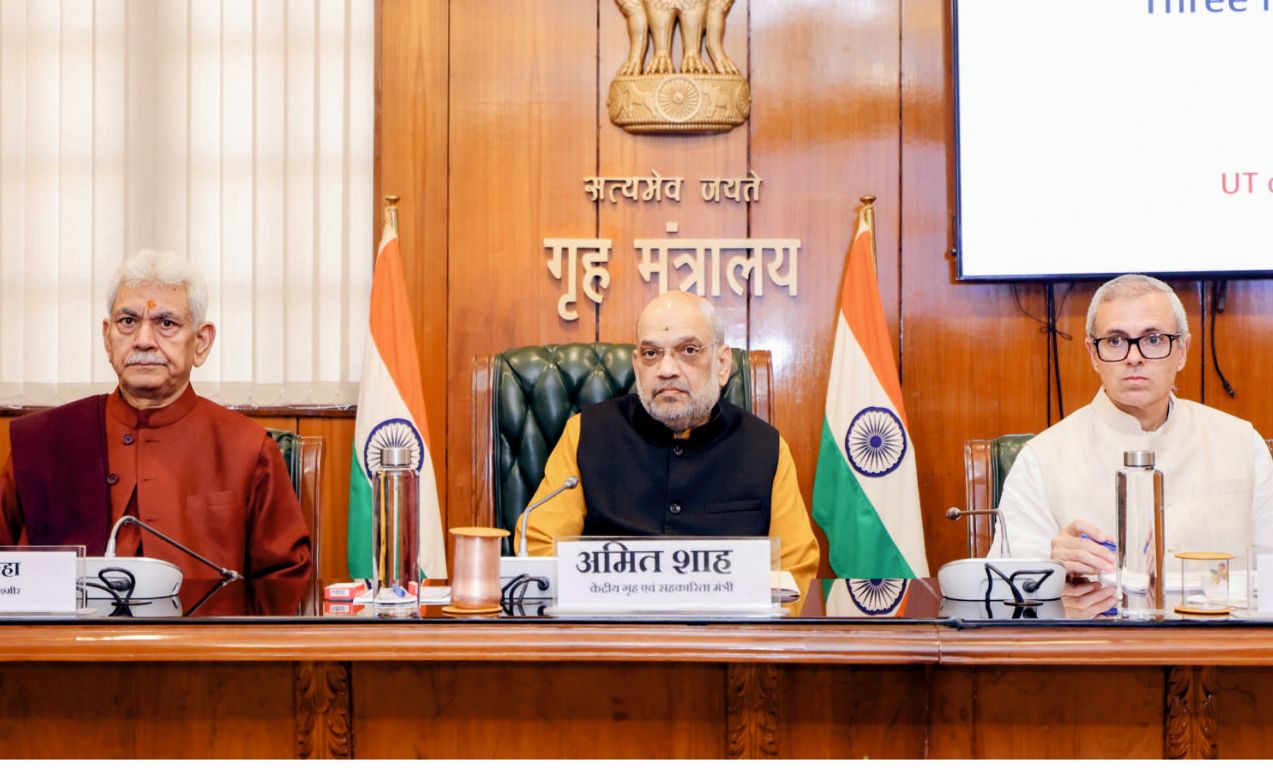
“The presence of Chief Minister Omar Abdullah and Lieutenant Governor Manoj Sinha in the meeting indicates the direct involvement of both the elected government and the centrally appointed administration in law enforcement reforms. A coordinated approach is crucial for the seamless execution of the new laws. The Broader Security Context: Jammu and Kashmir’s security situation is closely tied to the effective implementation of criminal laws.”

Union Home Minister and Minister of Cooperation Amit Shah recently chaired a high-level review meeting on the implementation of three new criminal laws in Jammu and Kashmir. The meeting, held in New Delhi, was attended by key officials, including Lieutenant Governor Manoj Sinha, Chief Minister Omar Abdullah, the Union Home Secretary, and other senior administrative and law enforcement officials. The discussions primarily focused on ensuring the full-scale implementation of the new laws by April 2025, emphasizing the role of police, prisons, courts, prosecution, and forensics. This analytical piece examines the key takeaways from the meeting, the implications of these new laws, and their potential impact on governance, security, and justice in Jammu and Kashmir.
Understanding The Three New Criminal Laws: The new criminal laws introduced under the leadership of Prime Minister Narendra Modi seek to modernize India’s judicial and legal framework. These laws emphasize technological integration, efficient policing, and citizen-centric justice delivery. The essence of the discussion in the review meeting revolved around:
Effective Enforcement And Awareness: Ensuring full implementation of the new legal provisions while educating the police and the general public about their implications. Proper workshops and community engagement initiatives must be conducted to ensure widespread awareness.
Use Of Technology: Deploying technological tools such as the National Automated Fingerprint Identification System (NAFIS) to improve law enforcement efficiency. AI-based analytics, data-sharing platforms, and biometric identification systems should be further enhanced to modernize law enforcement.
Trial In Absentia: Implementing the provision for conducting trials in absentia to address cases involving absconding criminals, particularly in the context of terrorism and organized crime. A fair mechanism should be devised to protect the rights of the accused while ensuring speedy trials.
Accountability Of Law Enforcement: Establishing a system where police officers are held responsible for timely charge-sheeting and proper use of legal provisions. A clear chain of command must be maintained to prevent delays and mishandling of legal processes.
The Role of Law Enforcement, Administration: A major concern in implementing new legal frameworks is the adaptability of law enforcement agencies. Amit Shah underlined the need for a paradigm shift in the attitudes of police personnel and the administrative machinery.
Shift From Counter Militancy To Civil Rights Protection: The Home Minister acknowledged a decline in terror-related incidents, signaling a transition for the police force to focus on ensuring the rights and freedoms of civilians. Law enforcement must work towards rebuilding trust with citizens through transparency and fair implementation of laws.
Training Of Police and Investigation Officers: The meeting stressed the need for 100% training of investigating officers on the new legal provisions. Without adequate training, the new laws could either be misused or remain underutilized, defeating their very purpose. A phased training program covering legal, technological, and ethical aspects should be introduced.
Technology-Driven Law Enforcement: Amit Shah’s insistence on maximum utilization of NAFIS at every police station highlights the importance of forensic and digital tools in modern policing. The integration of predictive policing and AI-assisted crime analysis can enhance efficiency and responsiveness.
Collaboration Between Agencies: Effective implementation of the new laws requires seamless cooperation between different law enforcement agencies, judiciary bodies, and forensic experts. Cross-agency communication must be strengthened to ensure consistency in law enforcement efforts.
Addressing Concerns Regarding Implementation: While the new criminal laws aim to streamline and modernize the legal framework, their execution in a region like Jammu and Kashmir comes with unique challenges.
Ensuring Fair,Non-Discriminatory Implementation: One of the key concerns with new criminal laws is their fair and unbiased enforcement. Jammu and Kashmir have experienced a history of stringent security laws being used extensively, sometimes leading to allegations of human rights violations. Strengthening independent review bodies can ensure balanced implementation.
Trial in Absentia,Its Implications: The provision for trial in absentia allows courts to conduct trials even if the accused is not present. While this measure is beneficial in dealing with terrorism-related cases, there are significant concerns about due process and the right to a fair trial. Legal safeguards must be strengthened to ensure a fair justice process.
Strengthening Judicial Infra : Enhancing the capacity of courts, ensuring digital integration in case management, addressing manpower shortages in judiciary and prosecution teams, and expanding legal aid services are crucial steps toward effective implementation.
Public Awareness, Legal Literacy: Conducting awareness drives, using digital platforms, and engaging community leaders can bridge the knowledge gap and build trust between citizens and law enforcement agencies.
Strengthening Public Grievance Mechanisms: The government must ensure a proper grievance redressal mechanism that allows the public to report any misuse of the new laws. This can be facilitated through independent legal committees and human rights commissions.
The Political, Security Dimensions: The Role of the Jammu and Kashmir Administration: The presence of Chief Minister Omar Abdullah and Lieutenant Governor Manoj Sinha in the meeting indicates the direct involvement of both the elected government and the centrally appointed administration in law enforcement reforms. A coordinated approach is crucial for the seamless execution of the new laws. The Broader Security Context: Jammu and Kashmir’s security situation is closely tied to the effective implementation of criminal laws. While Amit Shah noted a decline in terror activities, the geopolitical scenario and cross-border threats necessitate continued vigilance. Security policies should be aligned with developmental initiatives to promote long-term stability.
Confidence-Building Measures: Strengthening grievance redressal mechanisms for citizens, regular public engagement programs by law enforcement agencies, third-party monitoring to ensure compliance with legal provisions, and institutional mechanisms to address grievances related to law enforcement actions are key confidence-building measures.
Integration With Rehabilitation Programs: The implementation of criminal laws should be accompanied by rehabilitation initiatives for individuals affected by past conflicts. This includes vocational training programs, employment opportunities, and social reintegration efforts.
“A well-balanced approach integrating security, governance, technology, and public participation will be essential in ensuring that these legal reforms contribute to long-term stability in Jammu and Kashmir. By striking the right balance between law enforcement and civil liberties, the government can create a justice system that is both robust and fair. With continuous monitoring and periodic assessments, these changes can serve as a model for legal and judicial modernization in India, paving the way for a more progressive and transparent legal framework in the region.”
Monitoring, Review Mechanisms: Amit Shah emphasized a structured review process for tracking the implementation progress of the new laws. The proposed structure includes weekly reviews at the level of the Director General of Police, fortnightly reviews by the Chief Secretary, and monthly reviews led by the Chief Minister. These reviews should incorporate feedback mechanisms where citizens and legal experts can provide input to improve implementation strategies. The successful implementation of the new criminal laws in Jammu and Kashmir requires a multidimensional approach that integrates law enforcement reforms, judicial efficiency, technological advancements, and public participation. Ensuring a balance between security and civil liberties will be essential for fostering trust in the justice system. By addressing the challenges proactively and incorporating regular feedback, the new legal framework can serve as a model for efficient and people-centric law enforcement in India. Strengthening public confidence, enhancing training programs, leveraging technology, and ensuring fair implementation will be crucial in shaping the region’s legal landscape. With a well-coordinated approach, these reforms have the potential to significantly enhance governance, security, and justice in Jammu and Kashmir.
Kashmir Horizon View: The successful implementation of the new criminal laws in Jammu and Kashmir requires a comprehensive and multifaceted approach. Strengthening training programs for law enforcement, judiciary, and forensic teams is essential to ensure the effective and fair enforcement of the laws. A well-structured training initiative will equip officials with the necessary knowledge and skills to apply the legal provisions appropriately and prevent any misuse. Public awareness plays a crucial role in the acceptance and smooth implementation of these laws. Community outreach programs, legal literacy campaigns, and digital platforms should be leveraged to educate the public about their rights and responsibilities under the new framework. By engaging with local communities and building trust, the government can ensure that these legal changes are understood and supported by the people they are designed to protect. The advancement of technological infrastructure will also be pivotal in the modernization of the justice system. Expanding the use of AI-based crime analysis, digital case management, and forensic advancements will enhance efficiency in legal proceedings. Incorporating modern technology into law enforcement can significantly improve the speed and accuracy of investigations, thereby contributing to a more effective criminal justice system. Ensuring strong legal safeguards is imperative to prevent any potential misuse of these provisions. Independent oversight committees and human rights commissions should be empowered to monitor the enforcement of the new laws and address any concerns regarding their application. Transparency and accountability in legal proceedings will be crucial to maintaining public trust and upholding the principles of justice. Judicial and administrative reforms are necessary to support the successful execution of these laws. Strengthening courts, appointing more judges, and ensuring quick case disposal will improve access to justice for all citizens. Addressing systemic inefficiencies and reducing delays in legal processes will enhance the credibility and effectiveness of the justice system. A well-balanced approach integrating security, governance, technology, and public participation will be essential in ensuring that these legal reforms contribute to long-term stability in Jammu and Kashmir. By striking the right balance between law enforcement and civil liberties, the government can create a justice system that is both robust and fair. With continuous monitoring and periodic assessments, these changes can serve as a model for legal and judicial modernization in India, paving the way for a more progressive and transparent legal framework in the region.
(In commitment to continuous improvement the “Team Kashmir Horizon” invites it’s valuable readers to share their valuable feedback and suggestions with the “Team Kashmir Horizon”. The insights of readers will surely play a vital role in improving the content quality of “Kashmir Horizon” and contribute more for the empowerment of people. Please feel free to reach out to us at editor@ thekashmirhorizon.com. Team “Kashmir Horizon” eagerly anticipates thoughts and ideas of it’s readers, which will help us serve people and even more effectively. The inputs of valuable readers are highly valued as “Kashmir Horizon” strives to provide it’s readers the best possible experience. Thank you for being a part of the reader community!)