“Prime Minister Narendra Modi is now placing a larger question at the centre of the debate: How can India build a sporting nation capable of competing across disciplines, generations and geographies….”
Mohammad Irfan
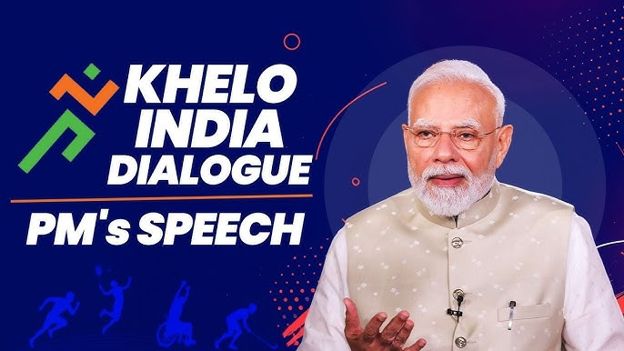
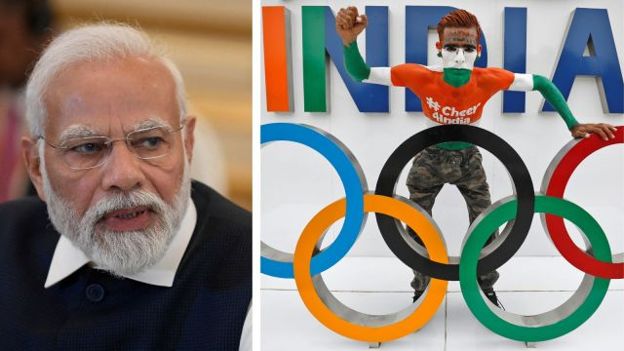 From a nationwide talent hunt for children aged 5–15 to a push for sports science, technology and new Olympic disciplines, Prime Minister Narendra Modi’s Khelo India vision seeks to turn India’s sporting potential into a broad-based national ecosystem New Delhi: India’s Olympic ambitions are entering a different phase. For decades, the country’s sporting conversation was dominated by a familiar question: How many medals can India win? Prime Minister Narendra Modi is now placing a larger question at the centre of the debate: How can India build a sporting nation capable of competing across disciplines, generations and geographies? His address at the Khelo India Samvad on August 27, ahead of National Sports Day, offered a roadmap for that transformation. The immediate horizon is the 2036 Olympics. But the vision outlined by Modi goes well beyond one edition of the Games. It seeks to create a culture in which sport becomes part of everyday life, talent is identified early, districts become centres of sporting excellence, technology and sports science support athletes, and young people can build careers not only as competitors but also as coaches, analysts, nutritionists, psychologists, doctors, technologists and sports professionals. The significance of the approach lies in its attempt to connect grassroots participation with elite performance. The premise is simple: India cannot become a sporting power if sporting talent remains undiscovered, unsupported or concentrated in a few centres. The next decade, therefore, is being presented as an opportunity to build the pipeline. The 2036 generation is already growing up The most important element of the government’s vision is its focus on children. Prime Minister Modi announced a major talent hunt to identify sporting potential among children aged between five and 15 years. The timing is significant. The 2036 Olympics are a decade away. A child who is eight, 10 or 12 today could be entering the prime of an athletic career by then. That creates a long-term pathway rather than a last-minute search for Olympic contenders. More importantly, the proposed approach moves beyond simply asking children which sport they like. The Prime Minister said the objective should also be to understand which sport a child is naturally suited for, and then provide appropriate training. That idea has the potential to change the way India discovers athletes. A child who may not initially identify with a particular sport could nevertheless possess the physical attributes, coordination, endurance, speed or other characteristics suited to it. This is where scientific talent identification can complement instinct and experience. Instead of waiting for exceptional athletes to emerge from conventional sporting channels, India can actively search for them. And with millions of children across the country, the potential talent pool is enormous.
Every District As A Potential Sporting Hub: Perhaps the most powerful theme running through the Prime Minister’s speech is decentralisation. India’s sporting future, the address suggested, cannot be built only in Delhi, Mumbai, Bengaluru, Hyderabad or other established sporting centres. It has to reach the districts. “Every district has the strength to shine on the world’s sports map,” Modi said. That proposition is particularly relevant for a country as geographically diverse as India. Different parts of the country possess different physical environments, traditions and sporting cultures. The Himalayas offer opportunities for skiing, climbing and other mountain sports.
India’s vast coastline creates possibilities for surfing and water sports. Urban centres offer opportunities for indoor sports and disciplines requiring specialised facilities. Several regions already have strong traditions in wrestling, athletics, archery, football, hockey and other sports.A district-focused strategy can therefore turn geography into an advantage. Instead of attempting to build identical sporting ecosystems everywhere, India can identify the strengths of different regions and develop specialisedpathways.Such a model could create a network of sporting districts, each contributing athletes to the national system.The result would be a broader and more diverse talent pool.
India’s Olympic opportunity Is Bigger Than Traditional Sports: India’s Olympic medal ambitions have often focused on disciplines in which the country already has established participation.But Modi’s address identified another major opportunity: entering sports where India has historically had little or no presence. He pointed to surfing and sport climbing as examples. The logic is compelling. India has a long coastline and vast mountainous terrain. It has a large youth population and millions of people increasingly interested in fitness and recreational sport. The challenge is to connect these natural advantages with organised competition. The opportunity is especially significant because Olympic success depends not merely on improving performance in existing disciplines, but also on discovering areas where Indian athletes could develop a competitive advantage. Expanding participation across Olympic sports would increase the number of pathways through which Indian athletes can reach the global stage.Itcould also reduce the country’s dependence on a relatively narrow group of disciplines for Olympic success.That is a strategic shift.
From Sports Participation To Sports Specialisation: The emerging vision also recognises that not every child has to become an elite athlete. A broad sports culture creates a much larger base from which elite athletes can eventually emerge.This is the logic behind the Prime Minister’s emphasis on participation.When more children play, more families become familiar with sport. When families become comfortable with sporting careers, more talented children are likely to remain in the system. And when more young people participate, coaches have a larger population from which to identify exceptional talent.This creates a virtuous cycle: More participation → larger talent pool → better identification → stronger training → greater competition → better elite performance.The Olympic medal is therefore the final product of a much larger process.The process begins on the playground.
Why Schools Could Become The Foundation: The school system is central to this transformation.Modi argued that sports periods should not be treated merely as co-curricular activities but as part of life.The idea represents a broader understanding of education.Academic achievement develops knowledge and intellectual abilities. Sports develop physical fitness, teamwork, discipline, resilience and the ability to deal with competition and setbacks. The Prime Minister described this as the “sports-person spirit”—the ability to rise, fall and rise again.That quality has relevance beyond sport.A child who learns how to handle defeat in a competition also learns that failure does not have to be final. A team sport teaches coordination and responsibility. Individual sport teaches self-discipline. Competitive sport introduces young people to goals, preparation and performance. A stronger sporting culture in schools could therefore contribute to both athletic development and broader youth development.
The Playground Versus The Screen : The Prime Minister’s warning about screens and his call to give greater importance to playgrounds reflect a social transformation already visible across India.Children are spending increasing amounts of time with digital devices. At the same time, fitness culture is becoming more visible among young adults. Running events, cycling, badminton, pickleball, gym-based training, recreational competitions and fitness challenges are increasingly becoming part of urban lifestyles. Prime Minister Modi cited this changing behaviour as evidence of a broader transformation. The importance of this shift is that sport begins to move away from being viewed exclusively as competition. People do not have to dream of becoming Olympians to benefit from sport. They can play for fitness. They can run for health. They can participate for social interaction. They can compete recreationally. And within that larger population, some will inevitably emerge with exceptional ability. That is how a sporting culture becomes a sporting pipeline.
Para-Athletes Show What Opportunity Can Achieve : The Prime Minister’s emphasis on para-athletes adds another important dimension to the sports vision: inclusion.He cited athletes including Sheetal Devi, AvaniLekhara, SumitAntil and Nitesh Kumar as examples of sporting excellence.Their journeys demonstrate that athletic potential cannot be defined by conventional assumptions. Para-sport has also shown how sporting success can transform not only an athlete’s life but the outlook of an entire family.The success of para-athletes has changed public perceptions about disability, ability and achievement. A national talent-identification system that actively includes differently abled children can therefore expand the sporting pool while making India’s sporting culture more inclusive.The message is clear: the search for India’s next generation of athletes should leave no category of young talent outside the system.
Sport Is Becoming An Industry : Another major change highlighted by the Prime Minister is the transformation of sport into a professional ecosystem. For young people, a career in sport no longer necessarily means becoming an athlete. Modern sport requires a wide range of professionals. Sports scientists analyse performance. Nutritionists design athlete-specific diets. Psychologists work on mental preparation. Doctors and physiotherapists manage injuries and rehabilitation. Data analysts study performance patterns. Engineers and designers develop equipment. Technology companies create tools for training, tracking and performance measurement. Coaches build technical and tactical skills. Event managers organise competitions. This expanding ecosystem creates employment opportunities alongside sporting opportunities. It also means that a young person passionate about sport can remain connected to the sector even without pursuing an elite athletic career. India’s growing economy and technology capabilities could provide a strong foundation for this sports industry.
Technology Is Changing The Athlete: The modern athlete is increasingly supported by technology. Training programmes can be monitored through data. Performance can be analysed frame by frame.Nutrition can be customized. Recovery can be tracked.Injury risks can be studied.Equipment can be designed according to an athlete’s requirements.The Prime Minister specifically identified sports technology, equipment design, medicine, nutrition, psychology and analytics as emerging areas of opportunity. This is important because elite sport is often decided by very small margins. Improving performance by fractions can determine whether an athlete reaches a final, qualifies for an event or wins a medal. India’s ability to combine its technological capabilities with sports development could therefore become a significant competitive advantage.
International Cooperation Can Accelerate Learning : The Government is also looking beyond India’s borders.Modi spoke about increasing cooperation with other countries to share expertise in sports science, training, coaching and experience. For a country attempting to rapidly expand across multiple Olympic disciplines, international knowledge can shorten the learning curve.Countries with long-established systems in specific sports can provide expertise in coaching methodologies, athlete development, competition structures and sports science. India does not need to build every component from scratch.It can learn, adapt and develop systems suited to its own conditions.This becomes particularly important for sports in which India is only beginning to establish a competitive presence.
“India does not need to build every component from scratch.It can learn, adapt and develop systems suited to its own conditions.This becomes particularly important for sports in which India is only beginning to establish a competitive presence.…..”
Jammu and Kashmir’s Geographical Advantage : The vision outlined by the Prime Minister also has particular relevance for Jammu and Kashmir.The region’s mountainous landscape provides a natural platform for winter and adventure sports.Its geography offers possibilities for skiing, snow sports, climbing and other mountain disciplines. At the same time, the region’s water resources create opportunities for selected water sports.The challenge is to convert seasonal sporting activity into a structured athlete-development pathway. With appropriate training infrastructure, coaches, competitions and sports science, Jammu and Kashmir can potentially contribute athletes to disciplines beyond those in which the region is traditionally known. The broader district-focused approach could be particularly useful here. Different districts possess different terrain and sporting traditions. Identifying these strengths and building local pathways could bring more young athletes into organised sport. The region’s sporting story, therefore, need not end with participation in local or national competitions. It can potentially become part of India’s Olympic pipeline.
Sport As A Tool Against Addiction: The Prime Minister also linked sports participation with the fight against drug abuse and addiction among young people.Sport provides routine, discipline and a sense of purpose. Training requires commitment. Competition provides goals. Teams create social networks. Coaches can become mentors. For young people, these structures can create healthier environments and alternatives to harmful habits. Sport cannot be viewed as a standalone answer to every social challenge, but expanding access to structured physical activity can strengthen community-based approaches to youth development. This makes investment in sports relevant not only to Olympic performance but also to public health and social wellbeing.
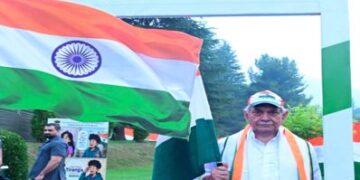
The Idea Of Lifelong Fitness: The Prime Minister’s reference to Fauja Singh brought another dimension to the conversation: sport does not have an expiry date. The broader objective is to create a society in which physical activity remains part of life across age groups. This is increasingly visible through recreational running, fitness events, cycling and community sports. The distinction between an athlete and an ordinary participant becomes important here. A sporting nation is not necessarily one in which everyone competes professionally. It is one in which sport is normal.Children play. Parents participate. Schools encourage activity. Communities organise competitions. Adults maintain fitness.Senior citizens remain physically active.From that broad base, elite athletes emerge.
Kashmir Horizon View: The 2036 Olympics may still seem distant.But for an athlete, a decade is not a long time. For a child discovered today, it could represent the entire journey from first training session to international competition. That is why the Prime Minister’s focus on the 5–15 age group is central to the larger vision. India has an opportunity to begin preparing an entire generation rather than a small group of athletes. The objective is not simply to ask who can win a medal in 2036. It is to build a system in which millions get the opportunity to play and thousands receive structured development, allowing the most talented to eventually compete at the highest level. That is a fundamentally different way of thinking about Olympic preparation. The playground becomes the starting point. The district becomes the discovery centre. Technology becomes the performance partner. Sports science becomes part of training. Schools become the foundation. And the athlete becomes the centre of a much larger ecosystem. India’s 2036 Olympic dream, therefore, is not only about what happens during a few weeks of competition. It is about what happens every day for the decade leading to those Games. The real ambition is to make sport a part of India’s social fabric—and to ensure that somewhere among the millions of children playing today are the athletes who could carry the country’s aspirations onto the world’s biggest sporting stage in 2036. As Prime Minister Modi put it, “jo khelega, who khilega”—whoever plays will blossom. The larger challenge, and opportunity, is to ensure that every child gets the chance to play, every promising athlete gets the chance to develop, and India’s sporting potential gets the system it needs to flourish.
(“Team Kashmir Horizon” is committed to continuous improvement and invites feedback and suggestions from readers and its followers on social media sites. Reader insights are considered vital for enhancing content quality and empowering the community. The team encourages open communication and values the thoughts and ideas of its audience, believing that such input will enable them to serve the public more effectively. The initiative aims to ensure that readers have the best possible experience with “Kashmir Horizon”. Interested individuals can reach out to us via email at [email protected].)