“This particular budget is of special significance as it marked a departure from previous practices. For the first time in many years, Jammu and Kashmir is preparing its own budget through a consultative process with public representatives”.

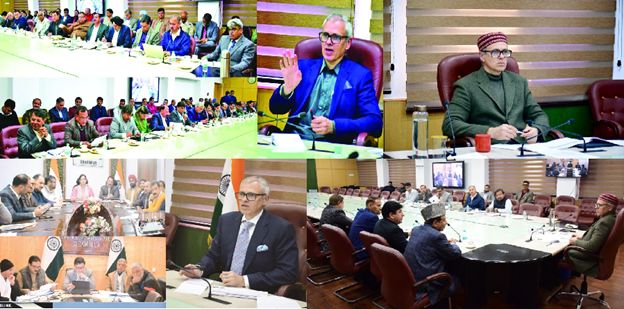
Pre-budget consultations play a crucial role in shaping a financial plan that aligns with the aspirations of the people. The Chief Minister of Jammu and Kashmir, Omar Abdullah this week emphasized this while engaging in extensive discussions with public representatives and key stakeholders. These consultations, held over multiple days, were designed to gain firsthand insights into the developmental priorities and pressing issues faced by various sectors and districts. The Chief Minister underscored the importance of ensuring that the budget reflects the voices of the people and meets their expectations.
A Landmark Budgeting Process: Moving Towards Self-Reliance: During these discussions, Omar Abdullah highlighted that this particular budget is of special significance as it marked a departure from previous practices. For the first time in many years, Jammu and Kashmir is preparing its own budget through a consultative process with public representatives. He pointed out that earlier, the Finance Minister of the country had limited engagement with the region’s specific needs. However, with the newly formed government, there was now an opportunity to draft a budget that incorporated local perspectives, making these consultations all the more crucial.
Addressing Developmental Concerns: An Inclusive Approach: The session witnessed over 33 interventions, covering a broad spectrum of developmental concerns. The Chief Minister assured the participants that while it might not be possible to address every demand immediately, all suggestions would be thoroughly examined during the budget formulation process. He reassured them that their concerns would not be ignored and that the government was committed to addressing the most pressing issues in a phased manner.
Economic Growth, Industrial Development,The Key Priorities: One of the primary areas of discussion was economic growth and industrial development. The Chief Minister stressed the necessity of bolstering manufacturing, trade, and tourism. He elaborated on the progress of railway connectivity, citing the expansion from Pathankot to Jammu, then to Udhampur and Katra, with further plans to extend the train route to Srinagar within the year. While this expansion was expected to boost connectivity and economic activity, concerns were raised about the potential impact on Jammu’s economy due to shifting trade patterns. Omar Abdullah acknowledged these concerns and emphasized the need for strategic planning to ensure Jammu remains a thriving commercial hub despite these changes.
Tourism;Unlocking Jammu’s Untapped Potential: Tourism emerged as a key focus area, with the Chief Minister highlighting Jammu’s immense potential, particularly in religious and pilgrimage tourism. He noted that while Mata Vaishno Devi remains a major draw, efforts should be made to showcase the region’s other sacred sites. Effective marketing and promotional campaigns could encourage visitors to extend their stay and explore Jammu’s cultural and historical heritage. Additionally, he underlined the potential of sports tourism, revealing plans to organize a major sporting event in Jammu, akin to the successful Srinagar Marathon. Such initiatives would not only boost tourism but also provide a platform for local talent and economic growth.
Infrastructure Expansion For Strengthening Connectivity: The discussion also touched upon infrastructural development, with the Chief Minister acknowledging the need for an upgraded Jammu Airport to improve connectivity. He noted that expansion plans were being formulated to accommodate increasing passenger traffic and to enhance the region’s accessibility. In the education sector, he expressed support for private institutions and advocated for a legislative framework that would encourage the establishment of private universities. This move, he argued, would create more opportunities for quality higher education and attract students from across the country.
Incorporating Public Inputs; Strengthening Policy Frameworks: Omar Abdullah extended his gratitude to all participants, assuring them that their inputs would be incorporated into the government’s policy framework. He reiterated that these consultations were not a mere formality but an essential step in ensuring that governance remained inclusive and responsive to public needs. The Chief Minister reaffirmed his commitment to formulating a budget that truly represented the aspirations of the people of Jammu and Kashmir.
Sectoral Consultations;Addressing Industry and Social Welfare: In a separate pre-budget consultation session, the Chief Minister engaged with representatives from various sectors, including industry and trade, tourism, hospitality, education, social welfare, tribal affairs, youth affairs, and agriculture. Each of these stakeholders put forth their concerns and recommendations, emphasizing the need to develop Jammu as a religious tourism hub, enhance private education opportunities, improve sports infrastructure, and strengthen support for tribal communities. The discussions also delved into boosting tourism, refining trade policies, and fostering industrial growth as essential drivers of the region’s economic development.
Engagement With Elected Representatives; A Collaborative Effort: Chairing another series of pre-budget consultations at the Civil Secretariat in Jammu, Omar Abdullah was joined by Members of the Legislative Assembly (MLAs) from Anantnag, Budgam, Kathua, and Samba districts, as well as District Development Council (DDC) Chairpersons, who participated via video conferencing. The Chief Minister underscored the importance of such engagements in fostering participatory governance. The meeting was also attended by senior officials, including Advisor to the Chief Minister Nasir Aslam Wani, Additional Chief Secretary Dheeraj Gupta, Principal Secretary Finance Santosh D Vaidya, and Director General Budget J&K, among others.
A Budget For The People, By The People: Addressing the gathering, the Chief Minister reiterated that the primary objective of these consultations was to gather valuable insights from key stakeholders before finalizing the budget. He emphasized that the upcoming budget was not solely the government’s creation but rather a collective effort aimed at representing the will of the people. By engaging elected representatives in these discussions, the government sought to ensure that budgetary priorities aligned with public expectations and the developmental needs of various constituencies.
“Regular feedback from public representatives, industry stakeholders, and civil society can help identify gaps and make necessary adjustments. Public participation should not end with consultations but should extend to active involvement in policy execution and review. In conclusion, the way forward for Jammu and Kashmir lies in a well-balanced approach that integrates economic development, social progress, and governance reforms. By prioritizing infrastructure, industrial growth, tourism, education, healthcare, and transparent governance, the upcoming budget can serve as a catalyst for sustainable progress in the region.”
Representation And Participation: Amplifying Public Voices: Omar Abdullah reminded the MLAs and DDC Chairpersons that their leadership was entrusted with the hopes and aspirations of the electorate. He assured them that their inputs would play a vital role in shaping the budget and that the government remained committed to involving elected representatives in crucial decision-making processes. He also emphasized that this consultation process would be ongoing, with regular interactions to ensure transparency and inclusiveness in governance.
Key Concerns Raised;A Roadmap For Development: During these consultation sessions, representatives from various districts raised a range of concerns and priorities. Key issues included road widening projects, new road construction, the enhancement of sports infrastructure, the upgrading of healthcare and educational institutions, the provision of potable drinking water, the development of tourist destinations, and strengthening healthcare services with adequate staffing. Additionally, the need for new colleges and schools was highlighted as a critical requirement for the region’s educational advancement.
A Commitment To Inclusive Development: The elected representatives expressed their gratitude to the Chief Minister for initiating these consultations, acknowledging the government’s proactive approach in incorporating grassroots perspectives into budgetary planning. They appreciated the opportunity to voice their constituencies’ concerns and were optimistic that their inputs would be reflected in the final budget. The Chief Minister concluded by reaffirming that the forthcoming budget session in the J&K Assembly would be a testament to the government’s dedication to serving the people with sincerity and commitment. By working together, he emphasized, the government and public representatives could uplift the socio-economic conditions of Jammu and Kashmir and drive sustainable development in the region.
Kashmir Horizon view: The pre-budget consultations in Jammu and Kashmir mark a significant step towards inclusive governance and participatory decision-making. However, translating these discussions into actionable policies requires a well-structured approach that balances economic growth, social welfare, and regional development. The following strategic measures can ensure that the upcoming budget reflects the aspirations of the people while addressing critical challenges faced by the region. A key priority for the government should be the enhancement of infrastructure to support economic growth. Investments in roads, railways, and airports will not only improve connectivity but also facilitate industrial expansion and boost tourism. The proposed expansion of Jammu Airport and the extension of railway lines to Srinagar must be complemented by upgraded highways and rural road networks. This will ensure seamless trade and mobility, attracting investments and providing employment opportunities in urban and rural areas alike. Industrial development is crucial for generating employment and fostering economic self-sufficiency in the region. To achieve this, the government should introduce incentives for businesses and entrepreneurs, particularly in sectors such as handicrafts, agro-based industries, and information technology. Special economic zones (SEZs) and industrial corridors should be developed to attract private sector investment, with a focus on skill development programs to enhance the employability of local youth. Tourism remains one of the most promising sectors for economic revitalization in Jammu and Kashmir. While the region is already a popular pilgrimage destination, there is a need to diversify tourism offerings by promoting adventure tourism, ecotourism, and cultural tourism. Infrastructure improvements, including better accommodation facilities, modernized transport systems, and digital marketing campaigns, will enhance Jammu’s standing as a top-tier travel destination. Additionally, government-led initiatives to encourage homegrown tourism enterprises can provide locals with direct economic benefits. Education and skill development should form a cornerstone of the upcoming budget. Establishing new colleges, universities, and vocational training centers will provide young people with the necessary skills to thrive in an evolving job market. The government should also consider facilitating private investment in higher education by creating a robust regulatory framework that ensures quality while encouraging new institutions to set up in the region. Special attention should be given to tribal and marginalized communities to ensure equitable access to quality education. Healthcare remains a critical area requiring government intervention. Strengthening primary healthcare centers, improving staffing in hospitals, and expanding telemedicine services can bridge the healthcare gap between urban and rural areas. Budget allocations should prioritize essential medical infrastructure, including diagnostics, emergency care, and maternal health facilities, ensuring that every citizen has access to quality healthcare services. To ensure transparency and accountability, the government should establish a monitoring mechanism to track the implementation of budgetary allocations. Regular feedback from public representatives, industry stakeholders, and civil society can help identify gaps and make necessary adjustments. Public participation should not end with consultations but should extend to active involvement in policy execution and review. In conclusion, the way forward for Jammu and Kashmir lies in a well-balanced approach that integrates economic development, social progress, and governance reforms. By prioritizing infrastructure, industrial growth, tourism, education, healthcare, and transparent governance, the upcoming budget can serve as a catalyst for sustainable progress in the region.
(In commitment to continuous improvement the “Team Kashmir Horizon” invites it’s valuable readers to share their valuable feedback and suggestions with the “Team Kashmir Horizon”. The insights of readers will surely play a vital role in improving the content quality of “Kashmir Horizon” and contribute more for the empowerment of people. Please feel free to reach out to us at editor@ thekashmirhorizon.com. Team “Kashmir Horizon” eagerly anticipates thoughts and ideas of it’s readers, which will help us serve people and even more effectively. The inputs of valuable readers are highly valued as “Kashmir Horizon” strives to provide it’s readers the best possible experience. Thank you for being a part of the reader community!)