“The state’s history, ongoing security issues, and frequent threats from militancy make the job of law enforcement officers even more demanding. The Lieutenant Governor’s address reflected these challenges, acknowledging the difficult circumstances under which the Jammu and Kashmir Police operate. The event celebrated the induction of these new officers into a force that plays a pivotal role in maintaining peace and security within the region. The induction of new officers also serves as a reminder of the ongoing efforts to improve the efficacy of law enforcement agencies in Jammu and Kashmir through the adoption of modern policing strategies, better coordination, and the incorporation of new technologies. The event was not just a celebration of achievement but also a reflection of the commitment to strengthening the region’s policing infrastructure.”

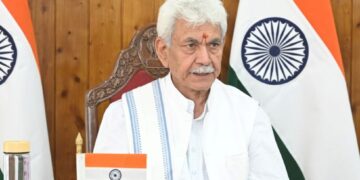
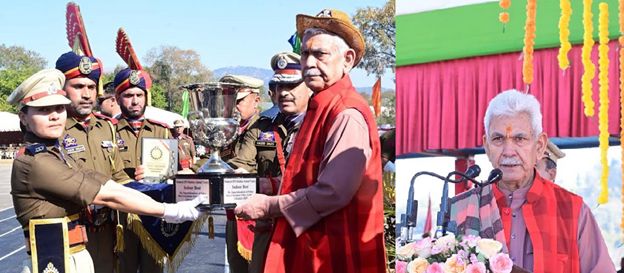
This week, Jammu and Kashmir’s Lieutenant Governor (LG), Manoj Sinha, attended the Passing Out Parade of Probationer Deputy Superintendents of Police (DySPs) at the Police Academy in Udhampur. The event was a momentous occasion, not only for the 61 passing out officers but also for the region’s law enforcement community. During his address, the Lieutenant Governor congratulated the officers on their achievements, urging them to fulfill their duties with the utmost honesty, dedication, and professionalism. He reminded the officers of the significant responsibility they now carried in ensuring the safety, security, and well-being of the people in Jammu and Kashmir.
The Role of Law Enforcement in J&K: The role of law enforcement in Jammu and Kashmir has always been challenging, given the region’s complex socio-political landscape. The state’s history, ongoing security issues, and frequent threats from militancy make the job of law enforcement officers even more demanding. The Lieutenant Governor’s address reflected these challenges, acknowledging the difficult circumstances under which the Jammu and Kashmir Police operate. The event celebrated the induction of these new officers into a force that plays a pivotal role in maintaining peace and security within the region. The induction of new officers also serves as a reminder of the ongoing efforts to improve the efficacy of law enforcement agencies in Jammu and Kashmir through the adoption of modern policing strategies, better coordination, and the incorporation of new technologies. The event was not just a celebration of achievement but also a reflection of the commitment to strengthening the region’s policing infrastructure.
Responsibility And Dedication: In his address, the Lieutenant Governor underlined the immense responsibility entrusted to the newly inducted officers. “From today, the nation is entrusting you with the important responsibility of maintaining internal security, combating militancy, ensuring the Rule of Law, and providing a safe and secure environment for the people. I wish you victory in every mission,” said LG Sinha. His words served as a call to action for the young officers, reminding them that their work would directly impact the stability and peace in the region. The duty of upholding the law and protecting citizens, particularly in a region fraught with complexities, is one that requires constant vigilance, resilience, and a commitment to upholding justice.
Tribute To The Bravehearts: The Lieutenant Governor also paid tribute to the brave men and women of the Jammu and Kashmir Police, as well as the security forces, who have made the ultimate sacrifice in service to the nation. These officers and jawans work under extremely difficult and perilous conditions, often putting their lives on the line to protect the citizens of Jammu and Kashmir. The LG praised their bravery and dedication, recognizing the significant role they play in ensuring the security of the nation. This tribute was a moment of reflection, highlighting the sacrifices made by those who have served before the newly inducted officers. “The J&K Police, working under extremely challenging circumstances, is playing a significant role in the country’s internal security,” he said. The Lieutenant Governor acknowledged that despite the tough conditions, the police force has remained steadfast in their mission to safeguard the citizens and maintain the integrity of the nation.
Operational Coordination And Approach: One of the key areas the Lieutenant Governor emphasized was the importance of operational coordination between the police and other security agencies. Given the complex security dynamics in Jammu and Kashmir, effective collaboration is vital for tackling emerging threats. “Terror-free and fear-free Jammu Kashmir is our resolve,” LG Sinha declared, stressing the government’s commitment to eradicating militancy and ensuring peace in the region. The government has adopted a “Whole of Government Approach” to dismantle the militants’ and separatists’ networks operating in the region. This multi-agency approach is aimed at improving operational coordination and ensuring a unified response to security challenges. The Lieutenant Governor encouraged the new DySPs to focus on working cohesively with other security agencies to achieve these objectives, highlighting the need for collaboration at every level of law enforcement.
Addressing New Security Challenges: With the world evolving rapidly, the nature of security threats is also changing. The Lieutenant Governor acknowledged these emerging challenges and tasked the Jammu and Kashmir Police with adapting to new realities. “We are witnessing new challenges, including cyber threats, disinformation campaigns, and narco-militancy,” he said. These threats have become increasingly sophisticated, requiring law enforcement agencies to innovate and develop new strategies to counter them effectively. The LG urged the officers to utilize innovative tools and techniques, particularly in addressing cyber threats, disinformation, and deep fakes, which have become significant concerns for internal security. He noted that modern technology, including Artificial Intelligence, is transforming the security landscape, making it imperative for law enforcement to stay ahead of these challenges.
Proactive Policing And Emerging Threats: A key point in the Lieutenant Governor’s speech was his call for a shift in the approach to policing. “We need to shift our tactics from reactive policing to proactive policing,” he emphasized. Proactive policing involves anticipating and responding to criminal activities before they escalate. It also includes constant vigilance and real-time monitoring of crime patterns to prevent incidents rather than merely responding to them after they occur. The Lieutenant Governor also highlighted specific emerging threats, including narco-militancy, the weaponization of social media, and the proliferation of disinformation. These issues are becoming increasingly pervasive and pose serious risks to national security and societal harmony. The newly inducted officers were called upon to lead the fight against these threats, with a particular emphasis on curbing drug trafficking, cybercrime, and counter-radicalization efforts.
The Importance of Prosecution: Another important aspect of effective policing that the Lieutenant Governor addressed was the role of prosecution in securing convictions and ensuring justice. “Investigation and successful prosecution are important weapons of effective policing,” he said, emphasizing that law enforcement’s job extends beyond neutralizing militants and extremists. It also involves eliminating the elements that support and enable militancy and separatism. The Lieutenant Governor stressed the need for thorough and fair investigations, ensuring that every crime is prosecuted to its logical conclusion. This focus on effective prosecution is vital in building public trust and ensuring that criminals are held accountable for their actions.
Civil Action Programs: The Lieutenant Governor also commended the Jammu and Kashmir Police for their civil action programs. These programs have been designed to bridge the gap between law enforcement and the community, creating a more positive relationship between the police and the people they serve. Civil action programs foster collaboration, trust, and cooperation between the police force and the local community. Garib Dass, Director of the Udhampur Police Academy, briefed the Lieutenant Governor on the various activities and programs conducted during the training course, including these civil action initiatives. The Lieutenant Governor took a ceremonial salute and inspected the passing out parade, congratulating the officers for their excellence during their training.
Review Meeting On New Criminal Laws Implementation: In a related development, the Lieutenant Governor also chaired a high-level meeting to review the implementation of three new criminal laws in Jammu and Kashmir: the Bharatiya Nyaya Sanhita 2023, the Bharatiya Nagarik Suraksha Sanhita 2023, and the Bharatiya Sakshya Adhiniyam 2023. These laws, which came into force in July 2024, aim to enhance the efficiency and effectiveness of the criminal justice system in the region. The meeting, attended by senior officials including the Chief Secretary and DGP, focused on the capacity building and training of police personnel to implement these new laws. The Lieutenant Governor emphasized the importance of ensuring transparency and meeting timelines for speedy investigation and trial, as outlined in the new laws.
“The link between drug trafficking and militancy is a complex challenge that requires a coordinated effort across law enforcement, health, and social sectors. A critical component of the police force’s future success will also depend on the implementation of the new criminal laws. These laws have the potential to enhance the criminal justice system’s effectiveness, especially in areas like counterterrorism, anti-national activities, and crimes related to extremism. However, for these laws to be truly impactful, transparency in their implementation, efficiency in investigations, and timely prosecutions are essential. Moreover, public engagement and community policing initiatives will play a pivotal role in strengthening the relationship between law enforcement and the people they serve. By fostering a sense of trust and cooperation, the police can better understand the concerns and needs of local communities.”
Technological Interventions And Training: The meeting also highlighted the importance of technological interventions in law enforcement. Discussions were held regarding the procurement of Forensic Science Laboratory (FSL) vans, the training of forensic experts, and the need for specialized training for police officers to handle complex investigations under the new criminal laws. Looking ahead, the Lieutenant Governor’s address and the subsequent meeting set the tone for the future of policing in Jammu and Kashmir. The emphasis on technological advancements, capacity building, and inter-agency coordination will help strengthen the law enforcement infrastructure in the region. The new DySPs, equipped with modern tools, techniques, and a proactive mindset, will play a crucial role in addressing emerging threats such as cybercrime, narco-militancy, and disinformation. Their work will be critical in maintaining peace and ensuring the security of Jammu and Kashmir.
Kashmir Horizon View: As the region moves forward, public awareness and community engagement must remain a priority. By fostering trust and collaboration between the police and the public, law enforcement can create a more secure and harmonious environment. The Lieutenant Governor’s commitment to modernizing the police force and improving law enforcement strategies will undoubtedly play a key role in shaping the future of Jammu and Kashmir’s security landscape. The Lieutenant Governor’s address and the subsequent review meeting signal a transformative phase for the Jammu and Kashmir Police. The focus on modernization through the use of advanced technologies, improved training, and cross-agency coordination is central to enhancing the region’s law enforcement capabilities. The future of policing in Jammu and Kashmir lies in its ability to adapt to rapidly evolving security challenges. As the region continues to grapple with the threat of militancy, cyber threats, narco-terrorism, and social media-based radicalization, the Jammu and Kashmir Police must stay ahead of these emerging risks. This means continuously updating their strategies, adopting cutting-edge technological tools, and strengthening their intelligence networks. The shift from reactive to proactive policing will be key in this regard. Rather than simply responding to crimes after they occur, law enforcement must anticipate potential threats, identify criminal activities in their nascent stages, and prevent them from escalating. In practical terms, this approach will require enhanced surveillance, real-time data analysis, and more effective crime mapping to forecast and neutralize criminal activities before they can take root. Moreover, addressing the growing threats of cybercrime and narco-militancy will necessitate specialized training and the adoption of new tools. Cybercrime is particularly difficult to combat due to its transnational nature, making cooperation with international agencies and experts essential. Meanwhile, the link between drug trafficking and militancy is a complex challenge that requires a coordinated effort across law enforcement, health, and social sectors. A critical component of the police force’s future success will also depend on the implementation of the new criminal laws. These laws have the potential to enhance the criminal justice system’s effectiveness, especially in areas like counterterrorism, anti-national activities, and crimes related to extremism. However, for these laws to be truly impactful, transparency in their implementation, efficiency in investigations, and timely prosecutions are essential. Moreover, public engagement and community policing initiatives will play a pivotal role in strengthening the relationship between law enforcement and the people they serve. By fostering a sense of trust and cooperation, the police can better understand the concerns and needs of local communities. This will not only help prevent crimes but also provide valuable intelligence to aid in criminal investigations. Civil action programs and outreach initiatives should be expanded, ensuring that citizens are not only protected but also involved in efforts to enhance law and order.
(In commitment to continuous improvement the “Team Kashmir Horizon” invites it’s valuable readers to share their valuable feedback and suggestions with the “Team Kashmir Horizon”. The insights of readers will surely play a vital role in improving the content quality of “Kashmir Horizon” and contribute more for the empowerment of people. Please feel free to reach out to us at editor@ thekashmirhorizon.com. Team “Kashmir Horizon” eagerly anticipates thoughts and ideas of it’s readers, which will help us serve people and even more effectively. The inputs of valuable readers are highly valued as “Kashmir Horizon” strives to provide it’s readers the best possible experience. Thank you for being a part of the reader community!)