

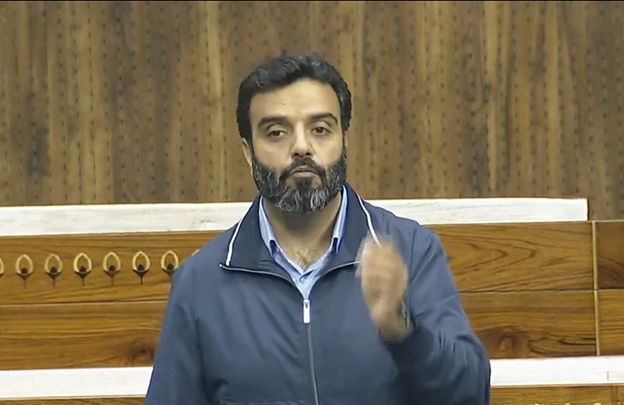
Syed Aga Ruhulla MP’s participation in the reservation protest in front of his own party’s Chief Minister’s residence in Srinagar has drawn significant attention and sparked widespread debate. While some critics have labeled it a “fixed match” or an act of defiance against the National Conference (NC), the reality appears far more nuanced. Ruhulla’s actions are best understood in the context of the promises he made during the recent Assembly elections. In his campaigns, Aga Ruhulla firmly stated that he would prioritize the people’s concerns over party lines, even if it meant challenging his own party. This protest is a testament to that pledge.
Context Behind Aga Ruhulla’s Move: During his election campaigns, Aga Ruhulla’s rhetoric emphasized accountability and commitment. He argued that leaders must stand with their people, irrespective of party affiliations, if promises remain unfulfilled. This principled stance resonated deeply with voters, earning him widespread support. By joining the reservation protest, Syed Aga Ruhulla demonstrated that his words were not mere slogans but a genuine commitment to public welfare. This bold step underscores the delicate balance between party loyalty and public accountability. It sends a powerful message: elected representatives must prioritize their constituents over the interests of their political parties. Such a move challenges the conventional narrative that views dissent within parties as betrayal, urging a rethinking of internal political dynamics.
Misinterpretations, Political Repercussions: Unsurprisingly, Ruhulla’s protest has been interpreted in various ways:
1. A Fixed Match: Some skeptics argue that the protest was orchestrated to project NC as a party that tolerates internal dissent and values democracy.
2. A Challenge To The Party: Others see it as a precursor to a potential split within the NC or an attempt by Ruhulla to carve out a distinct identity. However, these interpretations fail to capture the essence of Ruhulla’s actions. His protest appears to stem from a genuine desire to fulfill his campaign promises. It is not an act of defiance but a testament to his integrity as a leader. By standing with the protesters, Ruhulla aligned himself with the people’s aspirations, reinforcing his credibility as a public representative.
Advantage National Conference: Ironically, what might have been perceived as a challenge to the NC has, in several ways, worked to its advantage:
1. Strengthening Internal Democracy: Ruhulla’s actions have showcased NC as a party that accommodates diverse opinions. Unlike parties that suppress dissent, NC can now position itself as a progressive organization where internal debates and differences are welcomed. This move could strengthen the party’s democratic image, particularly among younger voters who value transparency and accountability.
2. Connecting Leadership With The People: The protest served as a bridge between the public and the party leadership. It highlighted the willingness of the NC Chief Minister to listen to grievances and engage directly with the public. This connection is crucial for rebuilding trust and strengthening the party’s grassroots appeal.
3. Reviving Public Activism: Over the years, public protests had dwindled due to disillusionment or fear of political repercussions. Ruhulla’s participation encouraged people to voice their demands without fear, revitalizing the culture of public activism. This empowerment is vital for a healthy democracy.
4. Providing a Breather For The Omar Government: The protest comes at a time when the Omar Abdullah-led government is six months into its tenure. Public engagement through protests can serve as an opportunity for the government to identify gaps in governance and address them proactively. It also allows the government to demonstrate its commitment to accountability and reform.
“In a region where political narratives often revolve around power struggles, Ruhulla’s protest serves as a reminder of the true essence of democracy – prioritizing the people above all else. As the political landscape evolves, such acts of integrity and accountability will play a crucial role in shaping the future of governance in Jammu and Kashmir.”
Role Of Leadership And Political Maturity: The way the NC leadership handles this situation will determine its long-term impact. Some junior-level party leaders’ dismissal of the protest as an “opponent-driven move” reflects a defensive mindset that could undermine the party’s image. Instead of viewing Ruhulla’s actions as a threat, the NC should embrace them as a reflection of the party’s internal democracy and commitment to public welfare. Political maturity demands that the NC capitalize on this event to strengthen its narrative. By showcasing the protest as an example of healthy internal debate, the party can project itself as a progressive and dynamic organization. This approach would not only mitigate potential criticism but also enhance the party’s appeal among voters.
Broader Implications For J&K Politics: Syed Aga Ruhulla’s protest has implications beyond the NC. It sets a precedent for other political representatives in Jammu and Kashmir, emphasizing the importance of prioritizing public welfare over party allegiance. It challenges the status quo, where loyalty to party leadership often takes precedence over accountability to the electorate. This incident also highlights the evolving political landscape in the region. With increasing awareness among voters, representatives can no longer afford to make empty promises. The demand for transparency and accountability is reshaping the dynamics of governance, urging leaders to adopt a more people-centric approach.
Challenges Ahead For The National Conference: While Ruhulla’s actions have brought certain advantages, they also pose challenges for the NC:
1. Managing Internal Dynamics: The party must ensure that such incidents do not lead to internal discord. A balance must be struck between encouraging healthy dissent and maintaining organizational unity.
2. Addressing Public Expectations: The protest has raised expectations among the public. The NC must now deliver on its promises to retain its credibility.
3. Countering Opposition Narratives: Opponents are likely to use this incident to portray the NC as a divided house. The party must counter such narratives with a unified and coherent response.
Conclusion: Syed Aga Ruhulla MP’s participation in the reservation protest is a defining moment in Jammu and Kashmir’s political discourse. It underscores the importance of accountability, internal democracy, and public activism. While it has sparked varied interpretations, the move ultimately reflects Ruhulla’s commitment to his constituents and serves as an example of principled leadership. For the NC, this incident is both an opportunity and a challenge. By embracing Ruhulla’s actions as a reflection of its internal democracy, the party can strengthen its image and connect with the electorate. However, it must also address the public’s concerns and deliver on its promises to sustain this momentum. In a region where political narratives often revolve around power struggles, Ruhulla’s protest serves as a reminder of the true essence of democracy – prioritizing the people above all else. As the political landscape evolves, such acts of integrity and accountability will play a crucial role in shaping the future of governance in Jammu and Kashmir.
(The Author is a freelancer. The views, opinions and conclusions expressed in this article are those of the author and aren’t necessarily in accord with the views of “Kashmir Horizon”)
Ahmad Ayaz
[email protected]






