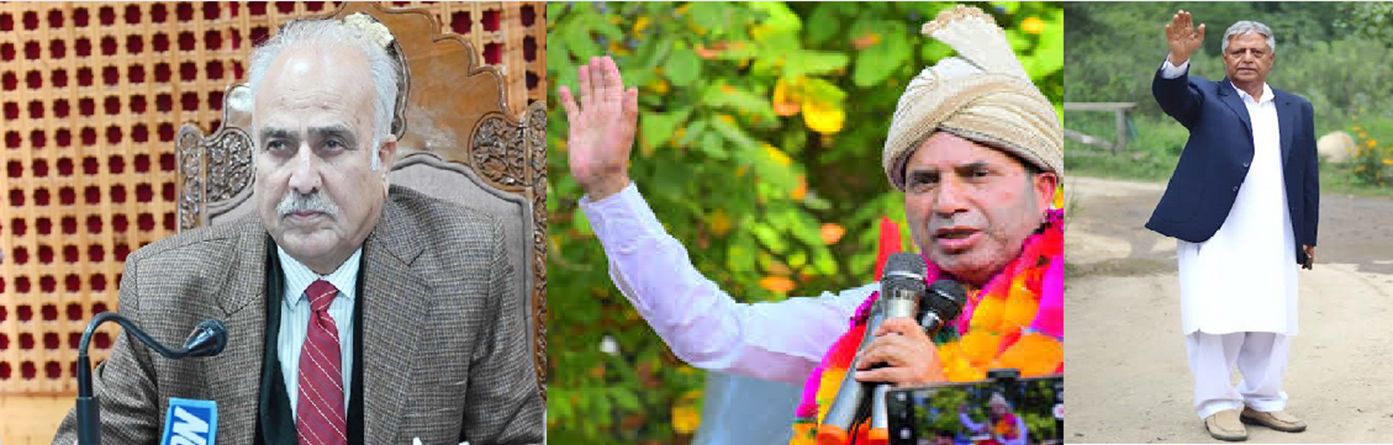
Srinagar: The political landscape of Jammu & Kashmir is experiencing a dramatic transformation, with new leaders rising to prominence in the aftermath of the 2024 Assembly elections. These figures, from varied backgrounds, are not only reshaping their constituencies but also redefining what it means to lead in a region steeped in history and complex political dynamics. Javaid Reyaz Bedar, Farooq Ahmad Shah, and Hasnain Masoodi are among the key players who are bringing fresh ideas and approaches to governance in the Union Territory, signaling a new era of leadership.
Javaid Reyaz Bedar; A New Chapter for Pattan Assembly: The Pattan Assembly seat, long dominated by the Ansari family, witnessed a shift in power during the 2024 elections. National Conference (NC) candidate Javaid Reyaz Bedar, a former Senior Superintendent of Police (SSP), emerged victorious in a tightly contested race, defeating Imran Raza Ansari of the People’s Conference by a mere 550 votes. Bedar garnered 29,714 votes, while Ansari secured 29,164 votes. The Ansari family had held the Pattan seat for decades, with Imran Raza Ansari continuing the political legacy of his father, Iftikhar Ansari, who had served as a prominent political figure in the region. From Congress to NC to PDP, the family maintained a stronghold on the seat. However, Bedar’s victory signals a desire for change among the electorate. Known for his humanistic approach during his tenure as SSP, Bedar is perceived as a leader who understands the ground realities of governance. His transition from law enforcement to politics in 2018 has made him a fresh face for the people of Pattan, who are eager for leadership focused on development and welfare. This change reflects a broader trend in Jammu & Kashmir, where voters are beginning to embrace leaders who offer new ideas and a break from the traditional political families that have long dominated the region. Bedar’s leadership promises to bring a fresh perspective to Pattan, one that is likely to focus on the economic development, infrastructure, and social welfare of the constituency.
Farooq Ahmad Shah: A Bureaucrat’s Bold Leap into Politics: Farooq Ahmad Shah’s victory in the Gulmarg constituency is a political milestone that has sent ripples across Jammu & Kashmir’s political scene. Shah, a former bureaucrat with extensive experience in governance and tourism, defeated Ghulam Hassan Mir, a long-time political figure who had held the seat for 24 years. This victory is seen not just as a personal triumph for Shah, but as a reflection of the people’s desire for a new direction in governance. Shah’s decision to leave his prestigious position as a senior bureaucrat to join the National Conference in 2022 was a bold one. His background in tourism and administration, especially his work as Director of Tourism and Secretary of Tourism in the region, positioned him as a candidate with a unique understanding of both governance and the challenges faced by the local population. Gulmarg, a globally renowned tourist destination, holds significant potential for economic development, and Shah’s deep knowledge of the tourism sector is expected to catalyze this growth. Shah’s background in tourism and development will allow him to spearhead sustainable growth in Jammu & Kashmir. His victory suggests that the people of Gulmarg are looking for a leader who not only understands the region’s political landscape but also has the technical expertise to guide its economic growth. Shah’s commitment to revitalizing the tourism sector, expanding its reach, and promoting sustainable practices is expected to create new economic opportunities for the people of the region.
Justice (Retd) Hasnain Masoodi: From Legal Expert to Political Leader In Pampore, Hasnain Masoodi’s victory over former minister Zahoor Ahmad Mir further underscores the shifting political currents in Jammu & Kashmir. Masoodi, who previously represented the Anantnag constituency in Parliament, won the Pampore Assembly seat with a lead of 2,763 votes. His victory is significant for several reasons, not least of which is his illustrious career as a lawyer and judge. Born in Khrew area of Pulwama district, Masoodi’s legal background includes serving as a High Court Judge in Jammu & Kashmir, where he gained recognition for his landmark judgments, including one affirming the permanence of Article 370, which granted special status to the state. In 2019, Masoodi entered politics, joining the National Conference and winning a seat in the Indian Parliament. He was a strong critic of the government’s decision to revoke Article 370 and even petitioned the Supreme Court to challenge the move. His victory in Pampore reflects his widespread appeal as a leader committed to justice, governance, and the rights of the people of Jammu & Kashmir. Masoodi’s background as a legal expert, combined with his experience as an elected representative in Parliament, positions him as a leader who can navigate the complex political landscape of Jammu & Kashmir. His legal acumen and his long-standing affiliation with the National Conference have earned him respect across political circles. His leadership is expected to bring a more balanced and rights-focused approach to governance in Pampore, with a focus on infrastructure development, education, and social welfare. In India, while judges have traditionally been expected to remain politically neutral, there have been a few instances where judges, after retirement, transitioned into active political roles. This has sparked debates about judicial independence and the ethics surrounding such transitions. One prominent example is Justice Hasnain Masoodi, who served as a judge in Jammu and Kashmir High Court and later entered politics with the National Conference (NC) party. Masoodi has represented the region as a Member of Parliament, marking a rare but notable shift from judicial service to politics
A Wave of Change in Jammu & Kashmir Politics: The victories of Javaid Reyaz Bedar, Farooq Ahmad Shah, and Hasnain Masoodi signal a profound shift in Jammu & Kashmir’s political dynamics. These leaders, while coming from different backgrounds, share a commitment to public service, governance, and development. Their triumphs mark a departure from the region’s traditional reliance on dynastic politics and family-run political empires. The people of Jammu & Kashmir, disillusioned by years of instability and underdevelopment, have begun to embrace leaders who offer not only political experience but also expertise in governance and development. Bedar’s rise in Pattan, Shah’s success in Gulmarg, and Masoodi’s victory in Pampore are all indicative of the electorate’s growing desire for leaders who bring fresh ideas, technical knowledge, and a commitment to improving the region’s socio-economic conditions. As Jammu & Kashmir continues to grapple with political uncertainty and economic challenges, the emergence of these new leaders provides a ray of hope for the future. Whether it’s Bedar’s human-centric approach to law enforcement, Shah’s focus on sustainable tourism development, or Masoodi’s dedication to justice and governance, these leaders are shaping the future of Jammu & Kashmir in ways that resonate with the aspirations of the people. Their leadership offers the promise of a more inclusive, progressive, and prosperous future for the region, one that moves beyond the constraints of past political ideologies and towards a model of governance based on expertise, accountability, and public service. As these leaders continue to make their mark, the people of Jammu & Kashmir will likely look to them for guidance as they navigate the challenges and opportunities that lie ahead.
UPSC at 100: PM Modi Calls for Citizen-First Civil Services for a Changing India
Says “Civil Services Must Mirror the Aspirations of a Digital-First India” New Delhi, Srinagar| Oct, 3: As the Union Public...
Read moreDetails