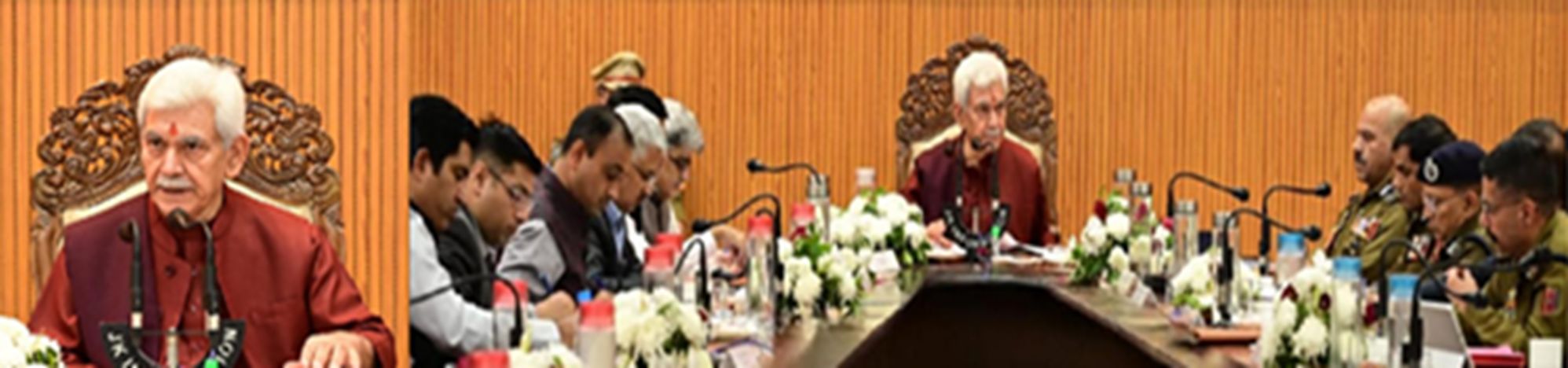
LG Sinha Says “Counter militancy operations are essential, addressing the broader networks and systems that support militancy must be a priority,and ”adding“ There should be no complacency in the fight against militancy. A united effort is essential to eliminate this threat from Jammu and Kashmir,”
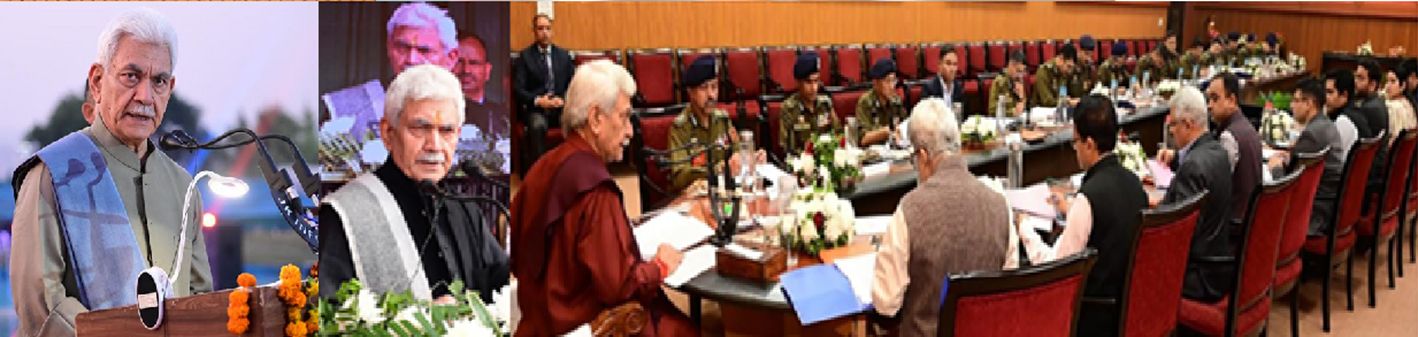
This week Jammu and Kashmir’s Lieutenant Governor (LG) Manoj Sinha presided over a significant high-level meeting in Jammu aimed at assessing both the security situation and the ongoing developmental initiatives in the region. In this meeting, Sinha reaffirmed his administration’s zero-tolerance policy towards militancy, emphasizing the critical need for strict vigilance and coordinated action among law enforcement agencies. His statement underscores the administration’s commitment to eliminating the threat of militancy and restoring peace to the region.
Zero-Tolerance Policy On Militancy: LG Sinha’s firm stance against militancy was the focal point of the meeting. He reiterated that the administration would adopt a zero-tolerance approach toward militancy activities, emphasizing the importance of maintaining security and peace in Jammu and Kashmir. Sinha stressed that there should be no complacency in the fight against militancy. He called for enhanced coordination among all security agencies, including the police, the army, and central forces, to eliminate militancy from the region. “There should be no complacency in the fight against militancy. A united effort is essential to eliminate this threat from Jammu and Kashmir,” LG Sinha remarked during the meeting. His statement reflects the urgency with which the administration views the ongoing militancy problem in the region. The threat posed by cross-border militancy, fueled by external forces, was another key issue raised during the discussions. Sinha pointed out that peace and stability in Jammu and Kashmir continue to be disrupted by attempts from across the border to incite violence and militancy. This cross-border militancy remains a persistent problem, and the LG highlighted the need for unrelenting vigilance to neutralize such threats.
Emphasis On Unified Action For Peace: During the high-level meeting, LG Sinha called upon all the security forces to work with dedication, emphasizing that leniency would not be tolerated in the fight against militancy. “The safety and peace of our people are non-negotiable,” he said, reiterating that the administration’s priority is the protection of civilians and the restoration of peace. His words serve as a call to action for all security agencies to remain united in their efforts to eliminate militancy and its enablers. Sinha’s approach reflects a multi-faceted strategy where the eradication of militancy is coupled with broader peace-building measures. The need for cooperation and synergy among various agencies was highlighted as a fundamental aspect of the fight against militancy. This coordinated effort is intended not only to tackle the militant threat but also to disrupt the entire support ecosystem that sustains militancy in the region. LG Sinha’s message was clear: while counter militancy operations are essential, addressing the broader networks and systems that support militancy must be a priority.
Tackling Cross-Border Militancy: Another central issue addressed by LG Sinha was the ongoing threat of cross-border militancy. Jammu and Kashmir’s geographical proximity to Pakistan has made it a hotspot for militant infiltration, which continues to destabilize the region. Despite continuous efforts by security forces to secure the borders and prevent infiltration, militants continue to find ways to cross over, often with the backing of Pakistani military establishments. The Lieutenant Governor emphasized that the safety of Jammu and Kashmir depends on proactive measures to prevent such infiltrations. He underscored the need for better surveillance, intelligence sharing, and stringent border controls to keep militants from crossing into the region. Cross-border militancy remains one of the most significant challenges faced by security forces in Jammu and Kashmir. In his remarks, Sinha reminded all officials present of the ongoing efforts to stop militants from using the region as a base for planning and executing militancy activities. These steps are critical to ensuring the long-term security of the Union Territory.
For Infra Development Focus On Strategic Planning: In addition to his security-related directives, LG Sinha also emphasized the importance of speeding up the region’s infrastructural development. During the meeting, the Lieutenant Governor called on Deputy Commissioners and senior officials to focus on monitoring the implementation of development projects. With Jammu and Kashmir still recovering from years of conflict, infrastructure development plays a key role in not only providing basic services but also in enhancing the region’s economic resilience. Sinha directed the officials to expedite infrastructure projects, especially those that directly impact the quality of life for residents. These projects include road construction, health facilities, educational institutions, and power supply systems. The government’s focus on infrastructure development is essential for improving the standard of living and providing a stable foundation for long-term peace. Moreover, the Lieutenant Governor highlighted the importance of public outreach programs to ensure that government schemes and benefits reach every corner of the region. He called for the saturation of government welfare schemes to guarantee that all eligible beneficiaries receive the necessary support. The implementation of the Holistic Agriculture Development Programme was also discussed, which aims to modernize agriculture in the region and increase productivity while promoting sustainability.
Economic Growth Through Entrepreneurship: LG Sinha stressed the need for promoting entrepreneurial ventures in Jammu and Kashmir, particularly through initiatives like the One District One Product (ODOP) scheme. This program encourages local entrepreneurship and is designed to create jobs and stimulate the economy. By focusing on unique products that can be produced in each district, the administration aims to diversify the local economy and make it less reliant on government employment and agriculture alone. Sinha’s leadership has placed significant emphasis on creating an environment where entrepreneurship can thrive. His vision includes harnessing the potential of local industries and facilitating the growth of small and medium enterprises (SMEs) to drive economic progress. This focus on entrepreneurship is expected to provide a much-needed boost to the region’s economy, creating new opportunities for youth and helping reduce unemployment rates.
“With cross-border militancy continuing to be a major threat, deploying modern technology for monitoring infiltration routes, coupled with timely intelligence inputs, can significantly improve the region’s security. Continued collaboration between security forces and local communities is essential for isolating militants and their supporters, ensuring a safer environment for civilians. Sinha’s assertion that the fight against militancy must go beyond just targeting militants is an essential aspect of the region’s security strategy.”
A Comprehensive Approach To Development, Security: While security remains a top priority, the Lieutenant Governor has made it clear that sustainable development and public welfare are equally essential for the future of Jammu and Kashmir. LG Sinha’s leadership marks a concerted effort to balance these two critical aspects: ensuring security while simultaneously creating opportunities for socio-economic growth. The implementation of public welfare schemes, expansion of agricultural development programs, and promotion of entrepreneurship are all part of the administration’s broader vision for a prosperous Jammu and Kashmir. Additionally, with the rising threat of cross-border militancy, the administration has made it clear that they are fully committed to eradicating the militancy problem through decisive action and without delay. The region’s ability to achieve peace and stability is inextricably linked to these twin focuses—security and development.
The Ongoing Threat Of Militancy: The stark reality of militancy in Jammu and Kashmir was highlighted by a tragic incident that occurred just a day before the meeting. On November 7, 2024, gunmen abducted and murdered two Village Defence Guards (VDGs) in the Munzla Dhar forests of Kishtwar. The slain individuals, Nazir Ahmed and Kuldeep Kumar, were residents of Kishtwar and were both shepherds by profession. They had been grazing their sheep when they were abducted by gunmen, who subsequently killed them. This incident serves as a grim reminder of the persistent threat posed by militants in the region. The killings of these VDG members reflect the vulnerability of rural communities, especially those involved in community defense efforts. It also highlights the courage of individuals who, despite the threat of violence, step up to protect their communities from militancy. This tragic loss underscores the urgency of LG Sinha’s call for greater cooperation among all security agencies and a relentless focus on eradicating militancy from Jammu and Kashmir. LG Manoj Sinha’s meeting on November 8, 2024, reinforced his administration’s commitment to a zero-tolerance policy on militancy, while also emphasizing the importance of development and social welfare. By focusing on both security and development, the administration aims to provide a comprehensive solution to the challenges faced by Jammu and Kashmir. With increased coordination among law enforcement agencies and a focus on creating opportunities for growth, the region is on track to overcome its long-standing challenges. Through a balanced approach, Sinha is leading Jammu and Kashmir toward a future marked by peace, stability, and progress.
Kashmir Horizon View: The recent statements by Lieutenant Governor Manoj Sinha highlight the multifaceted challenges faced by Jammu and Kashmir and the administration’s firm resolve to tackle them head-on. The future of the region hinges on addressing two primary issues: the persistent threat of militancy and the need for rapid economic and infrastructural development. Sinha’s call for a coordinated, multi-agency approach to both security and development provides a roadmap for moving forward. A critical aspect of the way forward is strengthening the security apparatus in Jammu and Kashmir. The region has been the epicenter of militancy and cross-border militancy for decades, and despite numerous counterinsurgency efforts, the threat persists. As Sinha emphasized, “There should be no complacency in the fight against militancy.” To achieve this, it is essential to enhance the intelligence-sharing mechanism among local security forces, the police, the army, and central forces. This will not only bolster the region’s defense but also help in preempting militant activities, particularly those originating from across the border. Moreover, the need for advanced surveillance systems along the borders cannot be overstated. With cross-border militancy continuing to be a major threat, deploying modern technology for monitoring infiltration routes, coupled with timely intelligence inputs, can significantly improve the region’s security. Continued collaboration between security forces and local communities is essential for isolating militants and their supporters, ensuring a safer environment for civilians. Sinha’s assertion that the fight against militancy must go beyond just targeting militants is an essential aspect of the region’s security strategy. Militancy is sustained not only by militants but by an entire ecosystem of logistical support, including financiers, recruiters, and sympathizers. The administration’s focus on eliminating this ecosystem through exemplary action against those who aid and abet militancy is a critical next step. This includes cracking down on illegal financial networks that fund militancy, addressing the radicalization of youth, and tackling the spread of extremist ideologies. Additionally, the involvement of local communities in security efforts, like the Village Defense Committees (VDCs), should be strengthened and expanded. While these committees play a vital role in protecting their communities from militant threats, they must also be provided with adequate training, resources, and legal protection to ensure their safety and efficacy.
(In commitment to continuous improvement the “Team Kashmir Horizon” invites it’s valuable readers to share their valuable feedback and suggestions with the “Team Kashmir Horizon”. The insights of readers will surely play a vital role in improving the content quality of “Kashmir Horizon” and contribute more for the empowerment of people. Please feel free to reach out to us at editor@ thekashmirhorizon.com. Team “Kashmir Horizon” eagerly anticipates thoughts and ideas of it’s readers, which will help us serve people and even more effectively. The inputs of valuable readers are highly valued as “Kashmir Horizon” strives to provide it’s readers the best possible experience. Thank you for being a part of the reader community!)