Srinagar: A new wave of political heirs has emerged in Kashmir, ready to make significant impacts on the region’s complex political scene. These fresh faces, carrying forward their influential family legacies, blend inherited prestige with their own ambitions. As they step into the political arena, their roles are poised to reshape Kashmir’s future in substantial ways.
Salman Sagar is stepping into the limelight as the son of National Conference (NC) General Secretary Ali Muhammad Sagar. Salman’s ascension within the NC, an influential force in J&K, signals a blend of youthful enthusiasm and adherence to the party’s traditional values. His role is anticipated to inject new energy into the NC’s strategies, potentially attracting a younger demographic and reinvigorating the party’s approach to governance.
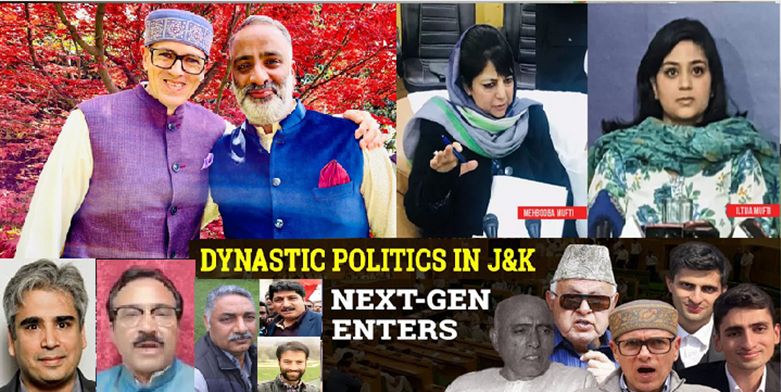
Iltija Mufti, daughter of former Chief Minister Mehbooba Mufti and granddaughter of former Union Home Minister Mufti Muhammad Sayeed, is a prominent new face in Kashmir politics. Known for her articulate and forceful views, particularly after the abrogation of Article 370, Iltija has made a significant impact. If she formally enters politics, she will need to establish her own identity while potentially transforming the PDP’s trajectory.
Tanvir Sadiq inherits a rich legacy from his late father, Sadiq Ali, a respected politician and poet. Tanvir’s background is a unique fusion of political and cultural heritage, as his father was deeply involved with the National Conference and later the Peoples Democratic Party (PDP). This blend of politics and culture is likely to resonate with voters who appreciate both traditional values and progressive ideals, shaping Tanvir’s political journey.
Irshad Rasool Kar is the son of former Congress leader Ghulam Rasool Kar, and his entry into politics carries the weight of a storied family legacy. His father’s extensive service in the J&K government and as a Working Committee member of the Jammu and Kashmir Pradesh Congress Committee (JKPCC) sets a high standard for Irshad. With a deep understanding of the political landscape inherited from his father, Irshad faces the challenge of navigating contemporary issues while upholding the family’s influential role.
Sajad Shafi, following the political path of his father Muhammad Shafi, aims to build on his father’s legacy in the Uri constituency. Sajad’s strong foundation from his father’s tenure with the National Conference provides him with a solid base. His task is to maintain the trust of his father’s loyal supporters while addressing the evolving needs of the Uri constituency, a balance that will be crucial for his success. Ahsan Pardesi, the son of Ghulam Qadir Pardesi, enters politics with a reputation for adaptability and a pragmatic approach. His father’s career as a bureaucrat-turned-politician known for his flexibility has set a high bar for Ahsan. Observers are keen to see whether Ahsan will continue his father’s versatile approach or carve out a distinct path in the political landscape, bringing either a pragmatic or ideologically cohesive perspective.
Hilal Akbar Lone, son of former Speaker Muhammad Akbar Lone, steps into a well-established political role. With his father’s extensive experience as a cabinet minister, Speaker Assembly, and Member of Parliament, Hilal inherits a significant legacy. His challenge will be to maintain the family’s influential presence while effectively managing the complex political dynamics of J&K.
Mian Mehar Ali represents the fourth generation of his family’s political involvement in Kangan. Following in the footsteps of his father, Member of Parliament Mian Altaf Ahmad, Mehar Ali’s entry into politics signifies not just a continuation of family tradition but a renewed commitment to addressing current issues in his constituency. His deep-rooted presence in Kangan is expected to provide stability and a fresh perspective as he takes on the challenges facing his community.
The upcoming assembly elections in J&K present a battleground where the legacies of influential political families intersect with the ambitions of a new generation. These second-generation politicians, rooted in their familial traditions, are set to influence Kashmir’s political landscape significantly. Their ability to merge inherited prestige with contemporary needs will determine their impact on the region’s future. As these emerging leaders prepare to navigate the complex political environment, their success will be pivotal in shaping the future of J&K politics.