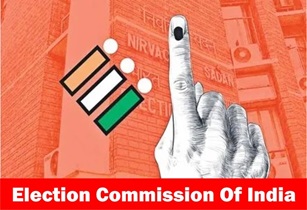
Srinagar: The Election Commission of India (ECI) has announced the schedule for the General Elections to the Legislative Assemblies of Haryana and Jammu & Kashmir, 2024.
According to the schedule, the elections in Jammu & Kashmir will be held in three phases on September 18, 2024, September 25, 2024, and October 1, 2024, while Haryana will witness a single-phase election on October 1, 2024.
With the announcement of these election dates, the ECI has reminded all media outlets, including television channels, radio networks, and digital platforms, of their obligations under Section 126(1)(b) of the Representation of the People Act, 1951.
This section imposes strict restrictions on the display of any election-related content during the “silence period,” which begins 48 hours before the conclusion of polling in any given area. The law is designed to ensure that voters can make their decisions free from last-minute influences.
Section 126 of the Representation of the People Act, 1951, specifically prohibits the following during the silence period: No public meetings, rallies, or gatherings intended to support or oppose any candidate or party can be held within the polling area during the 48-hour silence period.
It is prohibited to display any election matter via television, cinematograph, or similar apparatus in any polling area during this period. This includes all forms of media that could potentially influence voters.
Any violation of Section 126 is considered a criminal offense and can result in imprisonment for up to two years, a fine, or both.
The term “election matter” is broadly defined as any content intended or likely to influence or affect the outcome of an election. This includes not only direct political advertisements but also debates, analyses, opinion polls, and any form of visual or audio content that could sway voters’ opinions.
In past elections, there have been instances where TV channels have been accused of violating Section 126 by airing panel discussions, debates, and other news programs that contained election-related content during the silence period.
The ECI has previously clarified that the prohibition under Section 126 applies to all forms of media, including television, radio, and digital platforms. The Commission has emphasized that any content that could influence voters is strictly prohibited during this period.
The ECI has reiterated its warning to media outlets that they must ensure compliance with these regulations. This includes preventing the broadcast or display of any material that could be construed as promoting or prejudicing the prospects of any candidate or party during the 48-hour period leading up to the close of polling.
Media outlets are also advised to be particularly vigilant about disguised political advertisements, such as those masquerading as news items or headlines, which are also banned during this period.
In addition to the general restrictions, the ECI has outlined specific prohibitions on the following during the silence period:
It said that any political advertisement on TV, cable networks, radio, or in cinema halls is strictly prohibited. This ban extends to bulk SMS/voice messages, audio-visual displays, and other forms of communication that could influence voters.
“Political advertisements disguised as news items or headlines are also prohibited. Media outlets must ensure that no such content is broadcast or displayed during the silence period, even if it was scheduled before the period began,” it said.
The ECI has also clarified that Section 126’s restrictions apply to multi-phase elections only in the polling areas where voting is imminent. In areas where polling is scheduled for a later phase, election-related content can be broadcast or displayed, provided it does not reference or affect the areas under the current silence period.
The ECI’s guidelines are aimed at ensuring a fair and impartial election process, free from undue influence during the critical silence period. All media outlets are urged to adhere strictly to these guidelines to avoid legal repercussions and to maintain the integrity of the electoral process.
The Commission will be closely monitoring compliance and is prepared to take swift action against any violations. As General Elections to the Legislative Assemblies of Haryana and Jammu & Kashmir approach, the ECI’s reminder is crucial notice to all media outlets.
The integrity of the electoral process depends significantly on adherence to these rules, ensuring that voters can make informed choices without being subjected to last-minute influences.