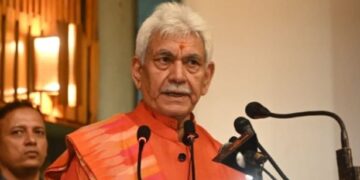
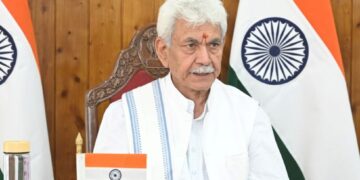
“ Sinha expressed gratitude to Prime Minister Narendra Modi and Finance Minister Nirmala Sitharaman, highlighting the budget’s focus on empowering diverse segments of society, including the middle class, youth, women, and farmers. Sinha described the budget as a catalyst for “intensified economic growth” and “far-reaching reforms” aimed at achieving a ‘Viksit Bharat’. He emphasized that the budget would improve the ‘Ease of Doing Business’ and ‘Ease of Living,’ reflecting a commitment to both economic advancement and quality of life.”
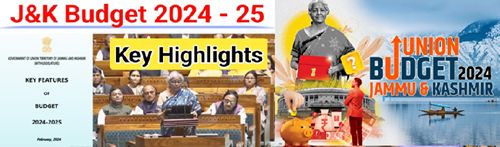
The Union Budget for 2024-25 has earmarked a sum of Rs 42,277.74 crore for the Union Territory of Jammu and Kashmir, marking a nominal increase of 1.2 percent compared to the previous fiscal year’s allocation. This budget, presented by Finance Minister Nirmala Sitharaman in the Lok Sabha, aims to address the region’s economic, social, and infrastructural needs, emphasizing the government’s commitment to fostering development and stability in Jammu and Kashmir.
Central Assistance And Resource Allocation: Of the total allocation, Rs 40,619.3 crore is designated as Central Assistance to Union Territories to bridge the resource gap in Jammu and Kashmir. This includes a significant advance of Rs 7,900 crore from the Contingency Fund of India, which will be recouped once the Demands for Grants for 2024-25 are passed by Parliament and the associated Appropriation Act receives presidential assent. Additionally, Rs 279 crore is allocated to the Union Territory Disaster Response Fund to manage expenditures related to natural calamities.
Hydroelectric Projects: The budget also includes substantial allocations for hydroelectric projects. Rs 130 crore is set aside as equity contribution for the 624 MW Kiru Hydro Electric Project, while Rs 476.44 crore is allocated for the 800 MW Ratle Hydro Electric Project. Furthermore, Rs 171.23 crore is earmarked for the 540 MW KWR Hydro Electric Project, demonstrating a strong focus on enhancing the region’s power infrastructure.
Flood Recovery , Infra Dev: To address flood recovery, Rs 500 crore has been allocated for the Jhelum and Tawi Flood Recovery Project (JTFRP). Additionally, Rs 101.77 crore is designated to support the Union Territory’s capital expenditure on infrastructure projects, aimed at closing the resource gap.
Police and Security: A notable allocation of Rs 9,789.42 crore is directed towards the Jammu and Kashmir Police, highlighting the government’s commitment to maintaining law and order and ensuring the security of the region.
Overview of Jammu and Kashmir’s Budget for 2024-25: With a projected GDP growth of 7.5 percent over the previous year, the budget for Jammu and Kashmir for the fiscal year 2024-25 amounts to Rs 1,18,390 crore. This includes revenue expenditure of Rs 81,486 crore and capital expenditure of Rs 36,904 crore. The tax/GDP ratio is projected to rise to 7.91 percent, up from 6.56 percent in the previous year. The projected GDP for 2024-25 stands at Rs 2,63,399 crore, reflecting a robust growth trajectory.
Gross Receipts And Expenditures: The total gross receipts for 2024-25 are estimated at Rs 1,51,526 crore, accounting for ways and means advances and overdrafts amounting to Rs 33,136 crore. Consequently, the total gross expenditure is also estimated at Rs 1,51,526 crore. Excluding the provision for advances and overdrafts, the net budget estimates for the fiscal year stand at Rs 1,18,390 crore.
Revenue And Capital Receipts: Expected revenue receipts are projected at Rs 98,719 crore, while capital receipts are anticipated to be Rs 19,671 crore. The budget estimates own revenues from both tax (18 percent) and non-tax (8 percent) sources at Rs 30,586 crore. Borrowings and Asset Monetization are expected to constitute 17 percent and 1 percent of the total receipts, respectively. Central assistance of Rs 42,278 crore (46 percent) and Rs 12,502 crore (10 percent) as CSS/ PMDP are also projected to flow into the Union Territory.
Expenditure Breakdown: The expenditure breakdown for the budget is as follows: 31 percent will be allocated to capital expenditure, 25 percent to salaries, 12 percent to pensions, 8 percent to power purchases, 9 percent to interest payments, and 15 percent to other expenses.
Major Initiatives And Development Projects: The budget provisions for ongoing initiatives in infrastructure development, sustainable agriculture, new industrial estates, PRI-level works, employment generation, tourism development, and social inclusion. These initiatives are aimed at fostering economic growth and improving the quality of life for the residents of Jammu and Kashmir.
Addressing Fiscal Challenges: Jammu and Kashmir have historically faced significant fiscal challenges, characterized by high fiscal stress and dependence on central grants for approximately 70 percent of its total expenditure. To address these issues, the government has provided a special central assistance of Rs 17,000 crore. This assistance is intended to alleviate the fiscal deficit, which is projected to reduce to 3.0 percent of GDP for the financial year 2024-25.
Special Financial Support: The special package of Rs 17,000 crore includes provisions for the salary, pension, and other costs of the Jammu and Kashmir Police, amounting to Rs 12,000 crore. Additionally, a lump sum grant of Rs 5,000 crore is provided as additional central assistance. The overall central assistance for 2024-25 is estimated at Rs 67,133 crore, which is expected to significantly improve the fiscal position of Jammu and Kashmir and support its developmental goals.

Main Highlights of J&K Budget
- ₹1,18,390 crore allocated to Jammu and Kashmir for 2024-25.
- ₹42,277.74 crore in central assistance provided.
- ₹7,900 crore advance from Contingency Fund; ₹776 crore for hydroelectric projects; ₹279 crore for disaster response; ₹9,789.42 crore for police support.
- Projected GDP growth at 7.5%; tax/GDP ratio at 7.91%; fiscal deficit to GDP ratio targeted at 3.0%.
- Gross receipts at ₹1,51,526 crore; net budget estimates at ₹1,18,390 crore; central assistance at ₹42,278 crore; CSS/PMDP assistance at ₹12,502 crore.
- 31% for capital expenditure, 25% for salaries, 12% for pensions, 8% for power purchases, 9% for interest payments, and 15% for other expenses.
- Focus on infrastructure, agriculture, industrial development, employment, tourism, and social inclusion.
- Addressing high fiscal stress with ₹17,000 crore special assistance and reforms to improve financial health.
- Significant socio-economic progress and increased voter turnout since 2019 reforms.
- Launch of Mission Youth; 38,384 recruited; 34 lakh e-Shram registrations; 74 crore 42 lakh electronic transactions.
Socio-Economic Development Since August 2019: The Finance Minister highlighted the unprecedented socio-economic development in Jammu and Kashmir since the reforms initiated in August 2019. The region has experienced peace, progress, and prosperity, with normalcy returning after over three decades of turmoil. Public institutions such as schools, colleges, universities, and hospitals are functioning efficiently without disruptions.
Democratic Participation: The Finance Minister noted the enthusiastic participation of the people of Jammu and Kashmir in the recent Lok Sabha elections, with a record voter turnout. This reflects the success of the 2019 reforms and the robust democratic spirit of the region’s citizens.
Commitment To Dismantling Terror Ecosystem: The Jammu & Kashmir Government remains committed to dismantling the terror ecosystem. A policy of zero tolerance against terrorism has been adopted, and security forces have effectively countered efforts to sponsor proxy wars. The improved security situation has boosted the confidence and resolve of society to fight terrorism.
Law and Order: The budget also focuses on improving the overall law and order situation in Jammu and Kashmir. The pre-2019 era of street violence, orchestrated by terrorists and secessionist networks, is now a thing of the past. The improved security environment has enabled the government to implement socio-economic development initiatives effectively.
Transformation of Jammu and Kashmir Bank: The complete turnaround of Jammu and Kashmir Bank since 2019 is cited as a success story. The Union Territory government, as the bank’s promoter, has improved its capital adequacy and corporate governance. Substantial equity capital was infused into the bank to address financial indiscipline and high NPAs. These efforts have transformed the bank’s financial health, enabling business growth and profitability.
Reform, Perform, and Transform: The government of Jammu and Kashmir is working on the mantra of “Reform, Perform, and Transform.” This has led to several initiatives aimed at unlocking economic and industrial potential, improving quality of life, promoting social and financial inclusion, fortifying law and order, decentralizing governance, enhancing public expenditure transparency, and stepping up infrastructure development.
Employment Initiatives: The Government has launched “Mission Youth” to transform the youth of Jammu and Kashmir into ambassadors of peace and development. Financial assistance is provided to youth and women entrepreneurs under initiatives such as Mumkin, Tejaswani, and Spurring Entrepreneur. Additionally, a massive recruitment drive has resulted in the recruitment of 38,384 individuals in the government sector since August 2019.
Improving Transparency and Efficiency in Governance: To improve governance, the government has adopted General Financial Rules, initiated IT reforms for financial management, and universalized procurement through the Government e-Market Place (GEM). The “Aapki Zameen Aapki Nigrani” portal has been launched to provide online access to land records, and registration of land revenue documents has been made online.
Direct Benefit Transfer: The Finance Minister highlighted the success of Direct Benefit Transfer (DBT), with over Rs 6,000 crore disbursed to 70.46 lakh beneficiaries through various welfare schemes by March 2024. Jammu and Kashmir recorded 74.42 crore e-transactions in 2023-24, averaging over 20 lakh electronic transactions daily, surpassing many states.
Interim And Regular Budgets: The budget presented for 2024-25 is the fifth consecutive budget of Jammu and Kashmir presented by the Union Finance Minister in the absence of a Legislative Assembly. An interim budget of Rs 59,634 crore was presented on February 5, 2025, in view of the Lok Sabha elections.
Revenue And Expenditure Analysis: The Finance Department of the UT government conducted a detailed analysis of revenue receipts from various sources, including GST, motor spirit tax, excise, and stamp duty. The own revenue of the UT government is estimated at Rs 21,860 crore. Efforts to harness central funds and enhance execution speed have led to increased receipts under centrally sponsored schemes.
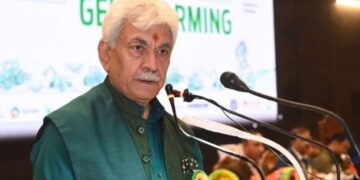
LG Manoj Sinha welcomes Budget: Lieutenant Governor Manoj Sinha has praised the Union Budget for 2024-2025 as a transformative plan for India’s growth. In his statement, Sinha expressed gratitude to Prime Minister Narendra Modi and Finance Minister Nirmala Sitharaman, highlighting the budget’s focus on empowering diverse segments of society, including the middle class, youth, women, and farmers. Sinha described the budget as a catalyst for “intensified economic growth” and “far-reaching reforms” aimed at achieving a ‘Viksit Bharat’. He emphasized that the budget would improve the ‘Ease of Doing Business’ and ‘Ease of Living,’ reflecting a commitment to both economic advancement and quality of life. Sinha also commended the budget for its focus on rural development and agricultural infrastructure. He pointed out that initiatives to boost agricultural productivity and resilience, including natural farming and oilseeds production, would significantly benefit Jammu and Kashmir. These measures are designed to foster inclusive growth for farmers and laborers, promoting development in both rural and urban areas.
“Maintaining fiscal discipline through expenditure controls and debt management will ensure sustainable development. Finally, addressing security concerns by dismantling the terror ecosystem and improving law and order will create a favorable environment for progress. Through these strategies, Jammu and Kashmir can achieve sustainable development, economic growth, and improved living standards, aligning with the broader vision of a developed India”.
Kashmir Horizon View: The Union Budget for 2024-25, presented by Finance Minister Nirmala Sitharaman, allocates ₹42,277.74 crore to Jammu and Kashmir, marking a modest increase of 1.2% over the previous fiscal year’s allocation. This budget encompasses ₹40,619.3 crore as Central Assistance to Union Territories to address the resource gap in Jammu and Kashmir, alongside ₹7,900 crore to be recouped from the Contingency Fund of India once the Demands for Grants for 2024-25 are approved. Noteworthy allocations include ₹279 crore for the UT Disaster Response Fund, ₹130 crore for the Kiru Hydro Electric Project, ₹476.44 crore for the Ratle Hydro Electric Project, ₹500 crore for the Jhelum and Tawi Flood Recovery Project, ₹171.23 crore for the KWR Hydro Electric Project, ₹101.77 crore for infrastructure projects, and ₹9,789.42 crore for J&K Police. For the financial year 2024-25, Jammu and Kashmir’s budget is set at ₹1,18,390 crore, with revenue expenditure of ₹81,486 crore and capital expenditure of ₹36,904 crore. The tax/GDP ratio is projected at 7.91%, and the GDP is anticipated to grow by 7.5%, reaching ₹2,63,399 crore. The budget aims to drive infrastructure development, social security, and economic growth. Significant funds are allocated for ongoing and new infrastructure projects, including hydroelectric initiatives, flood recovery efforts, and road construction under various schemes. Looking ahead, the effective and timely implementation of budgetary allocations and ongoing projects will be crucial. Enhancing revenue generation through improved tax compliance and expanding the tax base is essential. Continued investment in infrastructure development, particularly in power, roads, and urban projects, will boost economic growth and improve living standards. Expanding social security nets and welfare schemes will promote inclusive growth and support marginalized communities. Furthering employment initiatives like Mission Youth will provide skill development, financial assistance, and employment opportunities to youth and women. Maintaining fiscal discipline through expenditure controls and debt management will ensure sustainable development. Finally, addressing security concerns by dismantling the terror ecosystem and improving law and order will create a favorable environment for progress. Through these strategies, Jammu and Kashmir can achieve sustainable development, economic growth, and improved living standards, aligning with the broader vision of a developed India.
(In commitment to continuous improvement the “Team Kashmir Horizon” invites it’s valuable readers to share their valuable feedback and suggestions with the “Team Kashmir Horizon”. The insights of readers will surely play a vital role in improving the content quality of “Kashmir Horizon” and contribute more for the empowerment of people. Please feel free to reach out to us at editor@ thekashmirhorizon.com. Team “Kashmir Horizon” eagerly anticipates thoughts and ideas of it’s readers, which will help us serve people and even more effectively. The inputs of valuable readers are highly valued as “Kashmir Horizon” strives to provide it’s readers the best possible experience. Thank you for being a part of the reader community!)