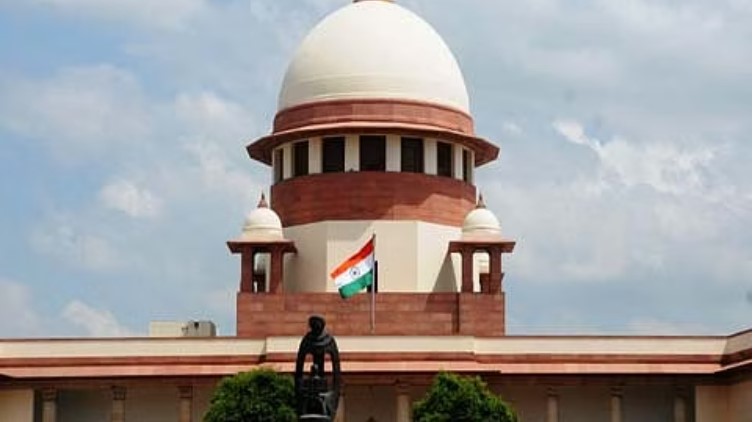
New Delhi, July 25: The Supreme Court of India ruled on Thursday that States have the authority to levy taxes on mineral rights, marking a significant decision by a nine-judge Constitution Bench reported by Bar & Bench.
This verdict determined that royalty payments made by mining operators to the Central government are not classified as taxes, thereby affirming the States’ power to impose cesses on mining and mineral-use activities (Mineral Area Development Authority etc vs Steel Authority of India and ors).
The judgment, delivered by Chief Justice of India (CJI) DY Chandrachud and Justices Hrishikesh Roy, Abhay S Oka, JB Pardiwala, Manoj Misra, Ujjal Bhuyan, Satish Chandra Sharma, and Augustine George Masih, saw Justice BV Nagarathna dissent from the majority opinion.
The majority held that States retain the authority to levy cesses on mining activities, emphasizing: “The legislative power to tax mineral rights lies with the State legislature, and the Parliament does not have the legislative competence to tax mineral rights under Entry 50 of List 1 since it is a general entry. The State legislature has the legislative competence under Article 246 read with Entry 49 of List 2 to tax mineral-bearing lands.”
However, Justice BV Nagarathna disagreed, stating: “I hold royalty is in the nature of the tax. States have no legislative competence to impose any tax or fee on mineral rights. Entry 49 is not related to mineral-bearing lands. I hold India Cement decision was correctly decided.”
The Court agreed to clarify whether the ruling will apply prospectively or affect past transactions on July 31, as requested by various petitioners.
This case, the oldest pending nine-judge Bench case before the apex court, addressed whether State governments are deprived of powers to tax and regulate mining and mineral activities due to the Mines Act. The Bench had reserved its judgment on March 14.
The 1989 Supreme Court decision in India Cement Ltd v State of Tamil Nadu held that royalty is a form of ‘tax’ under the Mines Act, preventing States from imposing cesses on such royalty. Subsequent judgments, including State of Madhya Pradesh v Mahalaxmi Fabric Mills Ltd (1995) and State of West Bengal v Kesoram Industries Ltd (2004), reiterated and clarified this position.
The Central government argued that States cannot levy taxes on mineral-bearing lands, with Solicitor General Tushar Mehta stating: “The development of the mineral industry needs uniformity at a national level. Fragmented State-wise levy will adversely impact the development of mineral and systemic utilization of minerals in larger public interest.”
The majority of the nine-judge Bench disagreed with the Centre, with key findings including:
The State’s plenary right to impose taxes on mineral rights remains unaffected unless Parliament imposes a limitation.
The scheme of the MMRDA Act cannot encroach upon the taxing rights of the States.
Royalty is not a tax on mineral rights, and any limitation on the enhancement of royalty is not an imposition of a tax under Entry 50 of List 2.
The term “land” includes mineral-bearing lands, allowing States to tax these lands under Entry 49 of List 2.
The majority differentiated between royalty and tax: “Royalty flows from mining lease, determined by the quantity of minerals removed. The payment is not for public purposes but a consideration paid to the lessor for exclusive mineral rights. Contractual payments due to the government cannot be deemed taxes merely because the statute provides for recovery as arrears.”
Justice BV Nagarathna, in her dissent, argued that royalty payments under the MMDR Act are a form of tax: “Under the statutory scheme of the MMDR Act, any exercise of mineral rights is subject to payment of royalty, which is a statutory exaction. States have no right to levy taxes or cesses on mining activities or mineral use.”
She also agreed with the Centre’s stance that allowing States to levy taxes on mineral use would hinder mineral development: “Royalty as a compulsory exaction meets all parameters of a tax. States are denuded of the powers to impose a cess or any other levy on royalty, which is against the mineral development of the country.”
Justice Nagarathna concluded that States taxing mineral use or mining activities would lead to double taxation: “Mineral value or produce cannot be used to tax mineral-bearing land under Entry 49 List 2. The term ‘land’ under the same Entry does not include mineral-bearing lands, leading to double taxation. Thus royalty cannot be a means to tax mineral-bearing lands.”
The Supreme Court’s decision thus reaffirms States’ rights to levy taxes on mineral rights, potentially reshaping the landscape of mining regulation and revenue in India.