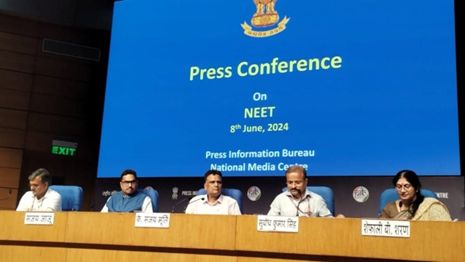
Srinagar: The aftermath of the National Eligibility-cum-Entrance Test (NEET-UG) 2024 has unfolded into a multifaceted saga of controversy, eroding the trust and confidence that candidates and stakeholders place in the examination process. What should have been a moment of celebration for aspiring medical professionals has been overshadowed by allegations of irregularities, casting a pall over the integrity of the entire evaluation system.
The 2024 NEET-UG results have raised red flags with a remarkable surge in inflated marks, a phenomenon that has left medical aspirants and educators alike scratching their heads in disbelief. The spotlight shines particularly brightly on the staggering number of candidates clinching the top rank, boasting an unprecedented percentile of 99.997129. However, the revelation that six of these high achievers hailed from the same examination center has ignited suspicion and speculation, prompting questions about the fairness and authenticity of the assessment process. Adding fuel to the fire, concerns have been raised regarding the scoring discrepancies that have emerged, notably the confounding instances where candidates purportedly garnered 718 and 719 marks, seemingly defying the established marking scheme of the examination. The National Testing Agency (NTA) sought to address these concerns by attributing the anomaly to compensatory marks awarded to candidates to offset time lost during the exam. However, the rationale behind the distribution of these compensatory marks remains shrouded in ambiguity, further exacerbating doubts about the transparency of the evaluation process.
The intricacies of the NEET-UG 2024 debacle extend beyond mere scoring irregularities. The revelation that the question paper was crafted using a new NCERT textbook has exposed a glaring discrepancy in resource access among candidates, disadvantaging those who relied on outdated textbooks.
NTA’s decision to grant additional marks to candidates who selected one of two viable options in such instances has inadvertently contributed to an artificial inflation of scores and an unprecedented surge in the number of top performers.
The timing of the NEET results release, coinciding with parliamentary election outcomes on June 4, has only served to exacerbate suspicions and fuel conspiracy theories regarding the motivations behind the accelerated timeline.
The expedited publication of results, coupled with allegations of question paper leaks and the provision of ‘grace marks’ to mitigate time loss, has sparked outrage and outcry from students, parents, and educators alike.
In the wake of mounting controversy and legal challenges, the integrity of the NEET-UG examination hangs in the balance, casting a shadow of uncertainty over the future of medical education in the country.
As petitions are filed and grievances aired, the need for transparency, accountability, and impartiality in the examination process has never been more pronounced. Only through a concerted effort to address the underlying issues and restore confidence in the evaluation system can the sanctity of NEET-UG be preserved for future generations of medical aspirants.
The results of the National Eligibility-cum-Entrance Test (NEET-UG) 2024 have stirred a storm of controversy, shaking the confidence of candidates and stakeholders alike in the fairness and integrity of the examination process.
What should have been a moment of triumph for aspiring medical professionals has been overshadowed by allegations of irregularities and improprieties, leaving the credibility of NEET-UG in question.
The 2024 NEET-UG results have triggered alarm with an unprecedented surge in inflated marks, raising suspicions and doubts among candidates and educators. Of particular concern is the extraordinary number of candidates securing the top rank, boasting a percentile of 99.997129.
The revelation that six of these top performers hailed from the same examination center has fueled speculation about the legitimacy of the results and the efficacy of the examination administration.
Further exacerbating the controversy are the discrepancies in scoring, notably instances where candidates purportedly obtained 718 and 719 marks, contrary to the established marking scheme.
The National Testing Agency (NTA) has attributed these anomalies to compensatory marks awarded to candidates to offset time lost during the exam. However, the lack of transparency surrounding the allocation of these compensatory marks has only deepened suspicions about the integrity of the evaluation process.
The complexities of the NEET-UG 2024 debacle extend beyond scoring irregularities to encompass disparities in resource access among candidates.
The revelation that the question paper was based on a new NCERT textbook has placed certain candidates at a disadvantage, particularly those relying on outdated textbooks. NTA’s decision to grant additional marks to candidates in such instances has raised questions about fairness and equity in the examination system.
The hasty publication of results, coupled with allegations of question paper leaks and the provision of ‘grace marks’ to mitigate time loss, has sparked outrage and condemnation from students, parents, and educators alike. As legal challenges mount and grievances are aired, the credibility and integrity of the NEET-UG examination hang in the balance.
Urgent action is needed to address the underlying issues and restore confidence in the examination process. Transparency, accountability, and fairness must prevail if NEET-UG is to regain its status as a credible and reliable assessment of medical aptitude.