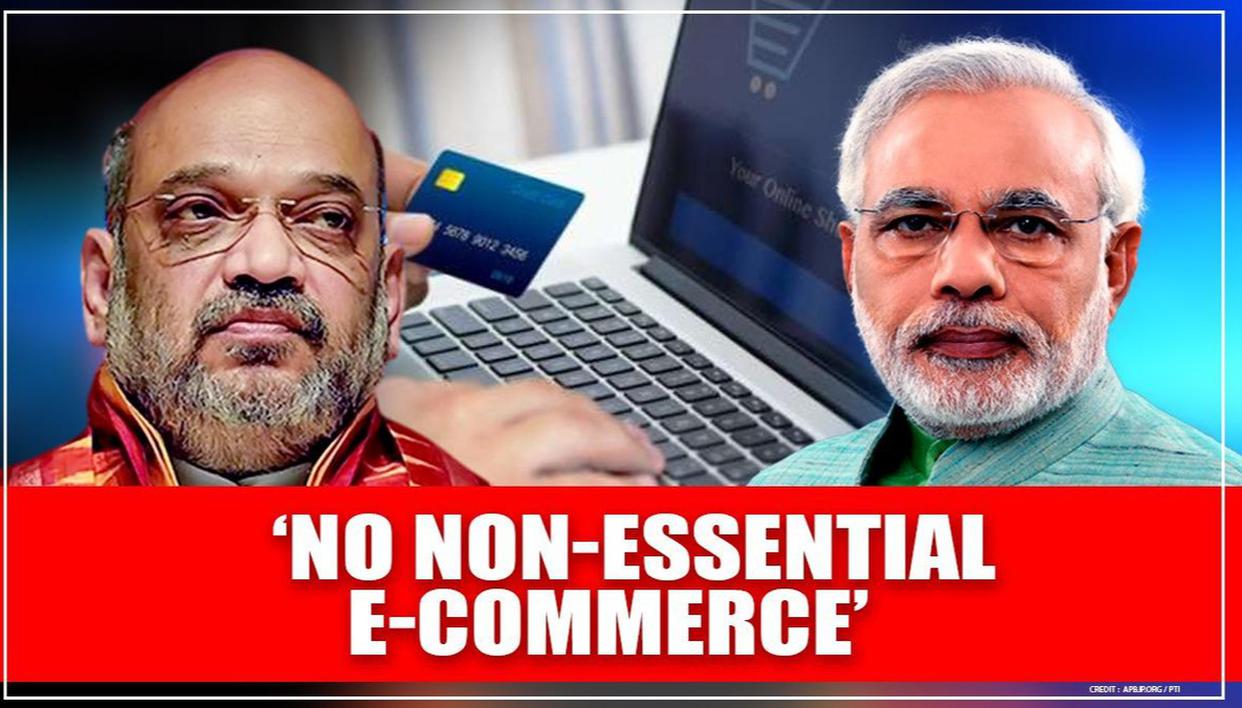
New Delhi/April,19: The supply of non-essential goods by e-commerce companies like Amazon, Flipkart and Snapdeal will remain banned during the lockdown period, the Home Ministry said today, days after permitting the sale of goods like mobile phones, refrigerators, clothes, television sets and laptops via e-commerce platforms.
A brief order by Home Secretary Ajay Bhalla said: “‘E-commerce companies (and) vehicles used by e-commerce operators will be allowed to ply with necessary permissions’ – is excluded from the guidelines”.
On Saturday, Defence Minister Rajnath Singh led a meeting to discuss re-starting select economic activities and services in non-containment zones after April 20 to boost the faltering economy.
After the meeting the government released a list of activities and services that will be functional from April 20 in parts of the country least affected by the coronavirus outbreak; these activities and services will not be allowed in coronavirus hotspots, the government cautioned.
The revised list – another was released earlier – included health services (inclusive of AYUSH), agriculture and horticultural activities, fishing (marine and inland), plantation activities (tea, coffee and rubber with maximum of 50 per cent of workers) and animal husbandry.The earlier list had included the sale of home appliances like televisions and refrigerators through e-commerce platform, a decision that invited criticism from the Confederation of Indian Traders (CAIT). “More than 40 lakh traders are supplying essential goods since lockdown came into effect. Side-lining and ignoring them, e-commerce companies have been allowed to deliver non-essential goods from April 20,” Praveen Khandelwal, CAIT Secretary-General, said.
“When the lockdown was announced these e-commerce companies suspended operations. We want to know today what is the necessity for which they have been given permission. We have no objection if they are given permission to provide essential services, but why non-essential goods,” he asked.
Guidelines on re-opening some sectors and allowing some activities – in non-COVID-19 hotspot districts – came after Prime Minister Narendra Modi extended the lockdown to May 3. The decision came after a video meet with 13 chief ministers who pointed to the lockdown’s impact on the economy.
Although the lockdown has been credited with saving lakhs of lives – the centre has claimed 8.2 lakh could have been infected otherwise – it has also hit the economy hard; the IMF has said it expects the economy to grow by only 1.9 per cent this year.